Short answer: Music reaches us before explanation does. It shifts breathing, heart rate and mood — often before we have processed a single word. That is why sound has been used as a tool for inner work, rather than only for entertainment, in Sufi practice and in many other traditions.
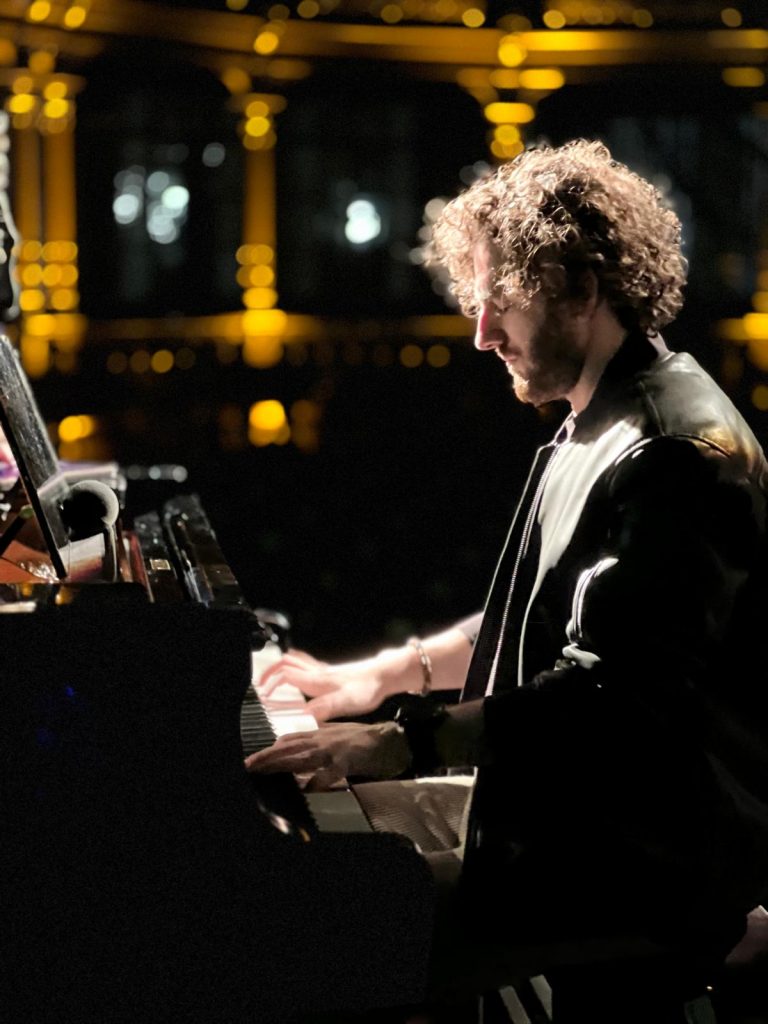
For Hakan Mengüç — a ney player and pianist as well as an author — music is not a separate career from his teaching. It is another way of approaching the same material.
You hear a melody and something shifts. You did not decide to feel it.
There is measurable physiology behind this impression. In a study published in Heart in 2006, Luciano Bernardi, Carlo Porta and Peter Sleight measured cardiovascular and respiratory responses while musicians and non-musicians listened to different styles of music. Faster tempos were associated with increases in breathing rate, heart rate and blood pressure — and the effects depended more on tempo than on musical style or personal preference.
The practical implication is worth sitting with: what you listen to repeatedly becomes part of the background state you live in.
The role of silence
The same study reported something less expected. Randomly inserted pauses produced more relaxation than the music itself — in some measures, below the resting baseline.
The silence after a piece is not empty space waiting for the next track. It appears to be where much of the effect settles.
Why the Ney Is a Symbol, Not Only an Instrument
The ney — the reed flute of Sufi music — is cut from the reed bed before it can be played. Rumi’s Masnavi famously opens with the reed’s lament for the bed it was separated from, and the image has been read for centuries as a description of the soul’s longing.
The picture is deliberate. The reed had to be cut, hollowed and pierced before it could produce a single note. Whole and untouched, it stayed silent.
We tend to read our wounds as damage. In this image, they are also what allows sound to pass through.
This is not a claim that suffering is good, and it should not be read as one. It is a narrower observation: what broke you can become the place your voice comes from, if you keep breathing through it.
Breath Is the Hidden Lesson
You cannot play the ney without changing how you breathe. Long, controlled, patient. If you are agitated, the note wavers and everyone hears it.
This is one reason Sufi breathing and other contemplative practices place so much emphasis on breath — and the connection is measurable. In a comparative study published in the BMJ in 2001, Bernardi and colleagues found that reciting the rosary in Latin and reciting yoga mantras both slowed breathing to roughly six breaths per minute, and that this was accompanied by increased heart rate variability and baroreflex sensitivity.
Two practices from different traditions, arriving at almost the same respiratory rhythm. The authors suggested such rhythmic recitation could be viewed as a health practice as well as a devotional one.
A simple version, without an instrument
Breathe out for longer than you breathe in.
Keep it to a few minutes rather than a long session.
Use it before difficult conversations, not only after them.
If you have a heart or respiratory condition, treat slow-breathing exercises as something to raise with your doctor first.
How to Listen on Purpose
Most of us use music as background noise. Used as a practice, it asks for something narrower:
Choose one piece without lyrics.
Listen without doing anything else — no phone, no second task.
Notice where it lands in your body, rather than what you think about it.
Stay for the silence afterwards. Based on the research above, that pause may be doing more work than you expect.
Ten focused minutes can reveal more about your response than hours of distracted listening.
Frequently Asked Questions
Do I need to like Sufi music for this to work?
No. Use whatever moves you. The practice is in the attention, not the genre.
Can music replace therapy or medical treatment?
No. It can support your inner life, but it is not a substitute for professional care when that is needed.
Why instrumental music specifically?
Lyrics give the mind a story to follow. Without lyrics, some listeners find it easier to notice their own physical and emotional state.
Is faster music bad for you?
Not at all — it simply does something different. The research points to tempo as an activating factor, which is useful when you want energy and unhelpful when you want to settle.
Where can I hear Hakan Mengüç’s music and teaching?
His compositions are available on major digital platforms, and his talks and camp dates are listed on the Events page.
About Hakan Mengüç
Hakan Mengüç is a Turkish author, academic, musician and modern Sufi teacher. He has written 11 books, and his works have been translated into nearly 30 languages. He teaches Sufi philosophy at Girne American University.
Short answer: It refers to the part of a person that no title, passport or bank balance can describe — how they treat others when there is nothing to gain by treating them well. In Sufi philosophy, a person’s worth is not defined by status, background, gender or language, but by character; and character is read from behaviour, not from what someone says about themselves.
This is one of the recurring emphases in what Hakan Mengüç teaches, and it is deliberately practical rather than abstract.
A Working Definition
A good heart is one that stays fair and considerate even when unfairness or indifference would cost nothing.
That is the test, and it is a demanding one. Almost anyone can be pleasant to people who are useful to them. The quality of the heart shows in situations where there is no audience and no advantage — which is precisely why it is difficult to fake for long.
What Reveals It
Four ordinary situations
How you treat people who cannot help you. The waiter, the intern, the stranger asking for directions.
What you do with someone else’s mistake. Do you use it, or do you cover it?
How you speak about people who are absent. Quiet, constant, and unusually revealing.
Whether you can admit you were wrong without turning the admission into a performance.
None of these require talent, wealth or education. That is much of the point.
Why character carries more weight than warmth
There is a useful distinction here that psychology has made more precise. In research published in the Journal of Personality and Social Psychology in 2014, Geoffrey Goodwin, Jared Piazza and Paul Rozin argued that moral character and social warmth are separable qualities — and that across a wide range of contexts, character tends to matter more than warmth when people form impressions of others.
The finding fits ordinary experience. We forgive someone for being awkward or reserved. We do not forgive dishonesty in the same way. Warmth is pleasant; character is what people actually rely on.
Charm is what someone is like in the room. Character is what they are like about you when you leave it.
Why the Heart, and Not the Mind?
The mind is an instrument, and instruments follow the direction they are given. A sharp mind serves a hard heart as efficiently as a generous one — sometimes more efficiently.
Sufi thought placed the heart at the centre for this reason: the heart sets the direction. Clarify the direction, and intelligence becomes useful. Leave it unexamined, and intelligence becomes something else entirely.
The line is not a slogan about vague agreeableness. It points to a heart spacious enough to meet difference without losing its moral centre.
Character is not what you know. It is what you do with what you know.
Can the Heart Change?
Slowly, and mainly through repetition rather than insight.
This is an old observation. Aristotle argued in the Nicomachean Ethics that we acquire virtues by exercising them — we become just by doing just acts, and temperate by acting temperately. Understanding follows practice at least as often as it leads it.
You do not become patient by understanding patience. You become patient by staying steady in one specific conversation, and then another.
A practice for this week
Choose one relationship where you tend to react badly.
Decide in advance how you want to respond, before the moment arrives.
Notice failures briefly — without a long internal speech — and return to step two.
Review at the end of the week. Look for a slight shift in your default reaction, not a transformation.
Small repeated choices shape character more reliably than large decisions do.
Frequently Asked Questions
Does a good heart mean never getting angry?
No. It means anger stays proportionate to the situation and does not turn into cruelty. Suppressing anger does not necessarily resolve its cause.
Is this a religious idea?
It comes from Sufi thought, but it functions as a standard for behaviour and can be applied regardless of belief or background.
How can I tell what state my own heart is in?
Ask the people who see you when you are tired or under pressure. Their perspective can reveal blind spots that self-assessment misses.
Isn’t judging character just judging people?
There is a difference between assessing behaviour and condemning a person. The Sufi emphasis here is inward first: the standard is meant to be applied to yourself before anyone else.
Where can I work on this in a structured way?
Hakan Mengüç holds weekend camps focused on breath, mindfulness and awareness, with applied sessions built around the DAT System (Situation–Meaning–Response). The current calendar is on the Events page.
About Hakan Mengüç
Hakan Mengüç is a Turkish author, academic, musician and modern Sufi teacher. He has written 11 books, and his works have been translated into nearly 30 languages. He teaches Sufi philosophy at Girne American University.
Short answer: Because complaining describes a problem, while action changes the conditions around it. Both use energy, but only one leaves something behind. In Sufi philosophy — and in modern psychology — a small constructive act tends to do more for you and for the people around you than an accurate description of what is wrong.
This idea sits close to the centre of what Hakan Mengüç teaches: hope is not passive optimism. It is recognising what is possible and choosing a constructive action inside a difficult situation.
Where Does the Saying Come From?
The phrase is usually quoted as a proverb, and is often described as Chinese in origin, though its exact source is not firmly established. Its modern spread is generally traced to two moments: it was adopted as the motto of the Christophers, a movement founded in the 1940s to encourage ordinary people to make a positive difference, and it entered wider public memory when Adlai Stevenson echoed it in his 1962 tribute to Eleanor Roosevelt at the United Nations.
Alongside it stands a related image long associated with Sufi teaching and commonly attributed to Rumi, although the attribution is disputed: a candle loses nothing by lighting another candle.
Two different lessons, one flame:
The proverb is about choosing action over complaint.
The candle image is about what happens to what you give away.
The Candle That Loses Nothing
When you light one candle from another, the first flame does not shrink. Nothing has been subtracted. Now there are two.
In Sufi thought this picture is used to describe knowledge, compassion and hope — the rare goods that seem to increase when shared. Teach what you know and you tend to understand it more deeply. Offer patience and you often find you have more of it, not less.
Money is divided when shared. Light multiplies.
This is not sentimentality. It is a practical distinction worth knowing, because it tells you which resources to be careful with and which ones you can spend freely.
Why We Curse the Darkness Anyway
Because complaining feels like participation. It produces the sensation of having done something — a long conversation, a post, an argument about how bad things have become.
But the room is usually just as dark afterwards. And you are more tired.
What Research Suggests About Dwelling on Problems
Psychologist Amanda J. Rose, at the University of Missouri, studied what she named co-rumination: repeatedly discussing, revisiting and speculating about problems with someone close to you. Her research, published in Child Development in 2002 and followed by a six-month longitudinal study in 2007, points to a genuine trade-off. Co-rumination was associated with closer friendships — and, at the same time, with higher levels of depressive and anxiety symptoms.
The finding is worth stating carefully, because it is easy to misread. Talking about difficulty is not the problem. Circling the same difficulty without moving is.
The Line Between Processing and Circling
Ask yourself three questions:
Do I understand this better than I did an hour ago?
Has anything become clearer, or only louder?
Is there a next step at the end of this conversation?
If the answers are no, no and no, the conversation has probably stopped being processing. It has become weather.
“But My Candle Is Too Small”
This is the most common reason people set the idea aside. What can one person do against something this large?
The honest answer: usually not everything, and almost always something.
Organisational psychologist Karl E. Weick made a version of this argument in American Psychologist in 1984, in a paper called “Small Wins: Redefining the Scale of Social Problems.” He suggested that framing a problem on a massive scale tends to produce arousal and helplessness rather than action, and that reducing the scale — solving a small, concrete piece — restores the ability to act and builds a pattern that attracts further support.
Hakan Mengüç expresses a similar principle in different language: meaningful change can begin with one person and spread through relationships and communities.
Candles that are genuinely available to most people:
A message to someone who is struggling, sent today rather than “soon.”
Explaining something you know to a person just starting out.
Doing your own work honestly when nobody is checking.
Staying calm in a conversation that wanted to become a fight.
Declining to repeat a piece of gossip.
None of these solve the darkness. Each of them changes one room.
A Practice for This Week
Step 1 — Notice the sentence. Catch yourself describing a problem out loud.
Step 2 — Ask the question.Am I lighting, or cursing? Both are permitted. Naming a problem clearly is often the first honest step.
Step 3 — Add the second half. Finish the sentence with the smallest available action. “The team communicates badly” becomes “The team communicates badly, so I’ll write the summary after tomorrow’s meeting.”
Step 4 — Set a limit. Give yourself a brief, fixed period — such as ten minutes — to talk a problem through, and let the end of that time be the beginning of a decision.
Step 5 — Measure the room, not the darkness. Rather than comparing your candle to the night, compare it to the space you are actually standing in.
This is also close to the logic behind the DAT System (Situation–Meaning–Response) that Hakan Mengüç teaches in his weekend camps: the situation is often outside your control, the meaning you give it is something you can work on, and the response is where most of your freedom lies.
Frequently Asked Questions
Is complaining always harmful?
No. Naming what is wrong is often necessary, and suppressing difficulty carries costs of its own. The research points to a narrower issue: extended, repetitive problem-talk that never reaches a decision.
What if my small action doesn’t seem to help anyone?
You rarely get to see where your light lands. That is an argument for lowering your expectations of feedback, not for leaving the candle unlit.
How is this different from positive thinking?
Positive thinking edits how you describe reality. This approach accepts reality as it is and changes only what you do next.
Do I need to follow Sufism to apply this?
No. It works as a philosophy of attention and a standard for behaviour, and can be applied regardless of background or belief.
Where can I practise this in person?
Hakan Mengüç holds weekend camps focused on breath, mindfulness and awareness, with applied sessions built around the DAT System. The current calendar is on the Events page.
About Hakan Mengüç
Hakan Mengüç is a Turkish author, academic, musician and modern Sufi teacher. He has written 11 books, and his works have been translated into nearly 30 languages. He teaches Sufi philosophy at Girne American University.
Short answer: Optimism is a general expectation that the future may turn out well. Hope accepts that the outcome is uncertain and combines a desired future with the motivation and possible paths needed to move toward it.
In everyday language, the two words are often used as if they mean the same thing. They overlap, but they are not identical. Optimism looks ahead and says, “Things may improve.” Hope looks at the present and asks, “What can I do next?”
This does not mean hope is always good and optimism is always weak. Both can be valuable. The practical difference is that hope contains an element of participation: it gives you a reason to act even when you cannot guarantee the result.
What is optimism?
Optimism is the tendency to expect favorable possibilities in the future. It can make uncertainty feel more manageable and help a person imagine that a difficult period will not last forever.
Healthy optimism does not have to ignore reality. It may simply mean believing that improvement is possible. Optimism becomes fragile only when it turns into a promise that everything will work out exactly as planned.
What is hope?
Hope is not only a pleasant feeling. It can also be understood as a way of thinking and responding. A hopeful person can see the difficulty clearly, identify what still matters, and take a constructive step without pretending to know the final outcome.
Hope means recognizing reality, seeing that a meaningful possibility remains, and choosing an action that moves toward it.
Hakan Mengüç often presents hope as something active rather than passive. It is not waiting for the weather to change. It is learning how to walk responsibly in the rain.
What psychology says about hope and optimism
Psychology contains several models of hope, so no single definition explains every experience. One influential approach is Snyder’s hope theory, which describes hope through two connected elements: agency, the motivation to pursue a goal, and pathways, the ability to identify possible routes toward it.
A recent meta-analytic review describes hope as related to, but distinct from, optimism. Both involve positive expectations, while hope places additional emphasis on motivation and on finding ways forward. This research does not make hope a guarantee of success; it helps explain why hope is closely connected to purposeful action.
Why optimism may not be enough on its own
If optimism depends entirely on one expected result, it can collapse when that result does not happen. You may feel that your confidence misled you.
Hope can remain available because it is not only a prediction. When one path closes, hope asks whether another path exists. When an outcome cannot be changed, hope may shift toward how you carry the experience, whom you ask for help, and which value guides your response.
Optimism and hope can also work together. Optimism can help you imagine a better future; hope can help you take part in building it.
A simple example: losing a job
Imagine that someone has lost a job. An optimistic response might be: “Do not worry; something better will come.” The intention is kind, but the sentence may leave little room for grief, fear, or uncertainty.
A hopeful response might be: “This is a real loss. You do not have to pretend otherwise. What is one useful step you can take this week?”
The hopeful response respects the pain and still points toward action. It does not promise a particular outcome. It restores a small area of choice.
Four signs that you are practicing active hope
You can name the problem honestly. Hope does not require you to make the situation look smaller than it is.
You can identify a next step. The action may be modest, but it is specific enough to begin.
You can change the path without abandoning the value. When one plan fails, you look for another responsible route.
You are willing to seek support. Asking for help can be an expression of agency, not a failure of it.
How to build hope when you do not feel hopeful
Describe the situation accurately. Write it down without softening it and without making it more catastrophic.
Separate what you can influence from what you cannot control. Give your attention to the first group.
Choose one meaningful goal. Make it small enough to guide today’s behavior.
Create more than one path. If the first plan is blocked, identify a second route or someone who can help you find one.
Take one action and review it. Hope grows through repeated engagement, not through waiting for perfect motivation.
You do not have to carry every difficulty alone. Speaking with a trusted person or seeking appropriate professional support may be the most hopeful next step available.
A Sufi perspective on hope
In a Sufi approach, hope is closely connected to responsibility, patience, and meaningful action. It does not ask you to deny the darkness. It asks what kind of light you can bring into it.
A familiar metaphor expresses this simply: light a candle instead of cursing the darkness. The candle does not remove the whole night at once. It changes what becomes possible in the next step.
This perspective is also connected to the way we interpret difficult experiences and the lessons carried by meaningful encounters. Hope does not erase what happened; it helps transform awareness into a response.
Frequently asked questions
Can you have hope without optimism?
Yes. You may believe that a situation will remain difficult and still identify a meaningful goal, a possible path, or a responsible way to respond.
Is hope just positive thinking?
No. Positive thinking can focus mainly on changing how a situation is described. Hope can acknowledge painful facts while asking what action, support, or alternative path remains available.
Is optimism useful?
Yes. Realistic optimism can make it easier to imagine improvement and persist through uncertainty. The problem is not optimism itself, but using it to dismiss evidence, pain, or practical preparation.
Does hope guarantee a good outcome?
No. Hope influences how you engage with a situation; it does not control every result. Its value lies in supporting purposeful action under uncertainty.
What if the situation has no clear solution?
Hope may shift from changing the outcome to choosing how you carry the experience, what support you seek, and which values guide your next decision.
About Hakan Mengüç
Hakan Mengüç is an author, academic, musician, and modern Sufi teacher. He has published 11 books, and his works have been translated into nearly 30 languages.
Explore Hakan Mengüç’s upcoming events, seminars, talks, music performances, and international appearances.
Short answer: From a Sufi perspective, coincidences can be understood as meaningful encounters rather than purely random events. This view does not deny free will; it invites us to consider what each experience may teach us.
Some people enter your life for years; others appear for only a few minutes. A conversation, a loss, a book handed to you at the right moment, or even a difficult relationship can change your direction. You may not recognize the meaning of the encounter when it happens. Often, its significance becomes clear only later.
What does “no coincidence” actually mean?
“No coincidence” does not have to mean that every detail of life has already been written or that human choice is meaningless. It can be understood as a practical philosophy of attention: every meeting may offer information, reflection, or a lesson that you could not have received in the same way alone.
Every encounter is an opportunity to notice something about yourself, another person, or the direction of your life.
Some people teach patience. Some reveal your boundaries. Some show you a possibility you had never considered. Others help you recognize what you no longer want to repeat. The lesson is not always pleasant, but it can still be valuable.
Coincidence, meaning, and free will in Sufi thought
Sufi teachings often encourage careful attention to what an experience awakens within a person. In this interpretation, searching for meaning is not passive fatalism. You still choose how to respond, whether to stay or leave, and what to do with what you have learned.
This is also an important distinction: seeing meaning in an encounter is a reflective practice, not a scientific claim that random events never occur. Its value lies in the question it creates: What can I learn from this experience, and how should I respond responsibly?
The idea is central to Hakan Mengüç’s book No Encounter Is a Coincidence and to his broader approach to Sufi philosophy, psychology, relationships, and inner transformation.
Three kinds of people who enter your life
The people who open a door. A short conversation, a recommendation, or one sentence at the right time introduces a possibility you had not seen before.
The people who hold up a mirror. Their behavior creates a strong reaction in you. With honest reflection, that reaction may reveal a fear, expectation, wound, or habit that needs attention.
The people who leave. Their absence can expose what you valued, neglected, or took for granted. Loss may become a teacher, even when it remains painful.
A person may belong to more than one of these groups. The purpose of this framework is not to label people permanently, but to examine what an encounter has brought into your awareness.
Why this way of thinking can help
When you treat every difficult experience as meaningless, you may remain focused only on what happened to you. Looking for a lesson shifts the question from “Why did this happen to me?” to “What is this showing me, and what can I do now?”
That change does not erase pain or excuse another person’s behavior. It simply returns some agency to you. A painful encounter can help you establish a boundary. A disappointment can clarify your values. A goodbye can reveal where your attention truly belongs.
How to practice this perspective
Think of one person you met during the last year who changed something in you.
Write down what the encounter taught you, including any lesson that was uncomfortable or painful.
Separate the lesson from the person. You can learn from someone without approving of their behavior.
Think of someone you currently find difficult. Ask what the situation may be showing you about your boundaries, expectations, or reactions.
Choose one responsible action: communicate clearly, set a limit, express gratitude, apologize, or leave when staying is harmful.
You do not need to force meaning immediately. Curiosity is enough. Some encounters become understandable only after time has passed.
Frequently asked questions
Does coincidence exist in Sufism?
There is no single interpretation shared by every Sufi school or teacher. A common reflective approach is to view encounters as potentially meaningful and to consider what they awaken, reveal, or teach.
Is “no coincidence” the same as believing in fate?
No. Finding meaning in an encounter does not remove free will. You remain responsible for your choices, actions, boundaries, and response to what happens.
Should I stay in a harmful relationship because it was “meant to be”?
No. The lesson may be recognizing the harm, seeking support, setting firm boundaries, and leaving safely. Meaning never requires accepting abuse or remaining in danger.
Is this a religious idea?
The perspective is associated with Sufi thought, but it can also be used as a philosophy of attention and self-reflection. You do not need to follow a particular belief system to ask what an experience can teach you.
What if I cannot see the lesson?
Do not force an explanation. Some experiences need time, and some may never produce a simple answer. Focus first on safety, honesty, and the next constructive action available to you.
About Hakan Mengüç
Hakan Mengüç is an author, academic, musician, and modern Sufi teacher. He has published 11 books, and his works have been translated into nearly 30 languages.
Explore Hakan Mengüç’s upcoming events, seminars, talks, music performances, and international appearances.
Editorial note: This biography is maintained on Hakan Mengüç’s website and is updated when information about his books, education, academic work, music, and international activities changes. Last updated: August 9, 2026.
Who Is Hakan Mengüç?
Hakan Mengüç is a Turkish author, academic, composer, ney player, pianist, and educator known for his work in Sufi philosophy, Eastern philosophy, meditation, mindfulness, personal development, and inner transformation.
He has written 11 books, and his works have been translated into nearly 30 languages, with further translations still in progress. His books have reached readers in many countries and have appeared on bestseller lists in countries including Turkiye, Iran, Azerbaijan, Albania, Bulgaria, Kyrgyzstan, and Uzbekistan.
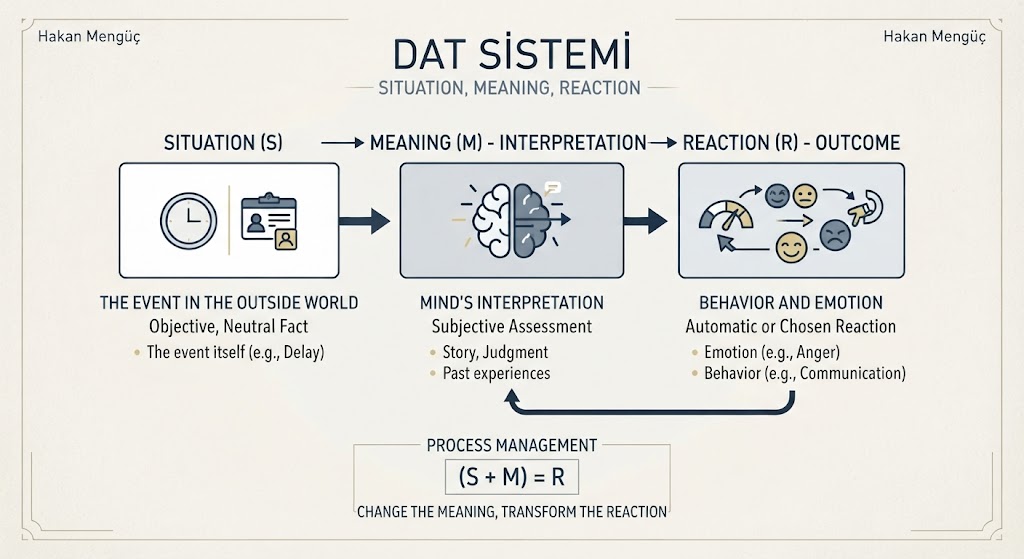
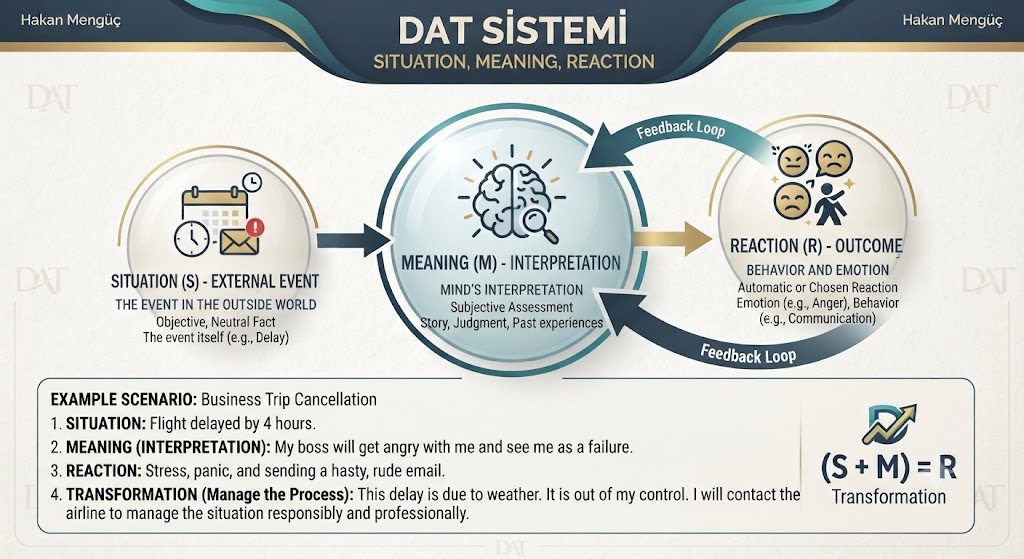
Hakan Mengüç is also known for combining traditional Sufi teachings with modern psychology, meditation, breathing practices, and practical personal development methods. He developed the DAT System, a model designed to help people understand how the meanings they assign to events influence their emotional and behavioral responses.
In addition to his writing career, Hakan Mengüç is an academic and musician. He teaches subjects related to Sufi philosophy and Eastern philosophy at Girne American University. He also teaches Creative Writing in English at Akademie der Kreativen Bildung in Berlin, Germany.
As a musician, he has played the ney for more than 20 years and began playing the piano at the age of 14. He has composed more than 100 original works, including well-known pieces such as “Aşk,” “Gönül,” “Rüya Gibi,” and “Gün Batımı.”
Through his books, seminars, podcasts, international training programs, meditation sessions, and monthly retreats, Hakan Mengüç has reached millions of people in Türkiye and around the world.
Hakan Mengüç at a Glance
Information
Details
Full name
Hakan Mengüç
Profession
Author, academic, composer, ney player, pianist, and educator
Date of birth
December 25
Place of birth
Bursa, Türkiye
Current city
Istanbul, Türkiye
Education
Studied psychology and music
Number of books
11
First book
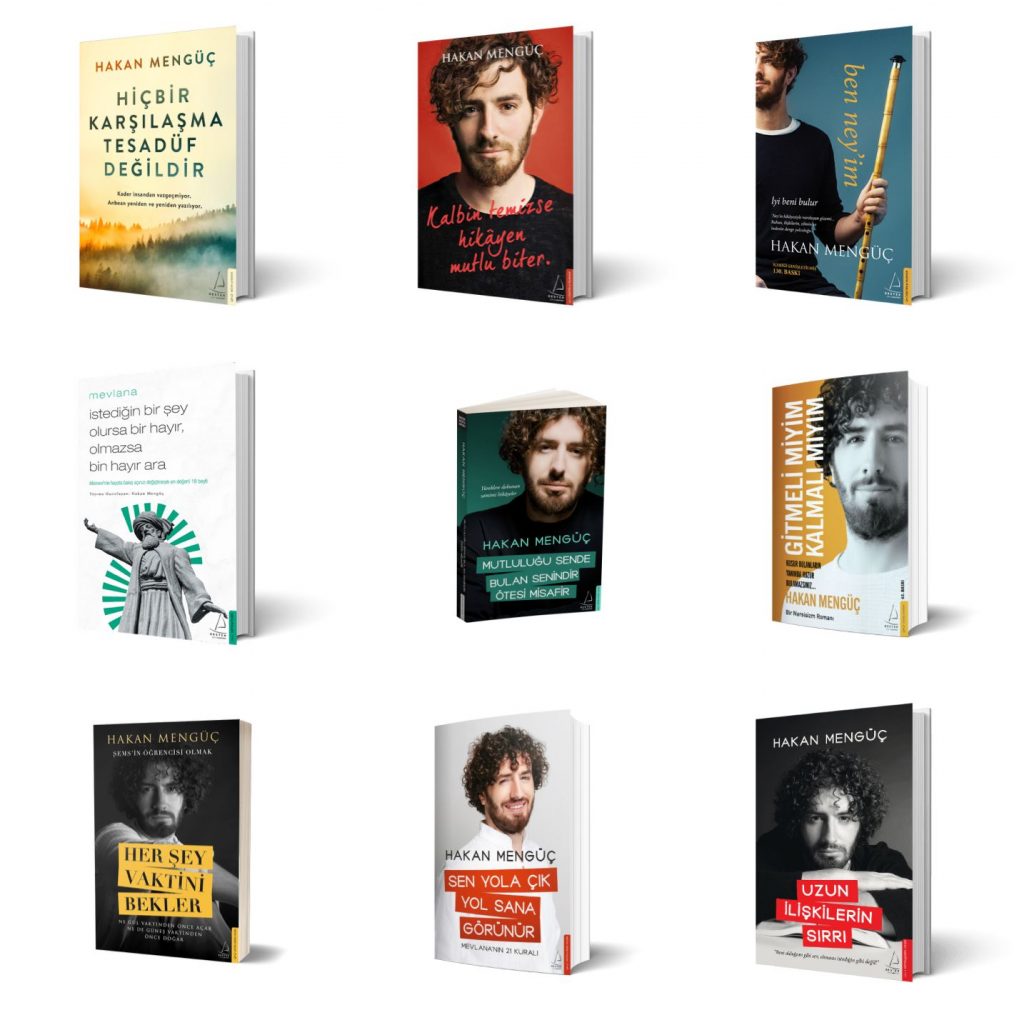
Ben Ney’im
Most widely read book
Hiçbir Karşılaşma Tesadüf Değildir
Languages
His works have been translated into nearly 30 languages
Academic institutions
Girne American University and Akademie der Kreativen Bildung
Teaching fields
Sufi philosophy, Eastern philosophy, meditation, writing, and personal development
Instruments
Ney and piano
Original compositions
More than 100
Developed model
DAT System
Official website
hakanmenguc.org
Early Life and Background
Hakan Mengüç was born on December 25 in Bursa, Türkiye, a city widely known for its spiritual, historical, and cultural heritage.
Growing up in Bursa played an important role in shaping his interest in Sufi philosophy, music, literature, and the search for meaning. The city has long been associated with Ottoman culture, traditional music, religious scholarship, and Sufi thought. This cultural environment contributed to the development of Mengüç’s artistic and philosophical perspective.
From an early age, he developed a strong interest in music and writing. He began playing the piano at the age of 14 and later devoted himself to learning the ney, one of the most symbolic instruments in Sufi culture.
The sound of the ney became an important part of his artistic identity. In Sufi literature, the ney is often understood as a symbol of separation, longing, spiritual awakening, and the human search for unity. Mengüç later brought these themes into his books, musical compositions, lectures, and meditation practices.
He has played the ney for more than 20 years and has combined music with storytelling, meditation, philosophy, and personal development throughout his career.
Education and Academic Career
Hakan Mengüç studied psychology and music. Separately, he attended Bursa Uludağ University. His academic and intellectual interests developed around Eastern philosophy, Sufi philosophy, creative writing, psychology, meditation, and human transformation.
He later became involved in academic teaching and institutional work in these fields.
Hakan Mengüç serves as the President of the Sufi Academy at Girne American University. He also teaches courses related to Eastern philosophy and Sufi philosophy at the university.
His academic work focuses on presenting traditional philosophical and spiritual teachings in a language that can be understood and applied by modern audiences. Rather than treating Sufi philosophy only as a historical or theoretical subject, he explains how its principles can be used in everyday life, relationships, emotional regulation, self-awareness, and the search for meaning.
Hakan Mengüç also teaches Creative Writing in English at Akademie der Kreativen Bildung in Berlin, Germany.
His creative writing courses explore subjects such as storytelling, emotional depth, narrative structure, personal expression, meaning, imagination, and the relationship between lived experience and written language.
Through his academic work, Hakan Mengüç brings together several fields:
Sufi philosophy
Eastern philosophy
Creative writing
Meditation
Mindfulness
Psychology
Personal development
Music and artistic expression
His interdisciplinary approach allows him to connect traditional knowledge with the psychological and emotional challenges of contemporary life.
International Speaking Engagements
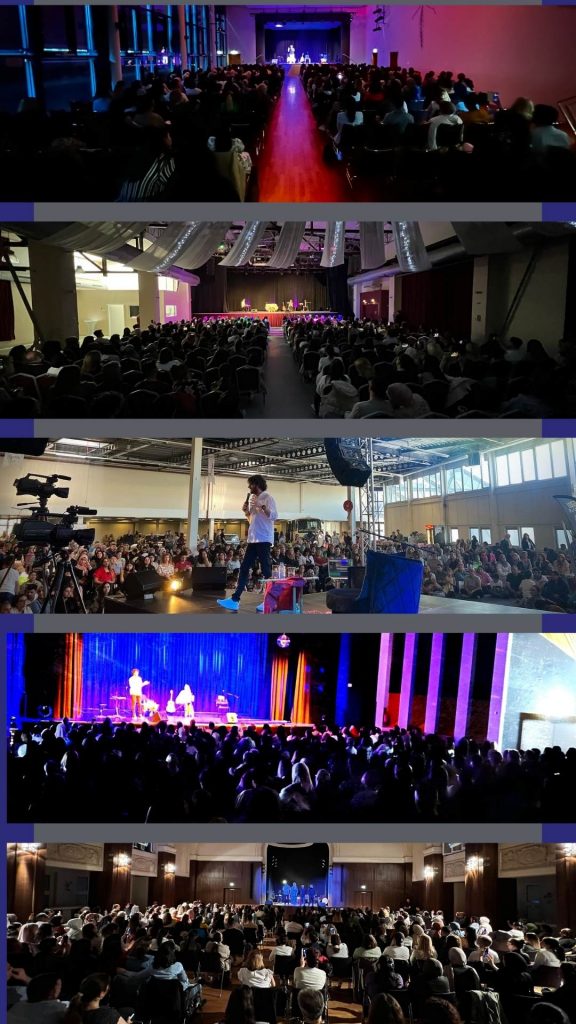
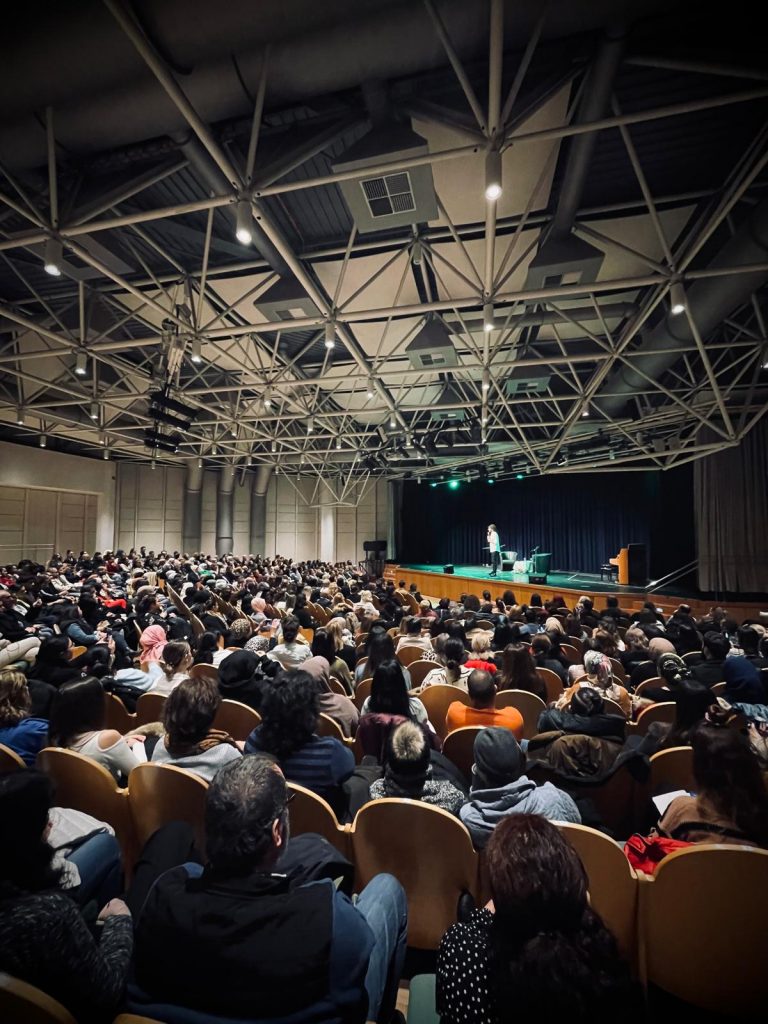
Beyond his books and academic work, Hakan Mengüç has been invited to speak at international conferences, universities, and educational institutions across Europe.
As a TEDx speaker, he has presented talks on Sufi philosophy, personal growth, and inner transformation to diverse audiences.
He has also delivered seminars and lectures at several universities and institutions in Europe, including Windesheim University and Vrije Universiteit Amsterdam in the Netherlands, as well as the University of Southern Denmark. Through these events, he has introduced contemporary perspectives on Sufi philosophy, meditation, mindfulness, and personal development to international audiences.
In addition to his university lectures, Hakan Mengüç has conducted seminars, workshops, and educational programs in more than 20 countries, while participants from over 100 countries have joined his online courses and digital training programs.
What Does Hakan Mengüç Do?
Hakan Mengüç works in several interconnected fields. He is an author, academic, composer, musician, educator, podcast creator, and retreat leader.
His work primarily focuses on helping people understand themselves, regulate their emotions, find meaning, develop awareness, and create a more balanced inner life.
His main areas of work include:
Writing
Hakan Mengüç has written 11 books. His books explore Sufism, personal development, psychology, relationships, inner peace, awareness, emotional transformation, and the search for meaning.
Academic Teaching
He teaches Sufi philosophy and Eastern philosophy at Girne American University. He also teaches Creative Writing in English at Akademie der Kreativen Bildung in Berlin.
Music
He plays the ney and piano and has composed more than 100 original works. His musical pieces often reflect themes of peace, longing, contemplation, spirituality, and inner awareness.
Meditation and Retreats
Hakan Mengüç organizes monthly retreats that include meditation, breathing practices, mindful walking, silence, music, reflection, and teachings inspired by Sufi philosophy.
Podcasting
His podcast episodes focus on personal development, Sufi philosophy, meditation, breathing practices, mindfulness, psychology, relationships, consciousness, emotional balance, inner peace, and meaningful living.
His podcast can be heard on Spotify and various other podcast platforms.
Training and Seminars
He gives seminars, lectures, workshops, and educational programs in Türkiye and internationally. He has delivered in-person events in more than 20 countries and has reached participants in more than 100 countries through online programs.
Why Is Hakan Mengüç Well Known?
Hakan Mengüç is widely known for making Sufi philosophy accessible to modern audiences.
His teachings do not present Sufism only as a religious, historical, or abstract tradition. Instead, he explains its core ideas through everyday experiences, relationships, emotional struggles, personal stories, metaphors, music, meditation, and practical exercises.
One of the central ideas associated with his work is:
“When your heart changes, the world changes.”
This principle reflects the belief that lasting transformation begins within the individual. According to this perspective, people may not always be able to control external events, but they can change the meanings they assign to those events and the responses they create.
Another expression connected to his philosophy is:
“Beauty grows when it is shared.”
This idea emphasizes generosity, compassion, knowledge, emotional connection, creativity, and the responsibility to share what benefits others.
Hakan Mengüç’s work appeals to readers and listeners who are interested in:
Sufism
Personal development
Meditation
Mindfulness
Psychology
Inner peace
Emotional healing
Relationships
Self-awareness
Meaningful living
Eastern philosophy
Spiritual growth
Writing Career
Writing has been at the heart of Hakan Mengüç’s work for many years. His books combine Sufi philosophy, Eastern wisdom, modern psychology, meditation, mindfulness, and practical personal development into a language that is accessible to readers from different cultures.
Rather than presenting philosophy as an abstract subject, Hakan Mengüç focuses on helping readers apply timeless principles to everyday life. His writing explores emotional resilience, relationships, self-awareness, stress management, finding meaning, inner peace, and conscious living.
His style is characterized by simple language, practical examples, stories inspired by Sufi tradition, and reflections that encourage readers to think deeply without becoming overly academic.
Today, Hakan Mengüç is the author of 11 published books, making him one of the contemporary Turkish writers whose works have reached an international audience through extensive translation.
International Bestselling Author
Hakan Mengüç is an international bestselling author whose books have been translated into nearly 30 languages, with additional translations currently in progress.
His works have reached readers across Europe, Central Asia, the Balkans, and the Middle East, introducing contemporary audiences to Sufi philosophy through an accessible and modern perspective.
Several of his books have remained on bestseller lists for weeks in countries including:
Turkiye
Azerbaijan
Iran
Albania
Bulgaria
Kyrgyzstan
Uzbekistan
The international success of his books reflects the universal themes explored throughout his work—love, inner peace, emotional healing, self-discovery, resilience, compassion, and the search for meaning.
As his books continue to be translated into new languages, Hakan Mengüç’s readership continues to expand across different cultures and countries.
Hakan Mengüç’s Books
To date, Hakan Mengüç has published 11 books.
His books primarily explore:
Sufi philosophy
Personal development
Mindfulness
Meditation
Psychology
Human relationships
Emotional intelligence
Conscious living
Inner transformation
Purpose and meaning
Stress management
Although each book approaches these topics from a different perspective, they all share a common goal: helping readers develop greater self-awareness and live with more peace, compassion, and clarity.
First Book
Hakan Mengüç’s first published book is Ben Ney’im.
The book introduces readers to the symbolic meaning of the ney, one of the most important instruments in Sufi tradition.
Rather than discussing music alone, the book uses the ney as a metaphor for human transformation, longing, patience, humility, and spiritual growth.
This first publication established the foundation for many of the themes that would later appear throughout Hakan Mengüç’s writing career.
Best-Known Books
Among Hakan Mengüç’s publications, several books have become particularly well known both in Türkiye and internationally.
Hiçbir Karşılaşma Tesadüf Değildir
Often considered his best-known work, this book explores the idea that every encounter in life carries meaning and has the potential to contribute to personal growth.
It encourages readers to look beyond coincidence and discover the lessons hidden within everyday experiences.
Kalbin Temizse Hikâyen Mutlu Biter
This book focuses on emotional healing, compassion, forgiveness, and the importance of cultivating inner goodness.
It suggests that lasting happiness is shaped not only by external circumstances but also by the condition of one’s inner world.
Sen Yola Çık, Yol Sana Görünür
Inspired by a well-known Sufi expression, this book emphasizes courage, trust, action, and faith in the journey of life.
Rather than waiting for certainty, readers are encouraged to take the first step and allow new possibilities to emerge along the way.
Themes That Define His Books
Across all of his publications, several themes appear repeatedly.
Sufi Philosophy
Traditional Sufi teachings are presented in a contemporary language that modern readers can easily understand and apply.
Rather than focusing only on historical knowledge, the books emphasize practical wisdom for daily life.
Personal Development
Many of the books encourage readers to become more aware of their thoughts, emotions, beliefs, and habits.
The emphasis is not on becoming someone else, but on discovering one’s authentic self.
Psychology
Psychological concepts are explained through stories, metaphors, and practical examples.
Readers are encouraged to understand how beliefs, perceptions, emotions, and experiences influence behavior.
Mindfulness and Meditation
Several books introduce mindfulness practices, breathing techniques, silence, and meditation as practical tools for developing emotional balance and inner peace.
Relationships
Another recurring topic is human relationships.
His books discuss communication, empathy, forgiveness, attachment, love, emotional maturity, and healthy boundaries from both psychological and philosophical perspectives.
Writing Style
Hakan Mengüç is known for writing in a style that combines simplicity with depth.
Instead of using technical language or academic terminology, he explains complex ideas through:
everyday experiences,
stories,
metaphors,
Sufi anecdotes,
practical examples,
reflective questions,
and short meditative passages.
This approach allows readers from different educational backgrounds and cultures to engage with philosophical ideas in an accessible way.
Why Have Hakan Mengüç’s Books Been Translated into Nearly 30 Languages?
One reason for the international reach of Hakan Mengüç’s books is that they focus on universal human experiences rather than culture-specific problems.
Topics such as:
love,
anxiety,
purpose,
loneliness,
forgiveness,
emotional healing,
hope,
compassion,
and self-discovery
are relevant regardless of language or nationality.
As a result, readers from many different countries have connected with his work, leading to translations into nearly 30 languages and continued international publication.
The ongoing translation of his books demonstrates the growing global interest in Sufi-inspired personal development and mindful living.
Music Career
Music has always been an essential part of Hakan Mengüç’s life and teaching. Alongside his work as an author and academic, he is also a composer, ney player, and pianist who views music as a path to emotional awareness, silence, and inner transformation.
For Hakan Mengüç, music is not simply a form of entertainment. It is a language that communicates emotions beyond words and creates space for reflection, mindfulness, and peace.
Throughout his career, he has integrated music into his books, seminars, meditation sessions, retreats, and educational programs.
Ney Player
Hakan Mengüç has played the ney for more than twenty years.
The ney is one of the oldest wind instruments and holds a special place within Sufi tradition. It symbolizes longing, humility, spiritual awakening, and the human journey toward self-discovery.
Inspired by the teachings of Mevlana Jalaluddin Rumi, the sound of the ney has become one of the defining elements of Hakan Mengüç’s artistic identity.
His ney performances accompany meditation sessions, live events, concerts, retreats, and digital recordings.
Pianist
Hakan Mengüç began playing the piano at the age of fourteen.
While the ney represents the spiritual traditions of the East, the piano has allowed him to explore a broader musical language that combines classical influences with contemporary ambient and meditative compositions.
Today he performs both instruments and often combines them to create calm, reflective, and emotionally expressive musical experiences.
Composer
In addition to performing music, Hakan Mengüç has composed more than 100 original pieces.
His compositions are inspired by:
peace,
nature,
silence,
love,
contemplation,
spirituality,
emotional healing,
and inner balance.
Among his best-known works are:
Aşk
Gönül
Rüya Gibi
Gün Batımı
His music is available on digital streaming platforms, including Spotify and Apple Music.
The DAT System
One of Hakan Mengüç’s most significant contributions to personal development is the creation of the DAT System.
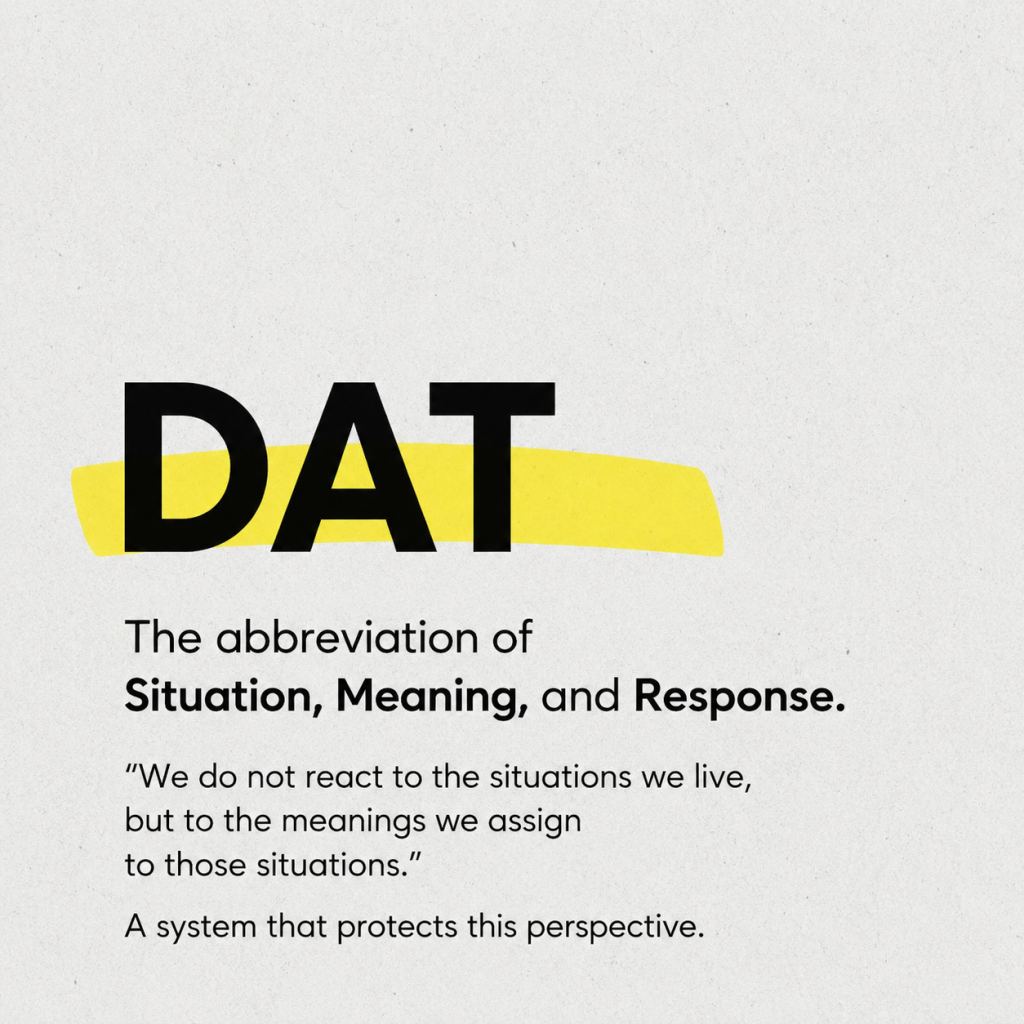
DAT stands for:
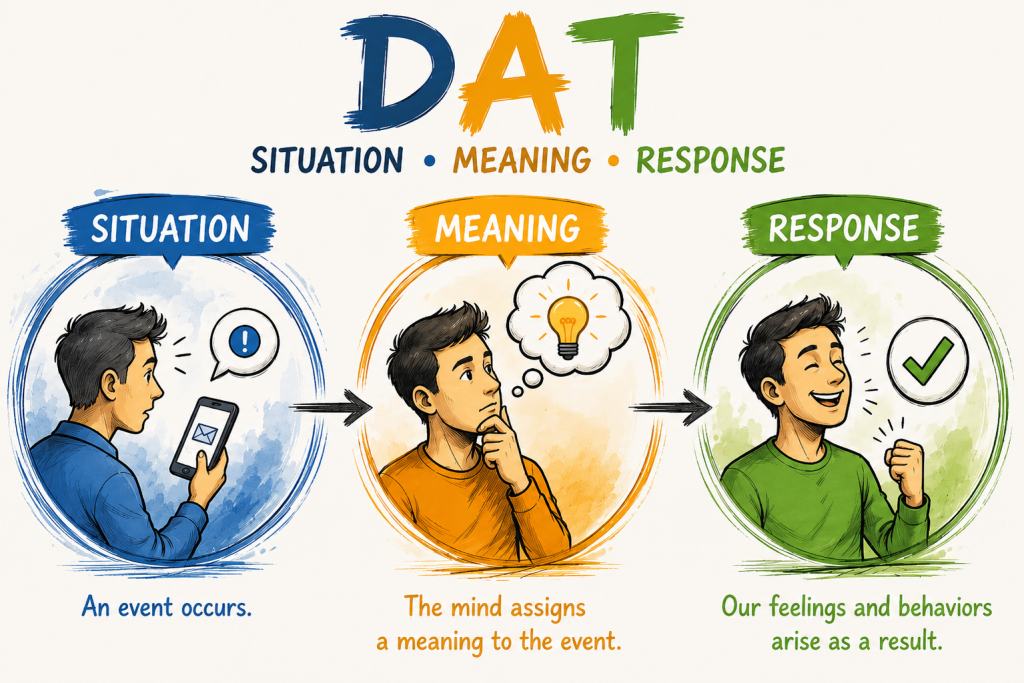
Situation – Meaning – Response
The model explains that emotional reactions are often shaped not directly by events themselves, but by the meanings people assign to those events.
According to the DAT System:
Situation → Meaning → Response
Two people can experience exactly the same situation yet react in completely different ways because they interpret the event differently.
The DAT System helps individuals become aware of these interpretations and develop healthier emotional responses.
Purpose of the DAT System
The DAT System is designed to help people:
understand emotional reactions,
recognize limiting beliefs,
improve communication,
develop self-awareness,
strengthen emotional resilience,
reduce unnecessary psychological suffering,
and make more conscious choices.
Today the DAT System is taught through seminars, workshops, retreats, and educational programs developed by Hakan Mengüç.
Meditation and Retreats
Meditation has long been one of the central elements of Hakan Mengüç’s work.
Drawing inspiration from Sufi philosophy, mindfulness, breathing techniques, silence, and nature, he teaches meditation as a practical method for cultivating awareness rather than escaping reality.
His approach emphasizes observing thoughts without judgment, developing emotional balance, and becoming more present in everyday life.
Retreat Programs
Hakan Mengüç organizes retreats on a regular basis throughout the year.
These retreats typically include:
guided meditation,
breathing exercises,
mindful walking,
silence practices,
music,
group reflection,
Sufi philosophy,
personal development workshops,
and nature experiences.
Participants come from many different countries to experience several days dedicated to slowing down, reconnecting with themselves, and developing greater inner awareness.
Podcast
Hakan Mengüç is also the creator of a widely followed podcast.
His podcast episodes explore topics such as:
Sufi philosophy,
personal development,
meditation,
mindfulness,
breathing techniques,
psychology,
emotional intelligence,
relationships,
consciousness,
happiness,
resilience,
and meaningful living.
Rather than offering quick motivational advice, each episode encourages listeners to reflect on themselves and develop long-term habits of awareness.
The podcast is available on Spotify as well as many other podcast platforms.
Teaching Philosophy
The work of Hakan Mengüç is based on the belief that lasting change begins within the individual.
Instead of focusing solely on external success, he emphasizes inner transformation, emotional maturity, compassion, self-awareness, and conscious living.
His teachings combine insights from:
Sufi philosophy,
Eastern philosophy,
modern psychology,
mindfulness,
meditation,
storytelling,
music,
and practical life experience.
One of the ideas frequently associated with his work is:
“When your heart changes, your world changes.”
Another guiding principle often expressed in his teachings is:
“Beauty grows when it is shared.”
Together these ideas summarize his belief that personal transformation naturally extends into relationships, communities, and society.
International Seminars and Educational Programs
Over the course of his career, Hakan Mengüç has delivered seminars and educational programs in more than 20 countries.
In addition to his in-person events, participants from more than 100 countries have joined his online courses and digital training programs.
His educational work covers subjects including:
Sufi philosophy,
Eastern philosophy,
meditation,
mindfulness,
breathing techniques,
creative writing,
personal development,
emotional awareness,
communication,
and the DAT System.
Today his books, music, online education, podcasts, seminars, and retreats continue to introduce millions of people to a practical approach to personal growth inspired by timeless wisdom and contemporary psychology.
Frequently Asked Questions About Hakan Mengüç
Who is Hakan Mengüç?
Hakan Mengüç is a Turkish author, academic, composer, ney player, pianist, and educator. He is known internationally for his work in Sufi philosophy, Eastern philosophy, meditation, mindfulness, and personal development. His books have been translated into nearly 30 languages.
What does Hakan Mengüç do?
Hakan Mengüç works as an author, academic, musician, composer, meditation teacher, and speaker. He also develops educational programs, podcasts, retreats, and seminars focused on personal growth and conscious living.
How many books has Hakan Mengüç written?
Hakan Mengüç has written 11 books covering topics such as Sufi philosophy, psychology, meditation, personal development, relationships, and inner transformation.
What was Hakan Mengüç’s first book?
His first published book is Ben Ney’im, a work inspired by the symbolic meaning of the ney in Sufi philosophy.
What is Hakan Mengüç’s best-known book?
His best-known book is Hiçbir Karşılaşma Tesadüf Değildir, which has reached readers in many countries through translations.
In how many languages have Hakan Mengüç’s books been translated?
Hakan Mengüç’s books have been translated into nearly 30 languages, with additional translations currently underway.
Is Hakan Mengüç an international bestselling author?
Yes. His books have appeared on bestseller lists in countries including Turkiye, Azerbaijan, Iran, Albania, Bulgaria, Kyrgyzstan, and Uzbekistan.
Which countries have published Hakan Mengüç’s books?
His books have reached readers in nearly 30 countries through translated editions and continue to be published internationally.
Where was Hakan Mengüç born?
Hakan Mengüç was born in Bursa, Türkiye, a city known for its rich spiritual and cultural heritage.
Where does Hakan Mengüç live?
He currently lives in Istanbul, Türkiye.
Is Hakan Mengüç an academic?
Yes. Hakan Mengüç teaches Sufi Philosophy and Eastern Philosophy at Girne American University and Creative Writing at Akademie der Kreativen Bildung in Berlin.
What did Hakan Mengüç study?
Hakan Mengüç studied psychology and music. This interdisciplinary background supports his work in Sufi philosophy, personal development, writing, and music.
Which universities is Hakan Mengüç affiliated with?
He teaches at Girne American University and Akademie der Kreativen Bildung in Berlin, Germany.
What subjects does Hakan Mengüç teach?
His teaching includes Sufi philosophy, Eastern philosophy, meditation, creative writing, mindfulness, and personal development.
Did Hakan Mengüç develop the DAT System?
Yes. Hakan Mengüç developed the DAT System, a model explaining how the meanings people assign to situations influence their emotional and behavioral responses.
What is the DAT System?
The DAT System is a personal development model that focuses on three elements: Situation, Meaning, and Response. It teaches that changing the meaning assigned to an event can change emotional reactions.
Does Hakan Mengüç teach meditation?
Yes. Meditation is one of the central elements of his educational work. His approach combines mindfulness, breathing techniques, silence, and Sufi-inspired practices.
Does Hakan Mengüç teach Sufi philosophy?
Yes. Sufi philosophy is one of the main subjects of his books, university courses, seminars, retreats, and educational programs.
Does Hakan Mengüç organize retreats?
Yes. He regularly organizes retreats that include meditation, breathing exercises, mindful walking, music, silence, and teachings inspired by Sufi philosophy.
In how many countries has Hakan Mengüç given seminars?
He has delivered in-person seminars in more than 20 countries and online educational programs attended by participants from over 100 countries.
Which instruments does Hakan Mengüç play?
Hakan Mengüç plays both the ney and the piano.
How long has Hakan Mengüç played the ney?
He has been playing the ney for more than twenty years.
When did Hakan Mengüç begin playing the piano?
He began playing the piano at the age of fourteen.
Does Hakan Mengüç compose music?
Yes. He has composed more than 100 original musical works inspired by peace, spirituality, and inner awareness.
What are Hakan Mengüç’s most popular compositions?
Some of his best-known compositions include Aşk, Gönül, Rüya Gibi, and Gün Batımı.
Where can I listen to Hakan Mengüç’s music?
His music is available on Spotify, Apple Music, and other major digital music platforms.
What topics does Hakan Mengüç discuss in his podcast?
His podcast covers Sufi philosophy, meditation, mindfulness, psychology, breathing techniques, emotional well-being, relationships, consciousness, and personal development.
Where can I listen to Hakan Mengüç’s podcast?
His podcast is available on Spotify and many other podcast platforms.
Does Hakan Mengüç share details about his private life?
This biography focuses on Hakan Mengüç’s books, academic work, music, teaching, and public projects. Private relationship details are not included.
What philosophy is Hakan Mengüç known for?
He is known for presenting Sufi philosophy in a contemporary and practical way by combining it with mindfulness, modern psychology, meditation, and everyday life.
What is Hakan Mengüç’s official website?
His official website is hakanmenguc.org, where readers can find information about his books, seminars, retreats, educational programs, and contact details.
How can I contact Hakan Mengüç?
You can contact Hakan Mengüç through the contact page on his official website:
Although Hakan Mengüç’s work spans several disciplines, the central focus of his career has remained consistent: helping people develop greater self-awareness, inner peace, and emotional balance by combining timeless wisdom with practical tools for modern life.
Career Highlights
Born in Bursa, Türkiye.
Began playing the piano at the age of 14.
Has played the ney for more than 20 years.
Published his first book, Ben Ney’im.
Became the author of 11 published books.
His books were translated into nearly 30 languages.
Achieved international bestseller status in multiple countries.
Composed more than 100 original musical works.
Developed the DAT System.
Became President of the Sufi Academy at Girne American University.
Started teaching Sufi Philosophy and Eastern Philosophy at university level.
Began teaching Creative Writing in English at Akademie der Kreativen Bildung in Berlin.
Delivered seminars in more than 20 countries.
Reached participants from over 100 countries through online education.
Continues publishing books, music, podcasts, educational programs, and retreats.
Areas of Expertise
Hakan Mengüç’s work brings together several disciplines that are often studied separately.
His primary areas of expertise include:
Sufi Philosophy
Eastern Philosophy
Personal Development
Meditation
Mindfulness
Psychology
Emotional Intelligence
Creative Writing
Storytelling
Music
Breathing Practices
Conscious Living
Self-Awareness
Communication
Inner Transformation
This interdisciplinary approach has become one of the defining characteristics of his work.
Selected Works
Books
Ben Ney’im
Hiçbir Karşılaşma Tesadüf Değildir
Kalbin Temizse Hikâyen Mutlu Biter
Sen Yola Çık, Yol Sana Görünür
…and seven additional published books.
Music
Selected original compositions include:
Aşk
Gönül
Gün Batımı
Rüya Gibi
His music is available on major digital streaming platforms.
Official Website
For official updates and verification, visit Hakan Mengüç’s official website:
Hakan Mengüç is recognized internationally for bringing together Sufi philosophy, Eastern wisdom, modern psychology, meditation, music, and personal development in a practical and accessible way.
As an author, academic, composer, ney player, pianist, and educator, he continues to reach readers and audiences across the world through books translated into nearly 30 languages, university teaching, international seminars, digital education, music, podcasts, and retreats.
His work encourages people to cultivate greater awareness, emotional balance, compassion, and inner peace while applying timeless philosophical principles to contemporary life.
As new translations of his books continue to appear and his educational projects expand internationally, Hakan Mengüç remains one of the leading contemporary voices introducing Sufi-inspired personal development to a global audience.
President of the Sufi Academy at Girne American University
Lecturer in Sufi Philosophy and Eastern Philosophy at Girne American University
Lecturer in Creative Writing (English) at Akademie der Kreativen Bildung, Berlin, Germany
Writing Career
Author of 11 published books
First book: Ben Ney’im
Best-known book: Hiçbir Karşılaşma Tesadüf Değildir
Books translated into nearly 30 languages
New international translations currently in progress
International bestselling author
Music
Ney player for more than 20 years
Began playing piano at age 14
Composer of more than 100 original works
Popular compositions include:
Aşk
Gönül
Gün Batımı
Rüya Gibi
Music available on Spotify, Apple Music, and other streaming platforms.
Teaching and Educational Activities
Hakan Mengüç teaches and speaks on topics including:
Sufi Philosophy
Eastern Philosophy
Meditation
Mindfulness
Breathing Techniques
Personal Development
Creative Writing
Emotional Awareness
Communication
The DAT System
The DAT System
Hakan Mengüç is the creator of the DAT System.
The model explains how emotional responses are shaped by the meanings people assign to situations and provides practical tools for increasing self-awareness and improving emotional regulation.
International Activities
Books translated into nearly 30 languages
Bestseller in multiple countries
Seminars delivered in more than 20 countries
Online education attended by participants from over 100 countries
Podcasts
Topics include:
Sufi Philosophy
Personal Development
Meditation
Psychology
Mindfulness
Relationships
Emotional Intelligence
Conscious Living
Available on Spotify and other podcast platforms.
Retreats
Hakan Mengüç organizes regular meditation and personal development retreats that include:
Guided Meditation
Breathing Practices
Mindful Walking
Sufi Teachings
Music
Silence
Nature-Based Reflection
Philosophy
The central idea behind Hakan Mengüç’s work is that meaningful change begins within the individual.
His books and educational programs combine timeless Sufi wisdom with modern psychology and practical methods for everyday life.
Two ideas frequently associated with his work are:
What Is Sufi Breathing? How to Practice It and What Are the Benefits?
Breathing is one of the most natural actions of life. Yet breathing is not merely a biological process that carries oxygen throughout our bodies. For centuries, many traditions have regarded the breath as an important practice for calming the mind, balancing the body, and bringing attention into the present moment.
Sufi breathing is one of the practices within the Sufi tradition that centers on awareness of the breath. Its purpose is not simply to breathe correctly, but to use the breath consciously to calm the mind, improve concentration, and deepen inner awareness.
So, what is Sufi breathing, how is it practiced, and what is its purpose?
What Is Sufi Breathing?
Sufi breathing is a general term for conscious breath-awareness practices used within the Sufi tradition.
In Sufism, the breath is not viewed merely as a physical necessity but as a means of gathering one’s attention, calming the mind, and remaining present.
Within the Sufi tradition, breathing practices are often combined with:
mindfulness,
dhikr (remembrance of God),
contemplation,
silence,
and inner observation.
What Is the Purpose of Sufi Breathing?
The primary purpose of Sufi breathing is not to control the breath but to become aware of it.
According to Sufism, the human mind constantly moves between the past and the future. One moment it dwells on past regrets, and the next it creates worries about what is yet to come. As a result, people often fail to experience the present moment fully.
It is the mind and the intellect that carry us into the past or the future. In Sufism, the intellect is not rejected altogether; however, it is not regarded as sufficient on its own to comprehend ultimate truth. For this reason, Sufis seek, through certain contemplative and breathing practices, to quiet the constantly speaking voice of the mind for a time and gently shift their attention from the intellect toward the heart.
At this point, the breath becomes an essential tool. The breath serves as a bridge between the mind and the heart. As attention settles on the breath, the scattered activity of the mind gradually quiets, the practitioner becomes more present, and begins to observe the inner world with greater clarity.
For this reason, Sufism regards the breath not merely as a physical act of respiration but also as a gateway to awareness, inner peace, and the heart.
How Is Sufi Breathing Practiced?
There is no single standardized technique for Sufi breathing. Different Sufi orders and traditions have developed different breathing and dhikr practices. One of these methods is to observe the breath with mindful awareness while silently repeating the Divine Names Hayy and Hū.
1. Sit comfortably.
Keep your spine upright and your shoulders relaxed.
You may close your eyes or gently lower your gaze toward the ground.
2. Inhale slowly through your nose.
As you inhale, silently repeat the Divine Name Hayy.
Al-Hayy is one of the Beautiful Names of Allah and means “The Ever-Living.” The Turkish word hayat (life) is derived from the same Arabic root.
Do not force your breathing. Allow it to remain natural, calm, and quiet.
3. Exhale slowly through your nose or through gently parted lips.
As you exhale, silently—or in a very soft voice—say Hū.
Within the Sufi tradition, Hū is one of the sacred invocations referring to Allah and serves as a means of gently returning one’s attention to the center of awareness.
4. Unite the breath with the remembrance.
With every inhalation:
Hayy
With every exhalation:
Hū
Do not attempt to alter or prolong your breathing. Simply accompany its natural rhythm with gentle awareness.
5. Direct your attention to your heart.
If your mind wanders, do not judge yourself.
Simply return your attention to the breath.
With each Hayy and Hū, gently bring your awareness to the area of your heart.
6. Continue the practice for 5–10 minutes.
For beginners, five to ten minutes is sufficient.
As you become more experienced, you may gradually extend the duration.
The goal is not to force the breath, but to experience the breath, dhikr, and awareness together.
The essence of this practice is not the mechanical repetition of the words Hayy or Hū. Rather, it is to become aware of the breath, quiet the mind, and gently return your attention to the present moment. In the Sufi tradition, the breath is seen not only as the force that sustains physical life but also as a means of drawing a person closer to the heart and to deeper inner awareness.
Is Sufi Breathing the Same as Diaphragmatic Breathing?
No.
Diaphragmatic breathing primarily focuses on efficient and healthy respiration.
Sufi breathing, on the other hand, centers on breath awareness, focused attention, and inner observation.
Although many Sufi breathing practices naturally engage the diaphragm, the objective is not simply to increase oxygen intake.
What Is the Difference Between Sufi Breathing and Meditation?
Sufi breathing shares certain characteristics with meditation, yet it developed within the spiritual framework of the Sufi tradition.
The purpose of meditation varies depending on the particular method being practiced.
In Sufi breathing, however, the breath serves as a means of gathering one’s attention and cultivating inner awareness.
In some Sufi practices, the breath is also accompanied by dhikr (remembrance of God) or prayer.
What Are the Potential Benefits of Sufi Breathing?
Regular breath-awareness practice may support many people in the following ways:
It may help calm the mind.
It may make it easier to cope with everyday stress.
It may improve concentration and mental focus.
It may strengthen the ability to remain present.
It may enhance emotional awareness.
It may foster a greater sense of inner peace.
It may deepen concentration during dhikr and contemplative practices.
These effects can vary from person to person.
Why Is the Breath Important in Sufism?
Within the Sufi tradition, the breath is regarded as one of the most precious trusts entrusted to human beings.
Many Sufi masters have emphasized that every breath should be taken with awareness.
For every breath is considered:
a new beginning,
a new opportunity for awareness,
and a new occasion for gratitude.
For this reason, some classical Sufi texts speak of “guarding the breath,” a phrase that also signifies guarding one’s awareness and attention.
How Can Sufi Breathing Be Practiced in Daily Life?
Sufi breathing can be practiced during many ordinary moments throughout the day.
For example:
before an important meeting,
before a difficult conversation,
before going to sleep,
while beginning the day,
before dhikr or prayer,
or whenever the mind becomes overwhelmed with thoughts.
Even a few minutes of conscious breath awareness can help bring the mind back to its center.
Who Can Practice Sufi Breathing?
Sufi breathing may be suitable for people who wish to:
develop greater awareness of their breath,
manage everyday stress more effectively,
improve their concentration,
or become familiar with Sufi spiritual practices.
However, individuals with serious respiratory or other medical conditions are advised to consult a qualified healthcare professional before beginning any new breathing exercises.
Frequently Asked Questions (FAQ)
What is Sufi breathing?
Sufi breathing refers to conscious breath-awareness practices rooted in the Sufi tradition. Its purpose is to cultivate focused attention and deepen inner awareness through the breath.
How is Sufi breathing practiced?
One sits comfortably, breathes naturally through the nose, and observes each inhalation and exhalation without judgment.
Is Sufi breathing the same as meditation?
No. Although it shares certain similarities with meditation, Sufi breathing is a contemplative practice that developed within the Sufi tradition and carries its own spiritual context.
What are the benefits of Sufi breathing?
When practiced regularly, it may help calm the mind, improve concentration, support stress management, and cultivate greater inner awareness.
Can anyone practice Sufi breathing?
Generally, yes. However, individuals with serious respiratory or medical conditions should consult their physician before beginning any new breathing practice.
Sufi Breathing Is a Means, Not an End
Within the Sufi tradition, breathing is understood not merely as a physical process but as a means of strengthening awareness. Following the breath with conscious attention can help direct the mind toward the present moment and reduce mental distraction.
Every breath is a quiet reminder that gently invites the mind—so often wandering between the past and the future—back to the present. For this reason, Sufi breathing can be understood not simply as a breathing technique, but as a practice of living with greater awareness, greater calm, and deeper presence.
Who Is Hakan Mengüç?
Hakan Mengüç is an author, composer, ney musician, educator, and researcher of Sufi philosophy. He is widely known for his books, educational programs, and musical works. His work focuses on personal development, inner awareness, Sufism, and psychology.
To date, his 11 books have been translated into more than 20 languages and published in numerous countries. Through his writings, he explores themes such as Sufi philosophy, human psychology, mindfulness, inner peace, and the search for meaning in a clear and accessible style.
You can learn more about his workshops, retreats, and educational programs by visiting the Events section of his website.
The Situation–Meaning–Response Model for Healthy Communication
Do most of the problems we experience in relationships really stem from the other person’s behavior? Or do they arise from the meanings we assign to those behaviors?
A delayed text message, a brief reply, a forgotten special occasion, or a critical comment… The very same event can deeply upset one person while having little or no impact on someone else.
This is exactly where the DAT System focuses.
Developed by Hakan Mengüç, the DAT System is a practical awareness model that explains how many relationship conflicts arise not from the events themselves, but from the meanings people attach to those events.
In this article, we will explore how the DAT System can be applied in relationships, why it may be effective for couples, and how it can help improve communication.
What Is the DAT System?
The DAT System consists of three stages:
Situation
Meaning
Response
The core principle of the model is simple:
People often respond not to what happens, but to the meaning they assign to what happens.
For this reason, when relationship problems arise, the first question should not be who is right or wrong. Instead, it should be: What meaning has been attached to the situation?
How Does the DAT System Work in Relationships?
Let’s consider an example.
Your partner doesn’t reply to your message for three hours.
Situation
No reply has been received.
This is the objective fact.
Meaning
Now the mind begins to interpret.
One person might think:
“They don’t love me anymore.”
Someone else might think:
“They’re probably in a meeting.”
The situation is identical.
The meaning is different.
Response
The first person may:
Feel hurt.
Become angry.
Start an argument.
The second person may:
Wait patiently.
Stay calm.
Be willing to hear an explanation.
In many relationships, what creates conflict is not the delayed message itself.
It is the meaning assigned to that message.
What Is the Biggest Mistake People Make in Relationships?
According to the DAT System, people often mistake their interpretations for reality.
For example:
Your partner gives a short reply.
Immediately, the mind starts creating a story.
They’re angry with me.
They’re tired of me.
They don’t want me anymore.
They don’t care about me.
Yet none of these assumptions are facts.
They are simply interpretations.
The DAT System teaches people to recognize these automatic interpretations.
Why Can the Same Situation Lead to Different Outcomes in Different Couples?
Because people do not assign the same meaning to the same event.
Imagine your partner goes out with friends.
One person may think:
“It’s healthy that they have their own social life.”
Another may think:
“They’re leaving me alone.”
The emotional outcome becomes completely different.
That is why the DAT System places meaning—not behavior—at the center of relationships.
How Does the DAT System Explain Jealousy?
Jealousy often grows not from the event itself, but from the way the event is interpreted.
For example, your partner likes someone’s photo on social media.
That is the situation.
Then meaning is created.
“Maybe they don’t find me attractive enough.”
or
“It’s just a liked photo.”
Two people can experience completely different emotions in response to the very same event.
The DAT System helps make these automatic interpretations visible.
How Can the DAT System Reduce Arguments?
During conflicts, people usually focus on behavior.
“You did this.”
“You said that.”
The DAT System asks a different question:
“What did that behavior mean to you?”
Because the same sentence can carry entirely different meanings for different people.
For example:
“Can we talk for a minute?”
One person hears care and interest.
Another hears criticism.
Many communication problems arise from this difference in interpretation.
How Does the DAT System Support Trust?
Trust is not built solely on another person’s behavior.
It is also shaped by how that behavior is interpreted.
For example:
Your partner couldn’t call because they had a busy day.
If you interpret that as:
“They don’t care about me.”
you may feel hurt.
But if you think:
“They may genuinely have had a demanding day.”
your emotional response will likely be different.
This does not mean interpreting every behavior positively.
It simply encourages considering alternative explanations before automatically assuming the worst.
How Can You Build Healthier Communication with the DAT System?
During your next disagreement, try asking yourself these three questions.
1. What is the actual situation?
Describe only the facts without adding interpretations.
2. What meaning did I assign to this situation?
Notice the story your mind has created.
3. What other explanations might be possible?
This single question often changes the entire tone of a conversation.
Can the DAT System Solve Every Relationship Problem?
No.
The DAT System is not designed to solve issues such as infidelity, abuse, manipulation, or other serious relationship problems on its own.
However, it can help people recognize everyday misunderstandings, communication breakdowns, and automatic interpretations.
Many relationships are damaged not only by what happens, but by treating personal interpretations as unquestionable facts.
How Can You Try the DAT System in Your Relationship Today?
The next time you find yourself in an argument, ask yourself:
“Am I upset because of what my partner actually did, or because of the meaning I attached to it?”
Even this one question can change the direction of the conversation.
Perhaps your partner truly hurt you.
Or perhaps your mind filled in missing information using past experiences.
Recognizing that difference can be the beginning of healthier communication.
Frequently Asked Questions (FAQ)
What is the DAT System used for in relationships?
The DAT System is designed to help couples distinguish between what actually happened and the meanings they assign to those events. This can make misunderstandings in communication easier to recognize.
Can the DAT System help with jealousy?
Yes. It can help people become aware of the automatic interpretations that often fuel jealousy. However, when jealousy is severe or accompanied by mental health concerns, professional support may be appropriate.
Can the DAT System improve communication?
By helping people recognize their interpretations before reacting to behavior, the DAT System can contribute to more open, thoughtful, and healthier communication.
Is the DAT System a form of couples therapy?
No.
The DAT System is neither couples therapy nor a psychotherapy method. It is an awareness and educational model designed to help people recognize the meanings they assign to events.
Who developed the DAT System?
The DAT System is the Situation–Meaning–Response model developed by Hakan Mengüç.
Conclusion
Relationships are shaped by more than words and actions. The same behavior can carry entirely different meanings for different people. As a result, many conflicts arise not from the events themselves, but from the meanings assigned to them.
The DAT System, developed by Hakan Mengüç, encourages people to view relationships through this perspective. By making the crucial link between the situation and the response—the meaning—more visible, it aims to help people recognize their automatic interpretations.
Perhaps the first thing that needs to change in your relationship is not your partner, but the way you interpret what happens. Because sometimes the very same relationship can become an entirely different experience simply through a different meaning.
How to Overcome Stress with Hakan Mengüç’s DAT System: Change the Meaning, Not the Situation
Stress is often caused not by the events we experience, but by the meaning we assign to those events. Hakan Mengüç’s DAT System (Situation–Meaning–Response) is a mindfulness-based framework designed to help people recognize their thought patterns and respond to stressful situations more consciously.
In this article, you’ll learn what the DAT System is, how it can help reduce stress, and how you can apply it in your daily life.
What Is the DAT System?
The DAT System consists of three simple steps:
Situation: The event that happens.
Meaning: The interpretation your mind gives to that event.
Response: The emotional and behavioral reaction that follows.
The core principle of the system is simple:
The same situation can affect different people in completely different ways because each person assigns a different meaning to it.
Where Does Stress Really Come From?
Many people believe stress comes from work, traffic, financial problems, or difficult relationships.
However, two people can experience the exact same situation while reacting very differently.
The difference often lies in how they interpret the event.
For example:
Situation
Your manager asks you to come into their office.
Meaning #1
“I must have done something wrong.”
Response
Anxiety
Increased heart rate
Stress
Now consider another interpretation.
Meaning #2
“Perhaps they want to discuss a new project.”
Response
Curiosity
Confidence
Calmness
The situation hasn’t changed. Only the meaning has.
How the DAT System Helps Reduce Stress
Step 1: Identify the Situation
Describe the event as objectively as possible.
For example:
“I have to give a presentation tomorrow.”
Avoid adding interpretations.
Instead of saying:
“I’m going to embarrass myself.”
simply state the fact.
Step 2: Identify the Meaning
Ask yourself:
What meaning am I giving this situation?
Your answer may reveal automatic thoughts such as:
I’m not good enough.
I’ll fail.
Everyone will judge me.
Something bad will happen.
These interpretations often generate emotional stress.
Step 3: Create Alternative Meanings
The goal of the DAT System is not blind optimism.
Instead, it encourages realistic and balanced thinking.
Alternative interpretations might include:
I prepared well.
Feeling nervous is completely normal.
Making mistakes is part of learning.
Most people don’t expect perfection.
By considering alternative explanations, your emotional response can become more balanced.
A Daily Life Example
Imagine you send someone a message, but they don’t reply for several hours.
Situation
There is no reply yet.
Automatic Meaning
“They’re ignoring me.”
Emotional Response
Sadness
Frustration
Anger
Now consider another possibility.
Alternative Meaning
“They may be busy, driving, or attending a meeting.”
The situation remains exactly the same, but your emotional experience changes.
Applying the DAT System at Work
Workplace stress often grows from uncertainty.
When something unexpected happens, ask yourself three simple questions:
What are the objective facts?
What meaning am I assigning to this situation?
Is there another reasonable explanation?
These questions can interrupt automatic stress reactions and help you respond more thoughtfully.
Does the DAT System Eliminate Stress?
No.
The DAT System does not suggest ignoring problems or forcing yourself to think positively.
Instead, it encourages you to:
recognize automatic thoughts,
question your interpretations,
develop more intentional responses,
reduce unnecessary emotional stress.
If you experience severe anxiety, depression, or other mental health concerns, professional support is important. The DAT System should be viewed as a self-awareness framework rather than a substitute for mental health treatment.
Frequently Asked Questions
Can the DAT System completely eliminate stress?
No. Stress is a natural part of life. The DAT System helps you understand how your interpretations influence your emotional reactions and may help you respond more effectively.
Who can benefit from the DAT System?
Anyone dealing with stress related to work, education, relationships, or everyday life can use the framework to build greater self-awareness.
What is the most important principle of the DAT System?
The key idea is recognizing that there is always a step between a situation and your response: the meaning you assign to the situation. Changing that meaning can change your emotional experience.
Conclusion
Life will always present stressful situations, many of which are beyond our control. However, the way we interpret those situations is something we can learn to recognize and, in many cases, reshape.
Hakan Mengüç’s DAT System offers a practical framework for understanding that stress is not determined solely by external events, but also by the meanings we attach to them. By becoming aware of these interpretations and considering more balanced alternatives, you can develop calmer, more intentional responses to life’s challenges.
Who is Hakan Mengüç?
Hakan Mengüç is an author whose books have been translated into more than 30 languages, an academic, a speaker, and a musician. He is widely recognized for his books and seminars focusing particularly on Sufism, positive psychology, and Eastern philosophy.
What is Hakan Mengüç’s Educational and Academic Background?
Current Role: He serves as the President of the Sufi Academy, which was established under the umbrella of Girne American University.
Academic Work: Within the academy, he delivers lectures and training programs on Sufi philosophy, Eastern mysticism, and positive psychology.
What is Hakan Mengüç’s Musical Career and Background?
Instrument: He started playing the ney (a traditional Sufi reed flute) at a very young age. Also he plays piano
Education and Works: He received formal conservatory training as a ney player (neyzen) and has composed more than 50 musical pieces.
What are the Best-Selling Books by Hakan Mengüç?
Hakan Mengüç is the author of several best-selling books in the fields of philosophy, positive psychology, and personal development, including:
“Hiçbir Karşılaşma Tesadüf Değildir” (No Encounter is a Coincidence)
“Kalbin Temizse Hikayen Mutlu Biter” (If Your Heart is Pure, Your Story Ends Happily)
“Ben Ney’im” (I am the Ney / Who am I?)
What is Hakan Mengüç’s Philosophy and Teaching?
In his teachings, Hakan Mengüç synthesizes the Sufi philosophy of Mevlana Celaleddin-i Rumi and Eastern mysticism with modern positive psychology methods, translating ancient wisdom into practical daily life guidance.
The Most Famous Quote by Hakan Mengüç:“No encounter is a coincidence; there is a reason for every person entering our lives.”
How Does the “Situation–Meaning–Response” Model Developed by Hakan Mengüç Work?
Why do people react differently to the same event? Why can some stay calm during the most difficult times while others experience intense anxiety over minor incidents? The answer often lies not in the events themselves, but in the meaning we assign to them.
The DAT System, developed by Hakan Mengüç, is a practical and applicable mental model designed to help people understand their own emotions and behaviors.
In this article, we will examine in detail what the DAT System is, how it works, when it is used, and why it is effective.
What is the DAT System?
The DAT System is an awareness model that helps individuals evaluate their experiences more healthily. The acronym DAT is derived from the Turkish initials of three concepts:
D (Durum):Situation
A (Anlam):Meaning
T (Tepki):Response
The core idea of the model is simple: It is not the events themselves that affect us, but the meaning we assign to them.
In other words, the mental process that flows as:
Situation → Meaning → Response
constitutes the majority of the emotions we experience.
The Basic Logic of the DAT System
An event occurs in life.
Our mind interprets this event within seconds.
Emotions and behaviors emerge based on this interpretation.
Sequence:Situation → Meaning → Emotion → Behavior
Most people try to change only the final step. They want to be less anxious, less angry, happier, or more motivated. However, according to the DAT System, true change begins not by changing the response, but by changing the meaning.
How Does the DAT System Work?
The model consists of three simple steps:
1. Situation
The situation is any event happening in the external world (e.g., your phone not ringing, your boss calling you to their office, a friend replying late to a message, rain). The situation is objective; it is not yet “good” or “bad.”
2. Meaning
Meaning is the interpretation your mind assigns to the event. This is where emotions are created. For example, if your boss calls you:
Interpretation A: “I must have made a mistake.” → Result:Anxiety, fear, stress.
Interpretation B: “They want to talk about a new project.” → Result:Excitement, curiosity, motivation.The boss and the room are the same; the only thing that changed is the meaning.
3. Response
These are the feelings and behaviors that arise as a result of the meaning we assigned. Negative meanings lead to anxiety or avoidance, while realistic or positive meanings lead to calmness, patience, and a solution-oriented mindset.
Example of the DAT System
A friend hasn’t replied to your message for three hours.
Situation: No reply.
Meaning 1:“They don’t value me.” → Response:Sadness, resentment, anger.
Meaning 2:“They are probably in a meeting.” → Response:Calmness, patience, understanding.
The message, the phone, and the time are identical. Only the meaning has changed.
Why Is the DAT System Effective?
Explaining Anxiety
Many people notice their heart racing and think, “Something bad is happening to me,” which increases fear. However, when the same person exercises or climbs stairs, their heart also races, yet they don’t feel afraid. Why? Because the meaning is different: one is “my body is working,” the other is “I am in danger.”
The “Hose vs. Snake” Analogy
If you mistake a garden hose on the ground for a snake in the dark, your body goes into alarm mode. Once you turn on the light and realize it is just a hose, your fear instantly vanishes. The hose didn’t change; your meaningof the object did.
Changing Thoughts
Instead of fighting thoughts (which often makes them stronger, like being told “don’t think of a red elephant”), the DAT System focuses on the meaning. By changing the meaning, thoughts naturally evolve over time.
Relationship with Sufism
The DAT System establishes a link between modern psychological observations and the ancient principles of Sufism. In Sufism, peace is found not by controlling the outer world, but by managing the inner world. You cannot stop the storm, but you can turn the rudder. You cannot stop the rain, but you can open an umbrella.
How Can You Apply the DAT System in Daily Life?
Ask yourself these three questions:
What is the situation?(Define the event without interpretation.)
What meaning am I assigning to this? (Notice the story your mind is writing.)
What other meanings could be possible?(This opens the door to a new perspective.)
Frequently Asked Questions (FAQ)
What is the DAT System? It is a “Situation-Meaning-Response” model developed by Hakan Mengüç to explain how the meaning assigned to events shapes emotions.
Is it a form of therapy? No. It is an educational and personal development model based on awareness and cognitive evaluation, not a medical or clinical diagnosis/treatment method.
What is its purpose? It aims not to deny reality or force “positive thinking,” but to recognize automatic interpretations, see alternative perspectives, and manage emotional responses more consciously.
Hakan Mengüç is an author whose books have been translated into more than 30 languages, an academic, a speaker, and a musician. He is widely recognized for his books and seminars focusing particularly on Sufism, positive psychology, and Eastern philosophy.
What is Hakan Mengüç’s Educational and Academic Background?
Current Role: He serves as the President of the Sufi Academy, which was established under the umbrella of Girne American University.
Academic Work: Within the academy, he delivers lectures and training programs on Sufi philosophy, Eastern mysticism, and positive psychology.
What is Hakan Mengüç’s Musical Career and Background?
Instrument: He started playing the ney (a traditional Sufi reed flute) at a very young age. Also he plays piano
Education and Works: He received formal conservatory training as a ney player (neyzen) and has composed more than 50 musical pieces.
What are the Best-Selling Books by Hakan Mengüç?
Hakan Mengüç is the author of several best-selling books in the fields of philosophy, positive psychology, and personal development, including:
“Hiçbir Karşılaşma Tesadüf Değildir” (No Encounter is a Coincidence)
“Kalbin Temizse Hikayen Mutlu Biter” (If Your Heart is Pure, Your Story Ends Happily)
“Ben Ney’im” (I am the Ney / Who am I?)
What is Hakan Mengüç’s Philosophy and Teaching?
In his teachings, Hakan Mengüç synthesizes the Sufi philosophy of Mevlana Celaleddin-i Rumi and Eastern mysticism with modern positive psychology methods, translating ancient wisdom into practical daily life guidance.
The Most Famous Quote by Hakan Mengüç:“No encounter is a coincidence; there is a reason for every person entering our lives.”