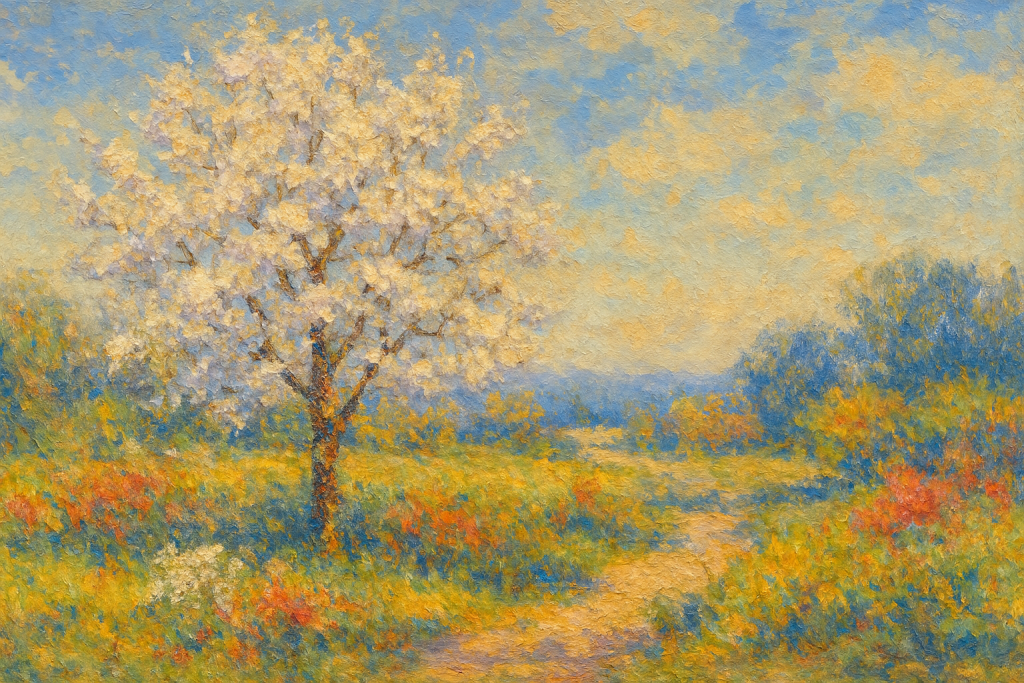
As you start to walk on the way the way appears

Etiket: sufi (page 1 of 2)

Who Was Rumi Really? Beyond Quotes and Social Media Wisdom

Who Was Rumi Really? Beyond Quotes and Social Media Wisdo

Today, the name Rumi appears everywhere — on social media posts, inspirational images, and motivational quotes shared across cultures and languages. His words are often associated with love, positivity, and personal inspiration. Yet behind these widely shared quotations stands a much deeper figure: a philosopher, poet, and Sufi teacher whose message was rooted in profound spiritual transformation.

To understand Rumi truly, we must move beyond popular quotes and rediscover the context in which his teachings emerged.


Rumi: A Spiritual Teacher Before a Poet

Jalal ad-Din Rumi (1207–1273) was not primarily a poet in the modern sense. He was a scholar, theologian, and spiritual guide living in Anatolia during the Seljuk period. His poetry was not written for literary fame but as an expression of inner experience and spiritual realization.

Rumi belonged to the Sufi tradition — a path focused on inner purification, self-knowledge, and the awakening of the heart. His poems were often spoken spontaneously during gatherings with students and later recorded by followers.

For Rumi, poetry was not art alone; it was a vehicle for transmitting spiritual understanding.


The Turning Point: Meeting Shams of Tabriz

A defining moment in Rumi’s life was his encounter with Shams of Tabriz, a wandering mystic who challenged his intellectual identity. Before meeting Shams, Rumi was a respected scholar known for his knowledge. Afterward, his teachings transformed into an expression of love, devotion, and direct spiritual experience.

Shams did not give Rumi new information; he awakened a deeper dimension within him. This transformation illustrates a central Sufi idea: true knowledge is not only learned intellectually but realized inwardly.

Much of Rumi’s poetry reflects this inner awakening — a movement from knowledge of the mind toward knowledge of the heart.


Love in Rumi’s Teachings

Modern audiences often interpret Rumi’s poetry as romantic or emotional. In Sufi understanding, however, love represents something far more expansive.

Love is the force that dissolves separation between the individual self and existence. It softens the ego and opens awareness to unity. When Rumi speaks of longing or union, he is describing the human desire to reconnect with meaning and wholeness.

This is why his poetry resonates across cultures: it speaks to a universal human experience rather than a specific historical moment.


Why Rumi Is Often Misunderstood

In many modern translations and online quotes, Rumi’s spiritual context is removed. Without the Sufi framework, his words can appear as general motivational sayings rather than expressions of a disciplined spiritual path.

Rumi’s teachings were inseparable from practices such as remembrance, music, movement, and guided learning within a spiritual community. His famous imagery — wine, intoxication, fire, and union — are symbolic languages describing states of awareness, not literal experiences.

Understanding this context restores the depth behind his poetry.


Rumi and the Modern World

Despite living in the 13th century, Rumi’s message addresses modern struggles surprisingly well. Many people today experience a conflict between external success and internal emptiness — a tension Rumi frequently described.

His teachings invite individuals to:

  • move from constant thinking toward presence
  • soften rigid identities
  • embrace transformation rather than certainty
  • listen to the wisdom of the heart

In this sense, Rumi offers not escape from modern life but guidance for living it more consciously.


The Role of Music and Experience

Rumi’s teachings were deeply connected to music and movement. The whirling practice associated with the Mevlevi tradition symbolizes the harmony between motion and stillness — an outward movement reflecting inner remembrance.

Music, rhythm, and poetry were tools for awakening awareness beyond intellectual understanding. This experiential dimension remains essential to understanding Rumi’s legacy.


A Contemporary Perspective

To truly understand Rumi today is not merely to quote him but to engage with the transformation he described. His message encourages a shift from external achievement toward inner alignment — from knowing about life to directly experiencing it.

Rumi reminds us that spiritual wisdom is not confined to the past. It becomes alive whenever a person turns inward with sincerity and awareness.


Practical Takeaway

If you wish to approach Rumi’s teachings more deeply:

  • Read his poetry slowly rather than quickly.
  • Reflect on how a verse applies to your inner state.
  • Spend moments in silence after reading.
  • Allow meaning to emerge through experience, not analysis alone.

Rumi’s words are less about understanding intellectually and more about remembering something already present within.


About the Author

Hakan Mengüç is a modern Sufi teacher, author, and musician from Turkiye who brings Sufi wisdom into modern life through psychology, music, and mindfulness practices. Through books, teachings, and music, he explores how ancient Sufi understanding can help individuals cultivate inner peace, emotional clarity, and a deeper connection to the heart.

Ibn Arabi and His 10 Most Famous Works

Ibn Arabi and His 10 Most Famous Works

Hello, my fellow traveler. Today, I want to introduce you to Muhyiddin Ibn Arabi, the great sage whose wisdom illuminated centuries, known by the title “Shaykh al-Akbar” — the Greatest Master.

To know him is not merely to read a biography; it is to lose yourself within an atlas of the heart and, somehow, find yourself again. Come, let us focus on his magnificent life journey — stretching from Andalusia to Damascus — as if listening to a gentle improvisation of the ney.


The Andalusian Years

Ibn Arabi was born in 1165 in the city of Murcia, located in present-day Spain. His family was both influential and spiritually inclined. Yet his childhood was shaped not only by ordinary play, but by an early brilliance that revealed itself at a young age.


The Meeting of Ibn Rushd and Ibn Arabi

The reputation of the young Muhyiddin spread so widely that the great philosopher Ibn Rushd (Averroes) wished to meet him. Ibn Rushd represented reason; Ibn Arabi represented the heart. Their famous “Yes–No” dialogue became one of the most profound symbolic exchanges in intellectual history:

Ibn Rushd asked:

“Is what you have discovered the same as what reason and philosophy teach us?”

Young Ibn Arabi replied:

“Both yes and no. Between this ‘yes’ and ‘no,’ souls take flight and heads part from bodies.”


A Traveler Forever on the Road

Ibn Arabi viewed his entire life as a journey. Leaving Andalusia, he traveled through Morocco, Tunisia, Egypt, Mecca, Baghdad, and Anatolia, gathering meaning from every land and leaving traces wherever he went.

The Meccan Period

Mecca became one of the great turning points of his life. Here he received the inspirations that would form his masterpiece, Al-Futūḥāt al-Makkiyya (The Meccan Openings).

Anatolia and the Seljuks

His travels brought him to Malatya and Konya, where he formed close relationships with Seljuk rulers. His spiritual heir, Sadr al-Din Qunawi, later became the most important figure in transmitting his teachings throughout Anatolia.


The Damascus Years

He spent the final years of his life in Damascus, where he passed away peacefully in 1240. He left behind more than 300 works and an enduring intellectual and spiritual system.


What Does Ibn Arabi Teach Us?

When you look at his life, you do not simply see a traveler — you see a voyager within the inner world. He reminds us:

“What you seek is hidden within you. You are the summary of the entire universe.”

What modern psychology today calls a holistic perspective, he planted as seeds in human consciousness eight centuries ago while walking the sunlit streets of Andalusia. His life was not a story of escape, but of arrival.


Ibn Arabi’s 10 Most Famous Works

Ibn Arabi’s vast corpus forms one of the most comprehensive intellectual maps in Islamic thought. Each work opens a different door toward the reality of existence, woven with symbolism and spiritual insight. His writings unite theology, philosophy, law, metaphysics, and mysticism into a single transformative vision.

Scholars estimate that between 300 and 500 works are attributed to him.

These books are not merely sources of knowledge; they are transmissions of spiritual experience. For centuries, seekers in both the East and the West have turned to them as foundational guides.

Here are ten of his most influential works:


1. Al-Futūḥāt al-Makkiyya (The Meccan Openings)

His magnum opus — almost an encyclopedia of Sufism.

Content:

A vast work covering sacred law, spiritual reality, and the Sufi path, blending metaphysics, cosmology, psychology, and jurisprudence with profound mystical insight.


2. Fuṣūṣ al-Ḥikam (The Bezels of Wisdom)

Considered the essence of his philosophical system.

Content:

Examines divine wisdom manifested through 27 prophets, from Adam to Muhammad. Written in a highly symbolic and dense style. Ibn Arabi states he received the book in a dream from the Prophet Muhammad.


3. Tarjumān al-Ashwāq (The Interpreter of Desires)

His most famous collection of poetry.

Content:

Though appearing to describe human love, each poem symbolically expresses divine love and spiritual realities. Ibn Arabi later wrote his own commentary to prevent misunderstanding.


4. Al-Tadbīrāt al-Ilāhiyya (Divine Governance)

Explores the relationship between the cosmos (macrocosm) and the human being (microcosm).

Content:

Draws parallels between governing a state and governing the human self, emphasizing mastery over the ego.


5. Shajarat al-Kawn (The Tree of Being)

Explains creation through the metaphor of a tree.

Content:

Describes the Muhammadan Light as the root of existence from which all creation branches forth.


6. Kitāb al-Asfār (The Book of Spiritual Journeys)

Focuses on the stages of spiritual travel.

Content:

Uses prophetic journeys such as the Hijra and Mi‘raj as models for the inner transformation of the seeker.


7. Mawāqiʿ al-Nujūm (The Stations of the Stars)

A technical work on spiritual discipline and etiquette.

Content:

Systematically explains the training of the heart, soul, and ego.


8. ʿAnqāʾ Mughrib (The Fabulous Gryphon of the West)

One of his most symbolic works.

Content:

Discusses the concept of the Seal of Sainthood and the perfected human of the end times.


9. Risālat al-Anwār (The Treatise of Lights)

Describes the spiritual retreat (khalwa) of a seeker.

Content:

Guides the reader through inner experiences encountered during solitude and warns against the illusions of the ego.


10. Inshāʾ al-Dawāʾir (The Formation of Circles)

A philosophically powerful exposition of his ontology.

Content:

Explains the relationship between God, the universe, and humanity through geometric diagrams and circular metaphors, presenting the hierarchy of existence.


Did You Know?

1. The Dream Behind Fuṣūṣ al-Ḥikam

Ibn Arabi recounts that in 1229, he saw the Prophet Muhammad in a dream, who handed him a book and instructed him to share it with humanity. The work was written following this spiritual command.

2. Writing Without Books

He stated that he wrote the thousands of pages of Futūḥāt al-Makkiyya without consulting other texts, relying entirely on spiritual inspiration received during circumambulation around the Kaaba.

3. The Lost Tomb and Sultan Selim

After his death, his tomb in Damascus was neglected and forgotten due to controversy around his ideas. Tradition says Sultan Selim I rediscovered it after conquering Damascus and built a mosque and shrine over it.

4. Defending the Language of Love

His poetic work Tarjumān al-Ashwāq was criticized as overly worldly. In response, Ibn Arabi wrote his own commentary explaining the divine meanings behind every verse.

5. A Life of Travel

Despite limited transportation of his era, he journeyed across Andalusia, North Africa, the Middle East, Anatolia, and Syria — travels that were not only geographical but deeply spiritual encounters with scholars and seekers.


Ibn Arabi’s immense legacy remains a timeless compass for every seeker of truth. Each work invites the reader beyond appearances, toward the unity at the heart of existence — the vast ocean of wisdom opened by the Shaykh al-Akbar.

What Sufism Says About Anxiety and Overthinking

What Sufism Says About Anxiety and Overthinking

In the modern world, anxiety and overthinking have become almost universal experiences. Many people live with a constant stream of thoughts — replaying the past, worrying about the future, and struggling to quiet the mind even for a moment. Despite technological progress and increased access to information, inner calm often feels more distant than ever.

While psychology explains anxiety through cognitive and biological processes, Sufism approaches it from another angle: the relationship between the self, the ego, and the illusion of control.


Why the Mind Cannot Stop Thinking

From a Sufi perspective, the restless mind is not a flaw but a natural function that has lost balance. The mind is designed to analyze, compare, and anticipate. Problems arise when a person begins to identify completely with their thoughts.

In Sufi teachings, this state is described as being dominated by the nafs — the ego-self that constantly seeks certainty, control, and validation.

Overthinking often comes from three hidden impulses:

  • the desire to control uncertain outcomes
  • fear of loss or rejection
  • attachment to a fixed identity

The mind believes that if it thinks enough, it can prevent pain. Yet excessive thinking often creates the very suffering it tries to avoid.


Anxiety as Resistance to the Present Moment

Sufism teaches that anxiety is frequently rooted in resistance — resistance to uncertainty, change, or the unfolding of life itself.

When attention is trapped between past regret and future fear, the present moment disappears. The heart loses its sense of grounding, and the mind attempts to compensate by thinking more.

Modern mindfulness practices describe a similar mechanism: anxiety decreases when awareness returns to the present. Sufis expressed this idea centuries ago through the practice of remembrance — gently returning attention to awareness again and again.


Control vs. Trust

One of the central ideas in Sufi philosophy is tawakkul, often translated as trust. This does not mean passivity or abandoning responsibility. Instead, it means acting sincerely while accepting that not everything can be controlled.

Overthinking grows stronger when a person believes they must mentally solve every possible future scenario. Trust softens this tension.

In Sufi understanding, peace arises when effort and acceptance exist together:

  • act with intention
  • release attachment to outcomes

This balance reduces the inner pressure that fuels anxiety.


The Ego and the Fear of Uncertainty

The ego seeks stability through prediction. It wants guarantees about relationships, success, and identity. When life refuses to provide certainty, anxiety appears.

Sufism does not attempt to destroy the ego but to refine it. Awareness allows a person to observe thoughts without becoming imprisoned by them.

A frequently expressed Sufi insight can be summarized simply:

You are not your thoughts; you are the awareness that witnesses them.

When this distinction becomes clear, thoughts lose some of their emotional intensity.


Breath, Presence, and Inner Calm

Many Sufi practices focus on breath because breathing connects body, mind, and awareness. Slow, conscious breathing interrupts the cycle of compulsive thinking and brings attention back to the present moment.

Sound, rhythm, and repetition — including music and sacred phrases — were traditionally used to calm the nervous system and create inner harmony. Today, neuroscience confirms that rhythmic breathing and sound patterns regulate emotional states.

What modern science explains biologically, Sufism explored experientially.


A Modern Interpretation

Anxiety in modern life is often treated as an enemy to eliminate. Sufism offers a gentler perspective: anxiety can become a teacher pointing toward imbalance.

Instead of fighting thoughts aggressively, the Sufi approach encourages curiosity:

  • What am I trying to control?
  • What fear lies beneath this thought?
  • Can I allow uncertainty without resistance?

Awareness transforms anxiety from a battle into a process of understanding.


Practical Takeaway

If you struggle with overthinking, try this simple Sufi-inspired exercise:

  1. Sit quietly for two minutes.
  2. Focus only on your breathing.
  3. When thoughts appear, do not resist them.
  4. Gently return attention to the breath.

The goal is not to stop thinking but to remember that thoughts come and go.

Calmness begins when awareness becomes stronger than mental noise.


About the Author

Hakan Mengüç is a modern Sufi teacher, author, and musician from Turkey who brings Sufi wisdom into modern life through psychology, music, and mindfulness practices. Through books, teachings, and music, he explores how ancient Sufi understanding can help individuals cultivate inner peace, emotional clarity, and a deeper connection to the heart.

New Release: “Gülistan” by Hakan MengUC

A Garden of Sound Where Poetry, Ney & Deep House Bloom Together

🎼 About the Artist

Hakan Mengüç is a globally known Sufi composer, author, and ney musician whose spiritual and artistic works have reached millions. With over 3 million books sold in 15 languages and performances in more than 30 countries, Mengüç continues to inspire with his ability to blend ancient wisdom with modern sound.

🎧 The Track: Gülistan

Meaning “rose garden” in Persian and Turkish, “Gülistan” is a deeply evocative journey where mystical poetry, the soulful breath of the ney, and atmospheric deep house elements unite.

This track reflects a different emotional color in Hakan Mengüç’s musical palette — a piece that opens the door to introspection, healing, and transformation.

It’s more than music. It’s a sonic garden for the soul.

🔊 The Genre: Sufi Deep House

Blending spiritual depth with hypnotic beats, Gülistan stands at the crossroads of:

  • Sufi-inspired soundscapes
  • Electronic minimalism
  • Organic & Deep House textures
  • Mystical downtempo aesthetics

Perfect for meditative dance, breathwork journeys, or simply losing yourself in the poetry of sound.

📲 Available Now on All Major Platforms

Listen to “Gülistan” now on Spotify, Apple Music, YouTube Music, and more.

Let this sacred rhythm plant a rose in your heart.

I Thought It Was the End… But It Was the Birth of a New Me


I Thought It Was the End… But It Was the Birth of a New Me

Sometimes someone leaves…

And all that’s left is silence.

A vast emptiness.

No words.

No sound.

Only the hollow ache of absence.

That person is gone—

but no one sees what they took with them:

the dreams you built together,

the quiet moments you shared,

the words they once said to you…

or the look they never had the courage to give.

The one who leaves is not just a person.

It’s a time in your life that ends.

A version of you disappears with them.

The old “you” is no longer there.

Because some goodbyes don’t just change your world—

they transform the world inside you.

But that’s where transformation begins.

Because the soul awakens most… when it loses something.

And sometimes, the greatest strength

rises from the quietest collapse.

Hard times are often the loneliest.

The world keeps spinning, people talk, life goes on…

But inside, you’re frozen in a different time.

No message arrives, no voice calls out—

it feels as if the world has forgotten you.

And in that silence, you begin to ask yourself:

“Where did I go wrong?”

“If things had been different, would we still be together?”

“Was I not enough? Or did they give up too soon?”

These questions have no clear answers.

But your heart always returns to the same place:

Longing…

Woundedness…

And still—love.

And this… this is the rawest form of being human.

To pray for someone’s happiness,

even when they’ve hurt you.

To wish them well,

even if you’ll never see or hear them again.

That’s not weakness.

That’s your greatest strength.

Some pains can’t be spoken.

You just carry them.

There are feelings you can’t explain to anyone.

Because even if you tried, no one would truly understand.

So you stay quiet.

You smile.

You pretend you’re okay.

But deep down, a part of you still burns like it did on the first day.

And you can’t show that to anyone—

because the world assumes you’ve moved on.

But you know…

You haven’t.

It’s just that the pain now sits quietly in a corner of your heart.

But hear me, my friend…

It is in that silence where we find ourselves again.

As you walk through the fire of pain,

your eyes begin to see differently.

And one day, you look in the mirror—

and the person staring back at you

is softer, deeper, stronger than you’ve ever been.

That’s the day you realize:

What felt like a breakup…

was actually a rebirth.

And from deep inside, a voice rises:

“I didn’t fall apart.

I wasn’t destroyed.

I simply grew.”

One day, the sun rises inside you again.

You wake up and the thing that once broke you—

is now just a memory.

Not erased.

But no longer piercing.

You’ve made peace with it.

You’ve let it be.

Your heart may still have cracks…

but they no longer define you.

And you begin to realize:

What once shattered you…

actually built your strength.

You ask yourself:

“How did I get back up?”

“How am I still able to love?”

“How do I still trust people?”

And the answer comes gently:

You didn’t just lose something—

you were reborn.

You now walk through life

with a softer heart,

a deeper soul,

and wiser eyes.

Because pain didn’t destroy you.

It shaped you into who you were always meant to be.

So pause now.

Take a deep breath.

And set this intention in your heart:

“I allow every experience I’ve lived

to turn me into someone wiser, kinder, and more loving.

I honor the past, embrace the present,

and look to the future with hope.”

Because no matter what you’ve lived through,

someone, somewhere still loves you.

Maybe a friend…

Maybe a prayer…

Maybe the sacred part of you that never stopped believing.

Remember this:

You are not broken.

You have simply been reshaped.

And now, with the light inside you,

it’s time to help light the way for others.

Even the darkest nights give way to morning—

and sometimes, that morning isn’t outside…

it’s born within.

You didn’t just walk through that darkness—

you brought light into it.

And those who do that…

make this world a more beautiful place.

You are precious, my fellow traveler.

🌿

A Soft Whisper to the Soul: This Too Shall Pas


A Soft Whisper to the Soul: This Too Shall Pas

I know…

There’s so much you’ve been holding inside.

Unspoken emotions,

Unshared sorrows,

Thoughts that live in your heart but never quite made it into words.

You know that kind of silence we carry sometimes?

It’s not really silence.

It’s the echo of all your uncried tears, your unseen exhaustion, your quiet disappointments.

Maybe you’re living in that silence right now.

But please don’t forget this:

Every silence carries the seed of awakening.

Every turning inward is a sacred preparation—

a space where your soul gets ready to be born again.

You are far stronger than you appear.

And this life…

It isn’t here to teach you everything.

It’s here to help you remember the truth you already carry within.

Feeling tired…

Crying…

Breaking down…

All of it is deeply human.

And you, my dear, are human.

To be human is to feel.

To fall, to rise, and to keep walking again.

As Mevlana Rumi said:

“Even if you’ve broken your vow a hundred times, come, yet again, come.”

Do you know what that means?

It means:

“Even if you’re tired, rise again.

Even if your heart is broken, love again.

Even if you’ve forgotten, remember again.”

Because your heart…

Is a compass that remembers.

It will guide you—

if only you choose to listen.

Everything you’re going through right now

might just be the path that leads you to your hidden treasure.

Perhaps life paused you at this very station

so you could finally look at where you’re going—with awareness.

Don’t abandon yourself

just because others have left you.

Some doors may have closed, yes—

but maybe those doors hid things that drained you,

that no longer helped you grow.

And now…

It’s time to let go of the old burdens.

The guilt, the past, the responsibilities that were never yours.

Gently set them down.

Because you are not just your past.

You are the infinite potential within you.

You are the parts of you still waiting to be discovered.

Life’s challenges…

They don’t come to turn you into something divine.

They come to make you deeply, tenderly human.

To soften your heart.

To make it more compassionate.

More aware.

So this moment—

let it be not an end,

but a beginning of transformation.

Now close your eyes…

Come back to yourself for a moment.

Maybe it’s been a while since you checked in.

Since you asked that child within: “How are you, really?”

Ask them now:

“Are you okay?”

And tell them:

“I’m here now.

I will take care of you.

I won’t ignore you anymore.”

This is where healing begins.

In hearing yourself.

In forgiving yourself.

In gently holding yourself again.

Because you…

You are the healing you’ve been waiting for.

You are the very words you’ve been longing to hear from someone else.

You are… a miracle.

And miracles—

they are born from fragile hearts.

So now, come closer…

Let’s whisper together:

“This too shall pass…

All of it shall pass…”

And once it has…

You will look back on these days with gratitude.

Because it’s these very days—

that will shape who you truly are.

Farewell for now, my fellow traveler.

With love and light always. 🌿


Spiritual Detox: Cleanse Your Heart with the Arrival of Spring

Hakan Mengüç, April 2025

In recent weeks, I’ve been traveling across many cities in Europe for seminars and book signings.

And in every city I visited, I could hear the footsteps of spring…

The budding trees whispering in quiet alleys,

the gentle sunlight touching faces with kindness,

and that lightness quietly resting in people’s eyes…

It was as if everything around me was speaking.

I believe that every season has its own language,

and every scene invites us to listen inward.

If we know how to see, life always carries a message for us.

So, what is spring telling us?

What do flowers say as they bloom?

What do the trees teach us as they let go of their dry branches?

Spring is not only the awakening of nature—

it is the awakening of the soul.

Just as the earth sheds its old skin,

we are called to release what we carry within.

Every new leaf is like a quiet intention

breaking free from the past.

And every spring,

we are gently reminded to let go of what no longer serves us.

Sometimes, we carry burdens for years without noticing:

A word we couldn’t forgive,

a disappointment buried deep inside,

a regret we pretend to forget but still echoes in the silence of the night…

Spring leans in and softly whispers:

“Let it go now. It’s time to renew.”

Just as we clean our homes in spring,

we must also cleanse our hearts.

As the Sufi sages say:

“The heart is a mirror; but once it’s covered with dust, it cannot reflect.”

So how do we cleanse ourselves?

It all begins with an intention.

A simple but profound one:

“With this spring, I choose to purify my heart,

to let go of what weighs me down,

and make space for something new to bloom.”

Sometimes it’s like a prayer.

A whisper carried on a walk,

a sentence written in silence,

or a moment of simply listening within…

True cleansing starts not on the outside,

but deep within.

And each step taken from the heart opens a new path.

Every spring, I do a small ritual.

I take a piece of paper and write down what feels heavy inside—

a feeling I haven’t released,

a person I haven’t yet forgiven,

or words I’ve never spoken out loud.

And then I gently release that paper into flowing water.

Softly, I say to myself:

“I release you with love. I no longer choose you—I choose peace.”

Maybe not everything changes in that moment.

But a lightness begins to rise inside.

And that lightness becomes a new breath for the soul.

Don’t forget, my dear friend,

Life becomes clearer not from the outside,

but from within.

And sometimes you find your answer

in the blooming of a flower,

in the cool air of morning,

or in the quiet peace that comes after a single tear.

So this spring—

don’t just open your windows…

open your heart, too.

And now… leave a gentle intention in your heart.

This is my intention…

With this spring,

I choose to lovingly release the burdens of my past,

to cleanse the old wounds that left marks on my heart,

to awaken the joy that has been quietly sleeping inside,

and to approach myself with more softness, more compassion.

I choose to welcome each new beginning with hope,

to patiently nurture the change blooming within me,

and to embrace the spring blossoming in my soul with love.

Because I know—

true spring does not begin outside…

it begins within.


You don’t need to be loved to feel valuable

Hello, my fellow traveler 🌙

You don’t need to be loved to feel valuable.

Your worth cannot be measured by how much others love you.

You are unique and precious just as you are.

Sometimes, you simply need to pause and recognize the light within yourself.

Remember how valuable you are without needing anyone else’s approval, just by being yourself.

Because you are whole and enough just the way you are.

Today, show yourself a little love and compassion, because you are the one who deserves it the most. 🌟

And never forget, when you start loving yourself and let go of the thought “I must be loved,” those who truly love you will find their way into your life.

Hakan | 3 January 2025

The Sufi path is the path of the heart

The heart cannot see the truth until it opens to love.

Last week was Mevlana Week, and on December 17, people from all around the world flocked to Turkey, particularly to Konya. Among them were not only Muslims but also Christians, Jews, Buddhists, and even those who identified as atheists. How is it, then, that Mevlana continues to attract so many people centuries after his passing? How is it that people of such diverse beliefs find peace in the same place?

This is the power of Sufism, which embodies the essence of Anatolian wisdom. Sufis have always spoken to the heart. They transformed their words into poetry, their emotions into music and dance. People listened to them not with their ears but with the ears of their soul; they watched not with their eyes but with the eyes of their heart. This was not merely a doctrine but a state of being, a journey.

In a talk I gave in Germany during Mevlana Week, I shared the profound messages of Sufi philosophy that inspire people. I’d like to share some of those insights with you.

The heart is an ocean; the tongue is its shore. What is in the ocean washes up on the shore.

Mevlana’s influence lies not only in his words but in the love behind those words. He taught us to see people not for their outward appearances but for their souls. His message is universal: “Come, come, whoever you are, come!”

The Sufi path is not one of knowing but of feeling. It requires leaving behind the mind’s chaos and descending into the depths of the heart.

As Mevlana said: “The heart is an ocean; the tongue is its shore. What is in the ocean washes up on the shore.”

This journey is less about reading and more about experiencing. Sufism is not just a teaching; it’s a state of being, a way of life. The heart is the door to the deepest truths of humanity. Open that door, and you will find the truth there. For the Sufi, the path is the path of the heart; the truth is not external but internal.

Love is the essence of Sufism. It is not merely a feeling for another person but the ability to see the Creator in every breath, in every being. Love is a state of forgiveness and acceptance. Sufism teaches us to embrace ourselves, others, and ultimately, all existence. A journey without love is not a journey. If your heart is closed, you cannot reach the truth. But if you take love as your guide, the paths will open naturally. Just as a river finds its way past the stones, love overcomes all obstacles and leads you to the truth.

Who am I?

A Sufi asks, “Who am I?” but not with their mind; they ask with their heart. The mind is occupied with the burdens of the past and worries of the future; it seeks logic, demands evidence, and draws boundaries. But the heart speaks from another dimension, whispering with a silent yet profound wisdom. That whisper can be heard not only in moments of peace but also amidst chaos—sometimes in the stillness of a breath, in a child’s laughter, or in the touch of a raindrop on the earth. And the Sufi knows that the answer always lies in love.

Love here is not just an emotion; it is a way of being. Love is like a bridge where one redefines themselves and the universe. Those who cross that bridge see how the ordinary transforms into the extraordinary. Just as a stone, with patience, effort, and love, becomes a gem, the heart can also become purified, clear, and a reflection of truth. But this can only happen when the heart is open to love.

Opening the heart to love takes courage. Love requires not only the willingness to embrace joy but also the risk of being hurt. Love demands tearing down the walls of the heart, letting go of fears, and stepping into uncertainty with trust. A Sufi keeps their heart open in this way, knowing that love is not just about receiving but also about giving. Love is not about possession; it is about letting go.

This is why the heart is like a garden. If you plant it with love and nurture it patiently, it will bloom with the most beautiful flowers. But remember, it is also your responsibility to weed out the garden. Emotions like fear, anger, and jealousy are the weeds. A Sufi clears these weeds from their heart, knowing that the light of truth can only shine in a clean heart.

And love is both the beginning and the end of this journey. Love transforms you. It brings you back to yourself and then takes you beyond yourself. Love is not just a personal experience; it is a universal connection. It elevates the ordinary to the extraordinary, unites the individual with the universal. When your heart is purified by love, Sufi wisdom says you are no longer just a human being; you become a messenger of love.

Let us end with one of Mevlana’s sayings:

“The heart cannot see the truth until it opens to love.”

as you start to walk on the way the way appears

As you start to walk on the way the way appears

Once, a young man, feeling lost in life, wandered aimlessly through a forest. His mind was clouded with uncertainty and fear, tangled in the complexities of his thoughts. He didn’t know which direction to take or how to move forward. At the peak of his despair, he spotted a horse approaching from the distance. The rider was a dervish, carrying an aura of calm and wisdom, as if the burdens of the world were effortlessly lighter in his presence.

The young man hurried to the dervish, saying with urgency:

“Master, I don’t know what to do with my life. Which path should I take? How many steps do I need to make? What if I choose the wrong one?”

The dervish paused, gazing at him with a serene, knowing look. He stopped his horse and spoke gently:

“My child, life is not a map to be deciphered all at once. If you try to solve everything at once, your mind will fall into confusion, and your courage will falter. Life unfolds as you walk. You only need to see the next step. When you dare to move, the path will reveal itself to you.”

The young man, still bewildered, asked, “But how do I even begin?”

The dervish pointed to the ground before him and said:

“Beginning is simply seeing the step that lies directly before you. Focus on the next step alone. When you take it, the next one will appear. The path is made by those who walk it. With every step you take, you build your own way.”

Hearing these words, the young man released the weight of his overwhelming thoughts. He took his first step, then another. With each step, the path became clearer. When he eventually emerged from the forest, he looked back and realized the complexity of the journey he had traversed. But in that moment, he understood that the essence of the journey was not in its length or challenges but in the courage to take the first step.

The Wisdom of Life: The Path is for Those Who Walk

The dervish’s advice reflects one of the profound principles of Sufi wisdom: The path of life reveals itself only to those who dare to walk it.

There are moments in life when we all feel lost, unsure of which direction to take. Our minds become entangled in trying to control the future, which only magnifies our fears. The Sufi way teaches us to focus on just one step at a time, for life is not about seeing the entire picture at once but about discovering its beauty piece by piece with every step forward.

1. The Key to Achieving Goals: Small Steps

Big goals often appear intimidating. Whether it’s starting a new career, improving a relationship, or seeking personal transformation, the sheer magnitude of these dreams can leave you paralyzed. But as the dervish taught, break them into smaller, manageable pieces:

If you’re aiming for your dream job: What’s your first step? Preparing a resume? Enrolling in a course?

If you want a healthier life: Start with a short walk or a single healthy meal today.

Each small step brings you closer to your ultimate goal. Remember, even the longest journeys are completed one step at a time.

2. Action Dissolves Uncertainty

Inaction only magnifies the chaos within. The young man in the story realized that the path became visible only after he took the first step. Similarly, in life, clarity comes when we move. Even mistakes are valuable guides on the journey.

Sufi wisdom reminds us: “Do not fear mistakes, for even they are lessons from the Divine.”

3. Stay in the Moment: The Key to Wisdom

The dervish’s advice, “See only the next step,” emphasizes the power of living in the present. Life is not shaped by dwelling on past regrets or worrying about future uncertainties. It is built by what we do in the here and now.

If you have decisions to make today, focus only on what today requires. The present moment is all you can truly control.

4. Trust: The Path Will Show Itself

Uncertainty is an inevitable part of life. But instead of succumbing to it, choose to trust. The path opens itself to those who believe and move forward. As the dervish said, “The path appears as you walk.”

This trust is the key to action. If you want life to unfold its mysteries to you, take that step into the unknown with courage. The Divine’s grace is always with those who dare to move.

Final Words: Take the First Step, and the Path Will Reveal Itself

This story reminds us of a simple truth: In life, we cannot discover all the answers at once. But as we take that first step, the path begins to unveil itself. Achieving great goals starts with the bravery of a single, small action.

Never forget, the secret of the journey lies in the courage to embark on it. If you wish to change your life, take the first step and let the rest unfold naturally. The path is for those who walk, and only by walking will you find your way. 🌿