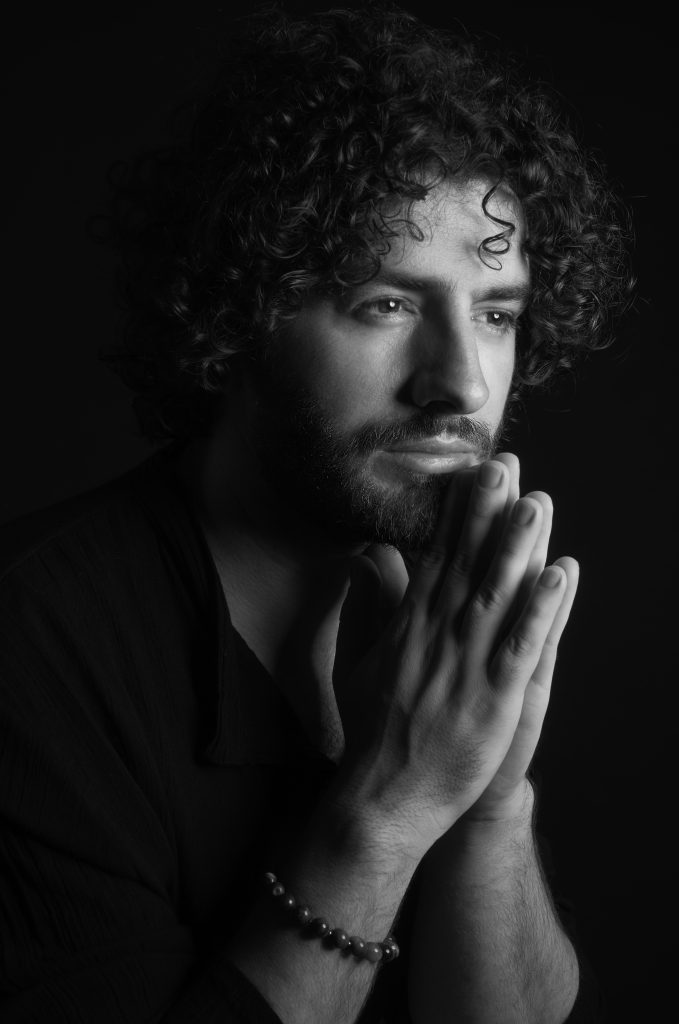
As you start to walk on the way the way appears

Etiket: rumi (page 1 of 1)

Who Was Rumi Really? Beyond Quotes and Social Media Wisdom

Who Was Rumi Really? Beyond Quotes and Social Media Wisdo

Today, the name Rumi appears everywhere — on social media posts, inspirational images, and motivational quotes shared across cultures and languages. His words are often associated with love, positivity, and personal inspiration. Yet behind these widely shared quotations stands a much deeper figure: a philosopher, poet, and Sufi teacher whose message was rooted in profound spiritual transformation.

To understand Rumi truly, we must move beyond popular quotes and rediscover the context in which his teachings emerged.


Rumi: A Spiritual Teacher Before a Poet

Jalal ad-Din Rumi (1207–1273) was not primarily a poet in the modern sense. He was a scholar, theologian, and spiritual guide living in Anatolia during the Seljuk period. His poetry was not written for literary fame but as an expression of inner experience and spiritual realization.

Rumi belonged to the Sufi tradition — a path focused on inner purification, self-knowledge, and the awakening of the heart. His poems were often spoken spontaneously during gatherings with students and later recorded by followers.

For Rumi, poetry was not art alone; it was a vehicle for transmitting spiritual understanding.


The Turning Point: Meeting Shams of Tabriz

A defining moment in Rumi’s life was his encounter with Shams of Tabriz, a wandering mystic who challenged his intellectual identity. Before meeting Shams, Rumi was a respected scholar known for his knowledge. Afterward, his teachings transformed into an expression of love, devotion, and direct spiritual experience.

Shams did not give Rumi new information; he awakened a deeper dimension within him. This transformation illustrates a central Sufi idea: true knowledge is not only learned intellectually but realized inwardly.

Much of Rumi’s poetry reflects this inner awakening — a movement from knowledge of the mind toward knowledge of the heart.


Love in Rumi’s Teachings

Modern audiences often interpret Rumi’s poetry as romantic or emotional. In Sufi understanding, however, love represents something far more expansive.

Love is the force that dissolves separation between the individual self and existence. It softens the ego and opens awareness to unity. When Rumi speaks of longing or union, he is describing the human desire to reconnect with meaning and wholeness.

This is why his poetry resonates across cultures: it speaks to a universal human experience rather than a specific historical moment.


Why Rumi Is Often Misunderstood

In many modern translations and online quotes, Rumi’s spiritual context is removed. Without the Sufi framework, his words can appear as general motivational sayings rather than expressions of a disciplined spiritual path.

Rumi’s teachings were inseparable from practices such as remembrance, music, movement, and guided learning within a spiritual community. His famous imagery — wine, intoxication, fire, and union — are symbolic languages describing states of awareness, not literal experiences.

Understanding this context restores the depth behind his poetry.


Rumi and the Modern World

Despite living in the 13th century, Rumi’s message addresses modern struggles surprisingly well. Many people today experience a conflict between external success and internal emptiness — a tension Rumi frequently described.

His teachings invite individuals to:

  • move from constant thinking toward presence
  • soften rigid identities
  • embrace transformation rather than certainty
  • listen to the wisdom of the heart

In this sense, Rumi offers not escape from modern life but guidance for living it more consciously.


The Role of Music and Experience

Rumi’s teachings were deeply connected to music and movement. The whirling practice associated with the Mevlevi tradition symbolizes the harmony between motion and stillness — an outward movement reflecting inner remembrance.

Music, rhythm, and poetry were tools for awakening awareness beyond intellectual understanding. This experiential dimension remains essential to understanding Rumi’s legacy.


A Contemporary Perspective

To truly understand Rumi today is not merely to quote him but to engage with the transformation he described. His message encourages a shift from external achievement toward inner alignment — from knowing about life to directly experiencing it.

Rumi reminds us that spiritual wisdom is not confined to the past. It becomes alive whenever a person turns inward with sincerity and awareness.


Practical Takeaway

If you wish to approach Rumi’s teachings more deeply:

  • Read his poetry slowly rather than quickly.
  • Reflect on how a verse applies to your inner state.
  • Spend moments in silence after reading.
  • Allow meaning to emerge through experience, not analysis alone.

Rumi’s words are less about understanding intellectually and more about remembering something already present within.


About the Author

Hakan Mengüç is a modern Sufi teacher, author, and musician from Turkiye who brings Sufi wisdom into modern life through psychology, music, and mindfulness practices. Through books, teachings, and music, he explores how ancient Sufi understanding can help individuals cultivate inner peace, emotional clarity, and a deeper connection to the heart.
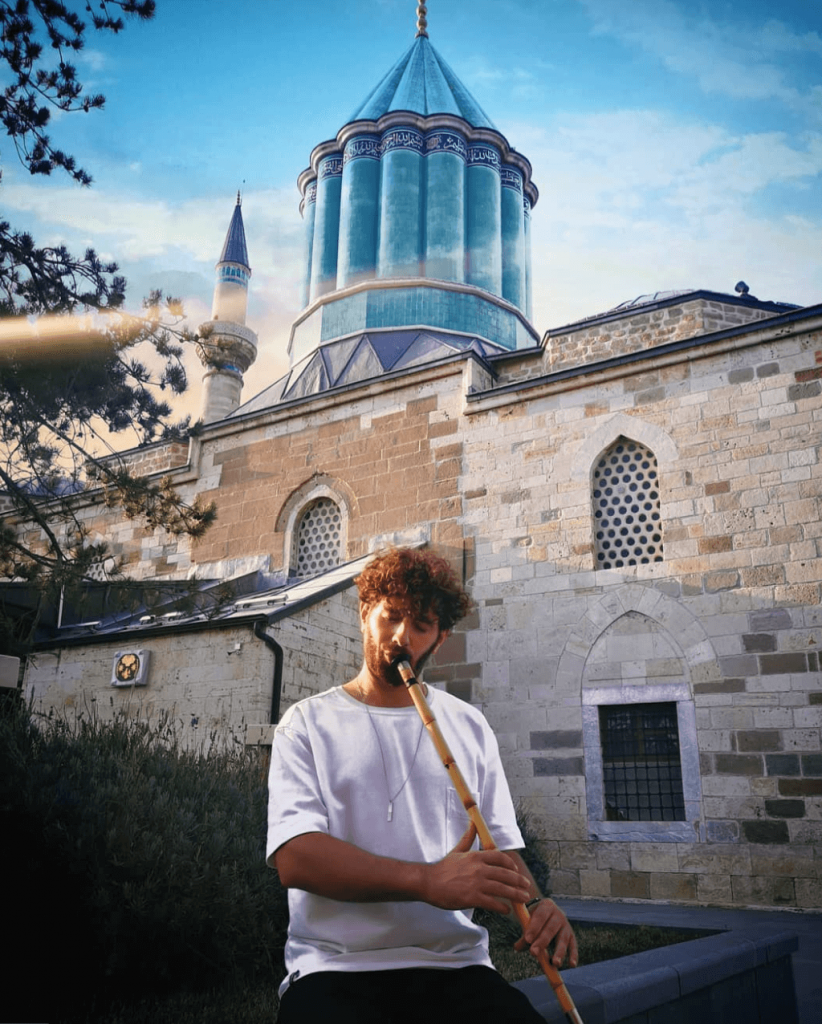
Sufism Explained for Modern Life: Why Ancient Wisdom Still Matters

Sufism Explained for Modern Life: Why Ancient Wisdom Still Matters

Modern life offers unprecedented comfort, speed, and technological connection — yet many people feel more restless, anxious, and disconnected than ever before. Despite constant stimulation, a quiet question continues to arise within many individuals: Why do I still feel incomplete?

This question is not new. Long before smartphones, productivity culture, or modern psychology existed, Sufism addressed the same human struggle — the search for meaning, balance, and inner peace. Today, its teachings feel surprisingly relevant because they speak directly to the challenges of the modern mind.


The Modern Crisis: Progress Without Inner Peace

We live in an age that trains the mind to constantly move forward: achieve more, improve faster, compare constantly. While this mentality has produced remarkable innovation, it has also intensified mental exhaustion.

Many people today experience:

  • chronic overthinking
  • emotional fatigue
  • loss of meaning despite success
  • difficulty being present
  • a sense of inner fragmentation

Modern psychology describes these experiences scientifically. Sufism, however, approaches them from an inner and existential perspective. It asks not only how the mind works, but how the heart can return to balance.


What Makes Sufism Different?

Sufism is often misunderstood as a distant mystical tradition or purely historical philosophy. In reality, it is a practical path centered on inner awareness and conscious living.

Rather than focusing only on external behavior, Sufism emphasizes inner transformation. The goal is not withdrawal from life but a change in the way one experiences life.

Sufi teachings suggest that suffering often arises when the ego attempts to control everything — outcomes, identity, relationships, and even emotions. The more tightly we try to control life, the more tension we create within ourselves.

Sufism proposes a different approach: awareness instead of control, presence instead of constant striving.


Ancient Wisdom, Modern Psychology

Many ideas that appear in modern psychological practices have parallels in Sufi teachings:

Modern ConceptSufi Understanding
MindfulnessPresence (Hudur)
Emotional awarenessSelf-observation (Muraqaba)
Letting goTrust and surrender (Tawakkul)
Self-developmentPurification of the self

Centuries ago, Sufis practiced conscious breathing, repetition of meaningful sounds, and contemplative reflection to calm the mind and deepen awareness. Today, similar methods are rediscovered through neuroscience and therapeutic practices.

This does not mean Sufism replaces psychology; rather, it complements it by addressing the deeper question of meaning and connection.


Living in the World, Not Escaping It

A common misconception is that spirituality requires withdrawal from modern society. Sufism teaches the opposite.

A Sufi is not someone who escapes life but someone who learns to remain inwardly balanced while fully participating in it. Work, relationships, creativity, and daily responsibilities become opportunities for awareness rather than distractions from it.

In this sense, Sufism is not about rejecting modern life but humanizing it.


The Role of the Heart in Modern Life

Modern culture prioritizes analytical thinking, productivity, and measurable success. Sufi philosophy adds another dimension: the intelligence of the heart.

In Sufi understanding, the heart is the center of perception that allows a person to experience compassion, meaning, and unity. When the heart becomes clouded by constant distraction and ego-driven comparison, life feels empty even when externally successful.

Reconnecting with the heart does not mean abandoning reason; it means restoring balance between intellect and inner awareness.


A Contemporary Perspective

For modern individuals, Sufism can be understood as a path of integration:

  • integrating mind and heart
  • action and reflection
  • ambition and contentment
  • individuality and connection

Its teachings invite people to slow down internally, even while living in a fast-moving world.

Sufism reminds us that peace is not found by changing circumstances alone but by transforming our relationship with experience itself.


Practical Takeaway

To apply Sufi wisdom in modern life, begin with small shifts:

  • Pause briefly during the day and observe your breathing.
  • Notice thoughts without immediately reacting to them.
  • Practice doing one activity fully present — without multitasking.
  • Ask yourself daily: Am I acting from tension or from awareness?

Transformation in Sufism begins with awareness, not perfection.


About the Author

Hakan Mengüç is a modern Sufi teacher, author, and musician from Turkey who brings Sufi wisdom into modern life through psychology, music, and mindfulness practices. Through books, teachings, and music, he explores how ancient Sufi understanding can help individuals cultivate inner peace, emotional clarity, and a deeper connection to the heart.

What Is Sufism? A Beginner’s Guide for the Modern World

What Is Sufism? A Beginner’s Guide for the Modern World

In a world filled with constant noise, anxiety, and endless mental activity, many people begin searching for something deeper — not necessarily a new religion, but a way to feel whole again. This search often leads to mindfulness, psychology, or philosophy. Yet centuries before these modern concepts became popular, Sufism offered a path centered on inner transformation, self-awareness, and the awakening of the heart.

So what exactly is Sufism, and why is it still relevant today?


What Is Sufism?

Sufism is the inner, experiential dimension of Islam that focuses on personal transformation and direct awareness of the Divine through the purification of the heart. Rather than being defined by rituals alone, Sufism emphasizes intention, awareness, compassion, and inner refinement.

At its core, Sufism asks a simple but profound question:

How can a human being live with a clear heart, a peaceful mind, and a meaningful connection to existence?

Sufis believe that human beings already carry a deep spiritual potential within themselves. The purpose of the path is not to become someone else, but to remove the veils that prevent a person from recognizing their true nature.


A Brief Historical Context

Sufism emerged in the early centuries of Islamic civilization as a movement emphasizing sincerity, humility, and inner awareness. Early Sufis sought simplicity and devoted their lives to self-knowledge and compassion.

Over time, great figures such as Rumi, Ibn Arabi, Yunus Emre, and many others expressed Sufi teachings through poetry, music, philosophy, and storytelling. Their works were not meant only for scholars but for ordinary people seeking meaning in everyday life.

This is why Sufi literature often speaks the language of love, longing, and transformation rather than abstract theology. The goal was always lived experience, not intellectual debate.


Sufism and the Modern Mind

Today, many psychological struggles — overthinking, anxiety, identity confusion, emotional disconnection — reflect a deeper sense of inner fragmentation. Modern psychology studies these experiences scientifically, while Sufism approaches them through spiritual awareness.

In Sufi thought, the ego is not an enemy to destroy but a part of the self that must be understood and refined. The mind becomes calmer not by suppression but through awareness, remembrance, and balance.

Practices such as mindful breathing, repetition of sacred sounds, music, and contemplation were used by Sufis long before the modern language of mindfulness appeared. What modern people call “being present,” Sufis described as living with an awakened heart.


The Role of Love and the Heart

One of the most distinctive aspects of Sufism is its emphasis on the heart as a center of perception. In Sufi philosophy, the heart is not merely emotional; it is a faculty of understanding deeper truth.

Rumi famously wrote about love not as romance, but as a force that dissolves separation between the self and existence. Love, in Sufi understanding, softens the ego, opens awareness, and reconnects individuals with meaning.

For this reason, Sufism is often described as a path of love — a journey from fragmentation toward unity.


Sufism as a Living Practice

Sufism is not only a philosophy; it is a lived experience. Traditionally, the path includes practices designed to cultivate awareness in daily life, such as:

  • conscious breathing
  • remembrance practices (dhikr)
  • music and sound meditation
  • reflection and self-observation
  • service and compassion toward others

These practices aim to transform ordinary moments into opportunities for awareness.

Rather than escaping the world, Sufism teaches how to live fully within it while remaining inwardly balanced.


A Modern Perspective

In today’s fast-paced world, Sufism offers a bridge between ancient wisdom and modern psychological understanding. It reminds us that peace is not found by changing external conditions alone, but by transforming the way we relate to ourselves and life.

The Sufi path does not ask people to withdraw from modern life. Instead, it invites them to bring awareness, compassion, and presence into everyday experiences — work, relationships, creativity, and personal growth.

Seen from this perspective, Sufism becomes not a distant tradition but a practical guide for living consciously in the modern world.


Practical Takeaway

If you are new to Sufism, begin simply:

  • Spend a few minutes each day in silence.
  • Observe your thoughts without judgment.
  • Breathe slowly and consciously.
  • Ask yourself not only “What am I doing?” but “How present am I while doing it?”

Sufism begins not with complexity, but with awareness.


About the Author

Hakan Mengüç is a modern Sufi teacher, author, and musician from Turkey who brings Sufi wisdom into modern life through psychology, music, and mindfulness practices. Through books, teachings, and music, he explores how ancient Sufi understanding can help individuals cultivate inner peace, emotional clarity, and a deeper connection to the heart.

The Journey of Love in Sufism: A Deep Dive into the Heart


The Journey of Love in Sufism: A Deep Dive into the Heart

For centuries, Sufism has served as a mystical path guiding people in purifying their souls and achieving inner peace. At the heart of this mystical journey lies ‘love’. In Sufi tradition, love is much more than just an emotion or a bond between people; it is the essence of existence and the foundation of the human connection with the divine. In this article, we will explore the understanding of love in Sufism and how this mystical path reaches the depths of the heart.

1. The Definition of Love in Sufism:
In Sufism, love signifies a universal consciousness and spiritual awakening. For instance, the Sufi thinker Ibn Arabi describes love as “the heart of existence.” According to him, love is a cosmic energy that resides at the core of everything and connects all creation. In Ibn Arabi’s philosophy, relinquishing one’s ego and surrendering to this universal love is the key to true knowledge and peace.

2. Love in Sufi Poetry:
Jalaluddin Rumi’s poem “The Dance of Love” perfectly reflects the power of love in the Sufi understanding. Rumi portrays love as a force that liberates the human soul from its limitations and invites it to dance in a sea of divine love. The poem emphasizes the importance of transcending individual love to attain an awareness of universal and divine love.

3. Love and Union with the Divine:
For those following the Sufi path, love is central to the union with the divine. This concept is embodied in Mansur Al-Hallaj’s statement, “I am the Truth.” This means that Mansur saw himself as a complete part of the divine existence, transcending the limits of his individual self. For Hallaj, love meant transcending one’s ego boundaries to achieve complete union with the divine.

In Sufism, love is not just an emotion but also a journey. This journey takes us from our inner world to a deeper understanding of universal consciousness and existence. The concept of love in the Sufi tradition carries an inspiring message not only for Sufi thinkers and poets but for all humanity: Love is the key not only to our connections with each other but also to our bond with the entire universe.


5 sufi principles

5 Sufi Principles

1. No encounter is by chance in this world that is full of great adventures. Everyone we meet teaches us something.

2. If you start with a pure intent to understand and learn, if you put down your arrogance, you will surely be ready when you encounter wise people who will teach you what you need to know.

3. Each journey has its own challenges. However, the difficulties and obstacles waiting ahead are not designed to weaken you. Their purpose is to educate and mature you.

4. Every living creature, every human being comes to this world with a purpose. Everyone discovers their own purpose as they live through each day. Therefore, when one learns to read and follow the signs, it will lead them to their goal. Reading life begins with knowing the first word of the Qur’an: Read!*

5. Never forget this…completion is not extinction. On the contrary, even death is not an end but a new beginning. The end of something in life is always conducive to the beginning of something better. As long as you go with the flow and stay calm.*

* The first word revealed from Allah upon the Prophet PBUH was Iqra› /Read

  • From Hakan Menguc’s book “No encounter by chance”

Hakan Menguc’s philosophy

Hakan Menguc’s philosophy of life

sufi qoutes hakan menguc

While explaining his philosophy of life built on hopefulness and sharing hope, he says: “Hopefulness is not a pure optimism. It is not to ignore the tragedy that humanity faces. Hope means seeing every possibility and doing your best for good rather than sitting at your house and cursing evil.” 

Hakan Mengüç argues that it is enough for even one person to believe in the continuity of hope on earth. “Moreover, this person can be you,” he says. “Then, you will continue to expand to become another “you” and another “you” and turn into “we”. 

That is why Hakan Mengüç has adopted the idea of “Burn a candle instead of swearing in the darkness…” And as his teachers suggest, the young writer, who aspires to make efforts to enlighten others with the candle he lights, wishes to encourage others to light new candles on this path. 

As Rumi said: “When a candle ignites another candle, it does not lose anything from its own light. On the contrary, it leads to the enlightenment of the darkness. ”

Hakan Menguc is one of the pioneers of the Sufi philosophy in the 21st century

Serhat akpınar, Founding President of Girne American University

What is Sufism?

What is Sufism?

Let’s explore what Sufism is…Sufism is the philosophy of being a good human being. As you may know, the most recognized Sufi is the famous poet Rumi whose poems are used by many writers and have inspired many spiritual teachings.

sufism hakan menguc

Sufism might best be explained by his saying “You can be anything in life, but the important thing is, to be a good human” He reminds us that being a good human being is more important than your positions and titles. Being a human means accepting and loving all people equally, regardless of race, color, religion, gender, sexual orientation or language, The Sufis say: “The Creator does not care for the outer form, instead cares for the love within your love.”

Sufism is about love and the heart. Not our physical heart, but our spiritual heart. There are so many ways to reach the Creator such as prayers, rituals, nature, meditations and so on and so forth. Sufism offers us the most profound way: a direct connection to the Creator through love.

The core of Sufism is oneness. We are all part of this great, mysterious and outpouring of love that we call creation. The famous Sufi says “You are not a drop in the ocean; you are the entire ocean in a drop.”

Everything in creation is an expression of incredible love. Sometimes, we can see this visibly through the nature. Sometimes it’s in poverty and in suffering, where it’s less visible. The Sufis say; “The wound is the place where the light enters you.” Thank you so much for listening.

Last but not least, the Sufis say “Your task is not to seek for love, but merely to seek and find all the barriers within yourself that you have built against it.”