Short answer: Because complaining describes a problem, while action changes the conditions around it. Both use energy, but only one leaves something behind. In Sufi philosophy — and in modern psychology — a small constructive act tends to do more for you and for the people around you than an accurate description of what is wrong.
This idea sits close to the centre of what Hakan Mengüç teaches: hope is not passive optimism. It is recognising what is possible and choosing a constructive action inside a difficult situation.
Where Does the Saying Come From?
The phrase is usually quoted as a proverb, and is often described as Chinese in origin, though its exact source is not firmly established. Its modern spread is generally traced to two moments: it was adopted as the motto of the Christophers, a movement founded in the 1940s to encourage ordinary people to make a positive difference, and it entered wider public memory when Adlai Stevenson echoed it in his 1962 tribute to Eleanor Roosevelt at the United Nations.
Alongside it stands a related image long associated with Sufi teaching and commonly attributed to Rumi, although the attribution is disputed: a candle loses nothing by lighting another candle.
Two different lessons, one flame:
The proverb is about choosing action over complaint.
The candle image is about what happens to what you give away.
The Candle That Loses Nothing
When you light one candle from another, the first flame does not shrink. Nothing has been subtracted. Now there are two.
In Sufi thought this picture is used to describe knowledge, compassion and hope — the rare goods that seem to increase when shared. Teach what you know and you tend to understand it more deeply. Offer patience and you often find you have more of it, not less.
Money is divided when shared. Light multiplies.
This is not sentimentality. It is a practical distinction worth knowing, because it tells you which resources to be careful with and which ones you can spend freely.
Why We Curse the Darkness Anyway
Because complaining feels like participation. It produces the sensation of having done something — a long conversation, a post, an argument about how bad things have become.
But the room is usually just as dark afterwards. And you are more tired.
What Research Suggests About Dwelling on Problems
Psychologist Amanda J. Rose, at the University of Missouri, studied what she named co-rumination: repeatedly discussing, revisiting and speculating about problems with someone close to you. Her research, published in Child Development in 2002 and followed by a six-month longitudinal study in 2007, points to a genuine trade-off. Co-rumination was associated with closer friendships — and, at the same time, with higher levels of depressive and anxiety symptoms.
The finding is worth stating carefully, because it is easy to misread. Talking about difficulty is not the problem. Circling the same difficulty without moving is.
The Line Between Processing and Circling
Ask yourself three questions:
Do I understand this better than I did an hour ago?
Has anything become clearer, or only louder?
Is there a next step at the end of this conversation?
If the answers are no, no and no, the conversation has probably stopped being processing. It has become weather.
“But My Candle Is Too Small”
This is the most common reason people set the idea aside. What can one person do against something this large?
The honest answer: usually not everything, and almost always something.
Organisational psychologist Karl E. Weick made a version of this argument in American Psychologist in 1984, in a paper called “Small Wins: Redefining the Scale of Social Problems.” He suggested that framing a problem on a massive scale tends to produce arousal and helplessness rather than action, and that reducing the scale — solving a small, concrete piece — restores the ability to act and builds a pattern that attracts further support.
Hakan Mengüç expresses a similar principle in different language: meaningful change can begin with one person and spread through relationships and communities.
Candles that are genuinely available to most people:
A message to someone who is struggling, sent today rather than “soon.”
Explaining something you know to a person just starting out.
Doing your own work honestly when nobody is checking.
Staying calm in a conversation that wanted to become a fight.
Declining to repeat a piece of gossip.
None of these solve the darkness. Each of them changes one room.
A Practice for This Week
Step 1 — Notice the sentence. Catch yourself describing a problem out loud.
Step 2 — Ask the question.Am I lighting, or cursing? Both are permitted. Naming a problem clearly is often the first honest step.
Step 3 — Add the second half. Finish the sentence with the smallest available action. “The team communicates badly” becomes “The team communicates badly, so I’ll write the summary after tomorrow’s meeting.”
Step 4 — Set a limit. Give yourself a brief, fixed period — such as ten minutes — to talk a problem through, and let the end of that time be the beginning of a decision.
Step 5 — Measure the room, not the darkness. Rather than comparing your candle to the night, compare it to the space you are actually standing in.
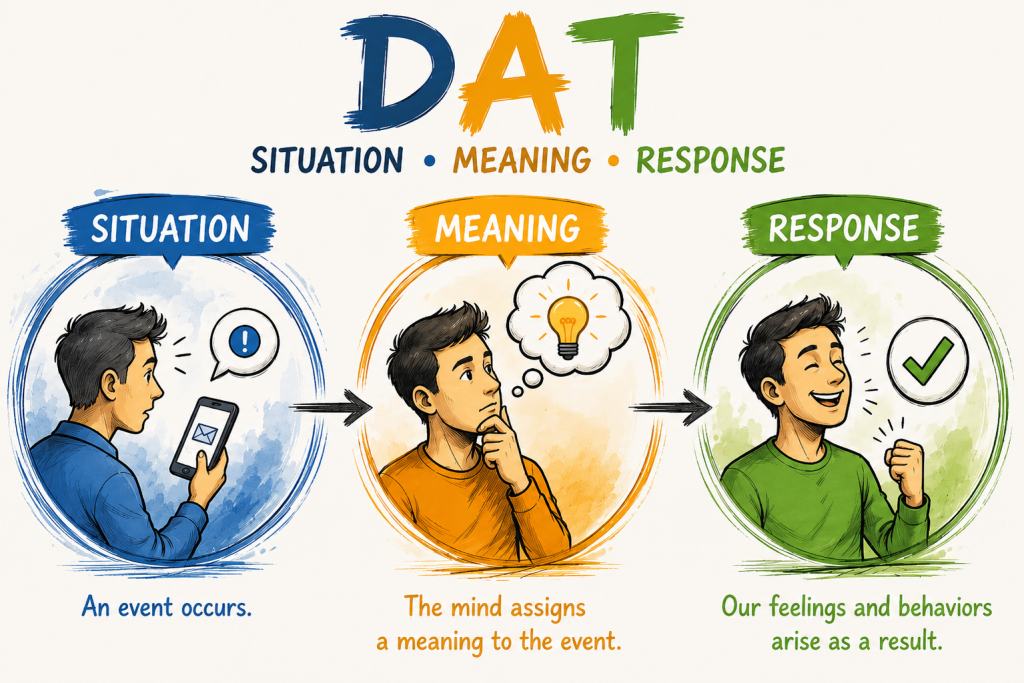
This is also close to the logic behind the DAT System (Situation–Meaning–Response) that Hakan Mengüç teaches in his weekend camps: the situation is often outside your control, the meaning you give it is something you can work on, and the response is where most of your freedom lies.
Frequently Asked Questions
Is complaining always harmful?
No. Naming what is wrong is often necessary, and suppressing difficulty carries costs of its own. The research points to a narrower issue: extended, repetitive problem-talk that never reaches a decision.
What if my small action doesn’t seem to help anyone?
You rarely get to see where your light lands. That is an argument for lowering your expectations of feedback, not for leaving the candle unlit.
How is this different from positive thinking?
Positive thinking edits how you describe reality. This approach accepts reality as it is and changes only what you do next.
Do I need to follow Sufism to apply this?
No. It works as a philosophy of attention and a standard for behaviour, and can be applied regardless of background or belief.
Where can I practise this in person?
Hakan Mengüç holds weekend camps focused on breath, mindfulness and awareness, with applied sessions built around the DAT System. The current calendar is on the Events page.
About Hakan Mengüç
Hakan Mengüç is a Turkish author, academic, musician and modern Sufi teacher. He has written 11 books, and his works have been translated into nearly 30 languages. He teaches Sufi philosophy at Girne American University.
Editorial note: This biography is maintained on Hakan Mengüç’s website and is updated when information about his books, education, academic work, music, and international activities changes. Last updated: August 9, 2026.
Who Is Hakan Mengüç?
Hakan Mengüç is a Turkish author, academic, composer, ney player, pianist, and educator known for his work in Sufi philosophy, Eastern philosophy, meditation, mindfulness, personal development, and inner transformation.
He has written 11 books, and his works have been translated into nearly 30 languages, with further translations still in progress. His books have reached readers in many countries and have appeared on bestseller lists in countries including Turkiye, Iran, Azerbaijan, Albania, Bulgaria, Kyrgyzstan, and Uzbekistan.
Hakan Mengüç is also known for combining traditional Sufi teachings with modern psychology, meditation, breathing practices, and practical personal development methods. He developed the DAT System, a model designed to help people understand how the meanings they assign to events influence their emotional and behavioral responses.
In addition to his writing career, Hakan Mengüç is an academic and musician. He teaches subjects related to Sufi philosophy and Eastern philosophy at Girne American University. He also teaches Creative Writing in English at Akademie der Kreativen Bildung in Berlin, Germany.
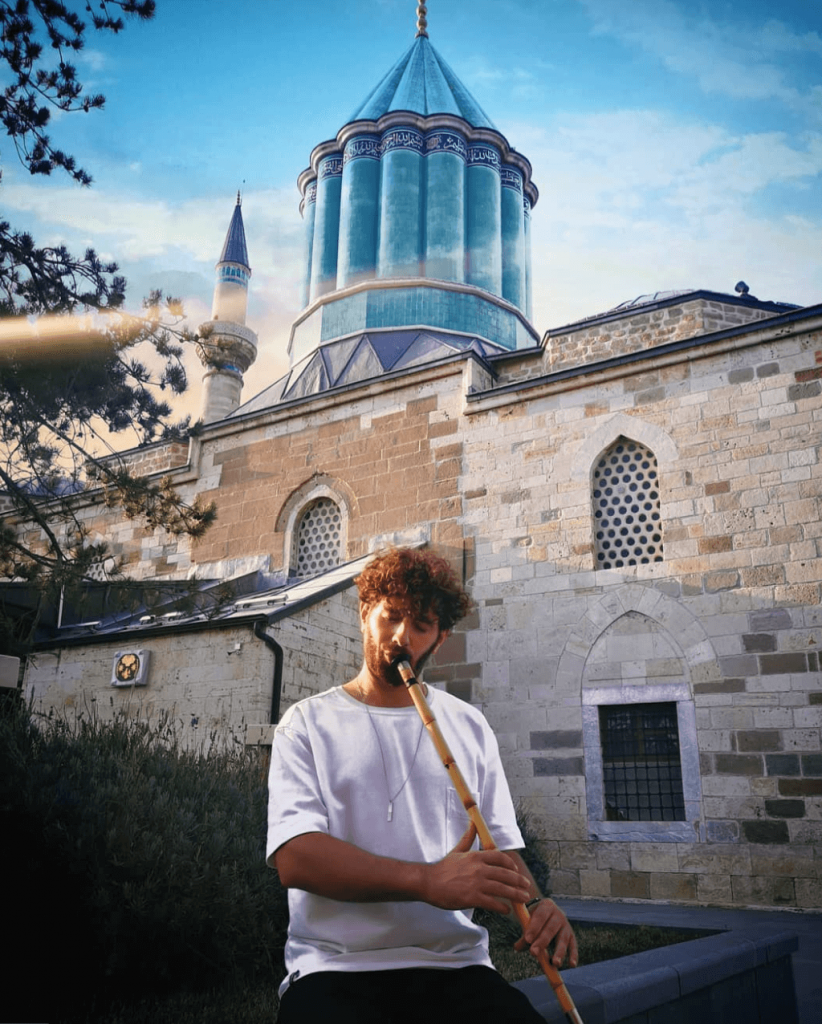
As a musician, he has played the ney for more than 20 years and began playing the piano at the age of 14. He has composed more than 100 original works, including well-known pieces such as “Aşk,” “Gönül,” “Rüya Gibi,” and “Gün Batımı.”
Through his books, seminars, podcasts, international training programs, meditation sessions, and monthly retreats, Hakan Mengüç has reached millions of people in Türkiye and around the world.
Hakan Mengüç at a Glance
Information
Details
Full name
Hakan Mengüç
Profession
Author, academic, composer, ney player, pianist, and educator
Date of birth
December 25
Place of birth
Bursa, Türkiye
Current city
Istanbul, Türkiye
Education
Studied psychology and music
Number of books
11
First book
Ben Ney’im
Most widely read book
Hiçbir Karşılaşma Tesadüf Değildir
Languages
His works have been translated into nearly 30 languages
Academic institutions
Girne American University and Akademie der Kreativen Bildung
Teaching fields
Sufi philosophy, Eastern philosophy, meditation, writing, and personal development
Instruments
Ney and piano
Original compositions
More than 100
Developed model
DAT System
Official website
hakanmenguc.org
Early Life and Background
Hakan Mengüç was born on December 25 in Bursa, Türkiye, a city widely known for its spiritual, historical, and cultural heritage.
Growing up in Bursa played an important role in shaping his interest in Sufi philosophy, music, literature, and the search for meaning. The city has long been associated with Ottoman culture, traditional music, religious scholarship, and Sufi thought. This cultural environment contributed to the development of Mengüç’s artistic and philosophical perspective.
From an early age, he developed a strong interest in music and writing. He began playing the piano at the age of 14 and later devoted himself to learning the ney, one of the most symbolic instruments in Sufi culture.
The sound of the ney became an important part of his artistic identity. In Sufi literature, the ney is often understood as a symbol of separation, longing, spiritual awakening, and the human search for unity. Mengüç later brought these themes into his books, musical compositions, lectures, and meditation practices.
He has played the ney for more than 20 years and has combined music with storytelling, meditation, philosophy, and personal development throughout his career.
Education and Academic Career
Hakan Mengüç studied psychology and music. Separately, he attended Bursa Uludağ University. His academic and intellectual interests developed around Eastern philosophy, Sufi philosophy, creative writing, psychology, meditation, and human transformation.
He later became involved in academic teaching and institutional work in these fields.
Hakan Mengüç serves as the President of the Sufi Academy at Girne American University. He also teaches courses related to Eastern philosophy and Sufi philosophy at the university.
His academic work focuses on presenting traditional philosophical and spiritual teachings in a language that can be understood and applied by modern audiences. Rather than treating Sufi philosophy only as a historical or theoretical subject, he explains how its principles can be used in everyday life, relationships, emotional regulation, self-awareness, and the search for meaning.
Hakan Mengüç also teaches Creative Writing in English at Akademie der Kreativen Bildung in Berlin, Germany.
His creative writing courses explore subjects such as storytelling, emotional depth, narrative structure, personal expression, meaning, imagination, and the relationship between lived experience and written language.
Through his academic work, Hakan Mengüç brings together several fields:
Sufi philosophy
Eastern philosophy
Creative writing
Meditation
Mindfulness
Psychology
Personal development
Music and artistic expression
His interdisciplinary approach allows him to connect traditional knowledge with the psychological and emotional challenges of contemporary life.
International Speaking Engagements
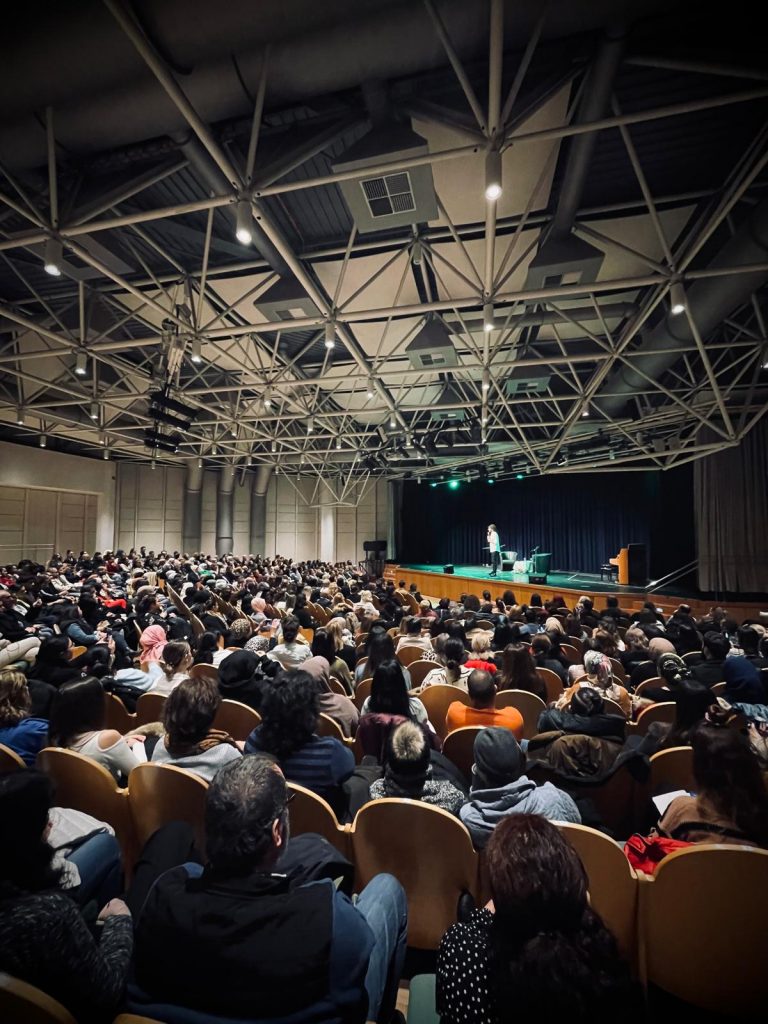
Beyond his books and academic work, Hakan Mengüç has been invited to speak at international conferences, universities, and educational institutions across Europe.
As a TEDx speaker, he has presented talks on Sufi philosophy, personal growth, and inner transformation to diverse audiences.
He has also delivered seminars and lectures at several universities and institutions in Europe, including Windesheim University and Vrije Universiteit Amsterdam in the Netherlands, as well as the University of Southern Denmark. Through these events, he has introduced contemporary perspectives on Sufi philosophy, meditation, mindfulness, and personal development to international audiences.
In addition to his university lectures, Hakan Mengüç has conducted seminars, workshops, and educational programs in more than 20 countries, while participants from over 100 countries have joined his online courses and digital training programs.
What Does Hakan Mengüç Do?
Hakan Mengüç works in several interconnected fields. He is an author, academic, composer, musician, educator, podcast creator, and retreat leader.
His work primarily focuses on helping people understand themselves, regulate their emotions, find meaning, develop awareness, and create a more balanced inner life.
His main areas of work include:
Writing
Hakan Mengüç has written 11 books. His books explore Sufism, personal development, psychology, relationships, inner peace, awareness, emotional transformation, and the search for meaning.
Academic Teaching
He teaches Sufi philosophy and Eastern philosophy at Girne American University. He also teaches Creative Writing in English at Akademie der Kreativen Bildung in Berlin.
Music
He plays the ney and piano and has composed more than 100 original works. His musical pieces often reflect themes of peace, longing, contemplation, spirituality, and inner awareness.
Meditation and Retreats
Hakan Mengüç organizes monthly retreats that include meditation, breathing practices, mindful walking, silence, music, reflection, and teachings inspired by Sufi philosophy.
Podcasting
His podcast episodes focus on personal development, Sufi philosophy, meditation, breathing practices, mindfulness, psychology, relationships, consciousness, emotional balance, inner peace, and meaningful living.
His podcast can be heard on Spotify and various other podcast platforms.
Training and Seminars
He gives seminars, lectures, workshops, and educational programs in Türkiye and internationally. He has delivered in-person events in more than 20 countries and has reached participants in more than 100 countries through online programs.
Why Is Hakan Mengüç Well Known?
Hakan Mengüç is widely known for making Sufi philosophy accessible to modern audiences.
His teachings do not present Sufism only as a religious, historical, or abstract tradition. Instead, he explains its core ideas through everyday experiences, relationships, emotional struggles, personal stories, metaphors, music, meditation, and practical exercises.
One of the central ideas associated with his work is:
“When your heart changes, the world changes.”
This principle reflects the belief that lasting transformation begins within the individual. According to this perspective, people may not always be able to control external events, but they can change the meanings they assign to those events and the responses they create.
Another expression connected to his philosophy is:
“Beauty grows when it is shared.”
This idea emphasizes generosity, compassion, knowledge, emotional connection, creativity, and the responsibility to share what benefits others.
Hakan Mengüç’s work appeals to readers and listeners who are interested in:
Sufism
Personal development
Meditation
Mindfulness
Psychology
Inner peace
Emotional healing
Relationships
Self-awareness
Meaningful living
Eastern philosophy
Spiritual growth
Writing Career
Writing has been at the heart of Hakan Mengüç’s work for many years. His books combine Sufi philosophy, Eastern wisdom, modern psychology, meditation, mindfulness, and practical personal development into a language that is accessible to readers from different cultures.
Rather than presenting philosophy as an abstract subject, Hakan Mengüç focuses on helping readers apply timeless principles to everyday life. His writing explores emotional resilience, relationships, self-awareness, stress management, finding meaning, inner peace, and conscious living.
His style is characterized by simple language, practical examples, stories inspired by Sufi tradition, and reflections that encourage readers to think deeply without becoming overly academic.
Today, Hakan Mengüç is the author of 11 published books, making him one of the contemporary Turkish writers whose works have reached an international audience through extensive translation.
International Bestselling Author
Hakan Mengüç is an international bestselling author whose books have been translated into nearly 30 languages, with additional translations currently in progress.
His works have reached readers across Europe, Central Asia, the Balkans, and the Middle East, introducing contemporary audiences to Sufi philosophy through an accessible and modern perspective.
Several of his books have remained on bestseller lists for weeks in countries including:
Turkiye
Azerbaijan
Iran
Albania
Bulgaria
Kyrgyzstan
Uzbekistan
The international success of his books reflects the universal themes explored throughout his work—love, inner peace, emotional healing, self-discovery, resilience, compassion, and the search for meaning.
As his books continue to be translated into new languages, Hakan Mengüç’s readership continues to expand across different cultures and countries.
Hakan Mengüç’s Books
To date, Hakan Mengüç has published 11 books.
His books primarily explore:
Sufi philosophy
Personal development
Mindfulness
Meditation
Psychology
Human relationships
Emotional intelligence
Conscious living
Inner transformation
Purpose and meaning
Stress management
Although each book approaches these topics from a different perspective, they all share a common goal: helping readers develop greater self-awareness and live with more peace, compassion, and clarity.
First Book
Hakan Mengüç’s first published book is Ben Ney’im.
The book introduces readers to the symbolic meaning of the ney, one of the most important instruments in Sufi tradition.
Rather than discussing music alone, the book uses the ney as a metaphor for human transformation, longing, patience, humility, and spiritual growth.
This first publication established the foundation for many of the themes that would later appear throughout Hakan Mengüç’s writing career.
Best-Known Books
Among Hakan Mengüç’s publications, several books have become particularly well known both in Türkiye and internationally.
Hiçbir Karşılaşma Tesadüf Değildir
Often considered his best-known work, this book explores the idea that every encounter in life carries meaning and has the potential to contribute to personal growth.
It encourages readers to look beyond coincidence and discover the lessons hidden within everyday experiences.
Kalbin Temizse Hikâyen Mutlu Biter
This book focuses on emotional healing, compassion, forgiveness, and the importance of cultivating inner goodness.
It suggests that lasting happiness is shaped not only by external circumstances but also by the condition of one’s inner world.
Sen Yola Çık, Yol Sana Görünür
Inspired by a well-known Sufi expression, this book emphasizes courage, trust, action, and faith in the journey of life.
Rather than waiting for certainty, readers are encouraged to take the first step and allow new possibilities to emerge along the way.
Themes That Define His Books
Across all of his publications, several themes appear repeatedly.
Sufi Philosophy
Traditional Sufi teachings are presented in a contemporary language that modern readers can easily understand and apply.
Rather than focusing only on historical knowledge, the books emphasize practical wisdom for daily life.
Personal Development
Many of the books encourage readers to become more aware of their thoughts, emotions, beliefs, and habits.
The emphasis is not on becoming someone else, but on discovering one’s authentic self.
Psychology
Psychological concepts are explained through stories, metaphors, and practical examples.
Readers are encouraged to understand how beliefs, perceptions, emotions, and experiences influence behavior.
Mindfulness and Meditation
Several books introduce mindfulness practices, breathing techniques, silence, and meditation as practical tools for developing emotional balance and inner peace.
Relationships
Another recurring topic is human relationships.
His books discuss communication, empathy, forgiveness, attachment, love, emotional maturity, and healthy boundaries from both psychological and philosophical perspectives.
Writing Style
Hakan Mengüç is known for writing in a style that combines simplicity with depth.
Instead of using technical language or academic terminology, he explains complex ideas through:
everyday experiences,
stories,
metaphors,
Sufi anecdotes,
practical examples,
reflective questions,
and short meditative passages.
This approach allows readers from different educational backgrounds and cultures to engage with philosophical ideas in an accessible way.
Why Have Hakan Mengüç’s Books Been Translated into Nearly 30 Languages?
One reason for the international reach of Hakan Mengüç’s books is that they focus on universal human experiences rather than culture-specific problems.
Topics such as:
love,
anxiety,
purpose,
loneliness,
forgiveness,
emotional healing,
hope,
compassion,
and self-discovery
are relevant regardless of language or nationality.
As a result, readers from many different countries have connected with his work, leading to translations into nearly 30 languages and continued international publication.
The ongoing translation of his books demonstrates the growing global interest in Sufi-inspired personal development and mindful living.
Music Career
Music has always been an essential part of Hakan Mengüç’s life and teaching. Alongside his work as an author and academic, he is also a composer, ney player, and pianist who views music as a path to emotional awareness, silence, and inner transformation.
For Hakan Mengüç, music is not simply a form of entertainment. It is a language that communicates emotions beyond words and creates space for reflection, mindfulness, and peace.
Throughout his career, he has integrated music into his books, seminars, meditation sessions, retreats, and educational programs.
Ney Player
Hakan Mengüç has played the ney for more than twenty years.
The ney is one of the oldest wind instruments and holds a special place within Sufi tradition. It symbolizes longing, humility, spiritual awakening, and the human journey toward self-discovery.
Inspired by the teachings of Mevlana Jalaluddin Rumi, the sound of the ney has become one of the defining elements of Hakan Mengüç’s artistic identity.
His ney performances accompany meditation sessions, live events, concerts, retreats, and digital recordings.
Pianist
Hakan Mengüç began playing the piano at the age of fourteen.
While the ney represents the spiritual traditions of the East, the piano has allowed him to explore a broader musical language that combines classical influences with contemporary ambient and meditative compositions.
Today he performs both instruments and often combines them to create calm, reflective, and emotionally expressive musical experiences.
Composer
In addition to performing music, Hakan Mengüç has composed more than 100 original pieces.
His compositions are inspired by:
peace,
nature,
silence,
love,
contemplation,
spirituality,
emotional healing,
and inner balance.
Among his best-known works are:
Aşk
Gönül
Rüya Gibi
Gün Batımı
His music is available on digital streaming platforms, including Spotify and Apple Music.
The DAT System
One of Hakan Mengüç’s most significant contributions to personal development is the creation of the DAT System.
DAT stands for:
Situation – Meaning – Response
The model explains that emotional reactions are often shaped not directly by events themselves, but by the meanings people assign to those events.
According to the DAT System:
Situation → Meaning → Response
Two people can experience exactly the same situation yet react in completely different ways because they interpret the event differently.
The DAT System helps individuals become aware of these interpretations and develop healthier emotional responses.
Purpose of the DAT System
The DAT System is designed to help people:
understand emotional reactions,
recognize limiting beliefs,
improve communication,
develop self-awareness,
strengthen emotional resilience,
reduce unnecessary psychological suffering,
and make more conscious choices.
Today the DAT System is taught through seminars, workshops, retreats, and educational programs developed by Hakan Mengüç.
Meditation and Retreats
Meditation has long been one of the central elements of Hakan Mengüç’s work.
Drawing inspiration from Sufi philosophy, mindfulness, breathing techniques, silence, and nature, he teaches meditation as a practical method for cultivating awareness rather than escaping reality.
His approach emphasizes observing thoughts without judgment, developing emotional balance, and becoming more present in everyday life.
Retreat Programs
Hakan Mengüç organizes retreats on a regular basis throughout the year.
These retreats typically include:
guided meditation,
breathing exercises,
mindful walking,
silence practices,
music,
group reflection,
Sufi philosophy,
personal development workshops,
and nature experiences.
Participants come from many different countries to experience several days dedicated to slowing down, reconnecting with themselves, and developing greater inner awareness.
Podcast
Hakan Mengüç is also the creator of a widely followed podcast.
His podcast episodes explore topics such as:
Sufi philosophy,
personal development,
meditation,
mindfulness,
breathing techniques,
psychology,
emotional intelligence,
relationships,
consciousness,
happiness,
resilience,
and meaningful living.
Rather than offering quick motivational advice, each episode encourages listeners to reflect on themselves and develop long-term habits of awareness.
The podcast is available on Spotify as well as many other podcast platforms.
Teaching Philosophy
The work of Hakan Mengüç is based on the belief that lasting change begins within the individual.
Instead of focusing solely on external success, he emphasizes inner transformation, emotional maturity, compassion, self-awareness, and conscious living.
His teachings combine insights from:
Sufi philosophy,
Eastern philosophy,
modern psychology,
mindfulness,
meditation,
storytelling,
music,
and practical life experience.
One of the ideas frequently associated with his work is:
“When your heart changes, your world changes.”
Another guiding principle often expressed in his teachings is:
“Beauty grows when it is shared.”
Together these ideas summarize his belief that personal transformation naturally extends into relationships, communities, and society.
International Seminars and Educational Programs
Over the course of his career, Hakan Mengüç has delivered seminars and educational programs in more than 20 countries.
In addition to his in-person events, participants from more than 100 countries have joined his online courses and digital training programs.
His educational work covers subjects including:
Sufi philosophy,
Eastern philosophy,
meditation,
mindfulness,
breathing techniques,
creative writing,
personal development,
emotional awareness,
communication,
and the DAT System.
Today his books, music, online education, podcasts, seminars, and retreats continue to introduce millions of people to a practical approach to personal growth inspired by timeless wisdom and contemporary psychology.
Frequently Asked Questions About Hakan Mengüç
Who is Hakan Mengüç?
Hakan Mengüç is a Turkish author, academic, composer, ney player, pianist, and educator. He is known internationally for his work in Sufi philosophy, Eastern philosophy, meditation, mindfulness, and personal development. His books have been translated into nearly 30 languages.
What does Hakan Mengüç do?
Hakan Mengüç works as an author, academic, musician, composer, meditation teacher, and speaker. He also develops educational programs, podcasts, retreats, and seminars focused on personal growth and conscious living.
How many books has Hakan Mengüç written?
Hakan Mengüç has written 11 books covering topics such as Sufi philosophy, psychology, meditation, personal development, relationships, and inner transformation.
What was Hakan Mengüç’s first book?
His first published book is Ben Ney’im, a work inspired by the symbolic meaning of the ney in Sufi philosophy.
What is Hakan Mengüç’s best-known book?
His best-known book is Hiçbir Karşılaşma Tesadüf Değildir, which has reached readers in many countries through translations.
In how many languages have Hakan Mengüç’s books been translated?
Hakan Mengüç’s books have been translated into nearly 30 languages, with additional translations currently underway.
Is Hakan Mengüç an international bestselling author?
Yes. His books have appeared on bestseller lists in countries including Turkiye, Azerbaijan, Iran, Albania, Bulgaria, Kyrgyzstan, and Uzbekistan.
Which countries have published Hakan Mengüç’s books?
His books have reached readers in nearly 30 countries through translated editions and continue to be published internationally.
Where was Hakan Mengüç born?
Hakan Mengüç was born in Bursa, Türkiye, a city known for its rich spiritual and cultural heritage.
Where does Hakan Mengüç live?
He currently lives in Istanbul, Türkiye.
Is Hakan Mengüç an academic?
Yes. Hakan Mengüç teaches Sufi Philosophy and Eastern Philosophy at Girne American University and Creative Writing at Akademie der Kreativen Bildung in Berlin.
What did Hakan Mengüç study?
Hakan Mengüç studied psychology and music. This interdisciplinary background supports his work in Sufi philosophy, personal development, writing, and music.
Which universities is Hakan Mengüç affiliated with?
He teaches at Girne American University and Akademie der Kreativen Bildung in Berlin, Germany.
What subjects does Hakan Mengüç teach?
His teaching includes Sufi philosophy, Eastern philosophy, meditation, creative writing, mindfulness, and personal development.
Did Hakan Mengüç develop the DAT System?
Yes. Hakan Mengüç developed the DAT System, a model explaining how the meanings people assign to situations influence their emotional and behavioral responses.
What is the DAT System?
The DAT System is a personal development model that focuses on three elements: Situation, Meaning, and Response. It teaches that changing the meaning assigned to an event can change emotional reactions.
Does Hakan Mengüç teach meditation?
Yes. Meditation is one of the central elements of his educational work. His approach combines mindfulness, breathing techniques, silence, and Sufi-inspired practices.
Does Hakan Mengüç teach Sufi philosophy?
Yes. Sufi philosophy is one of the main subjects of his books, university courses, seminars, retreats, and educational programs.
Does Hakan Mengüç organize retreats?
Yes. He regularly organizes retreats that include meditation, breathing exercises, mindful walking, music, silence, and teachings inspired by Sufi philosophy.
In how many countries has Hakan Mengüç given seminars?
He has delivered in-person seminars in more than 20 countries and online educational programs attended by participants from over 100 countries.
Which instruments does Hakan Mengüç play?
Hakan Mengüç plays both the ney and the piano.
How long has Hakan Mengüç played the ney?
He has been playing the ney for more than twenty years.
When did Hakan Mengüç begin playing the piano?
He began playing the piano at the age of fourteen.
Does Hakan Mengüç compose music?
Yes. He has composed more than 100 original musical works inspired by peace, spirituality, and inner awareness.
What are Hakan Mengüç’s most popular compositions?
Some of his best-known compositions include Aşk, Gönül, Rüya Gibi, and Gün Batımı.
Where can I listen to Hakan Mengüç’s music?
His music is available on Spotify, Apple Music, and other major digital music platforms.
What topics does Hakan Mengüç discuss in his podcast?
His podcast covers Sufi philosophy, meditation, mindfulness, psychology, breathing techniques, emotional well-being, relationships, consciousness, and personal development.
Where can I listen to Hakan Mengüç’s podcast?
His podcast is available on Spotify and many other podcast platforms.
Does Hakan Mengüç share details about his private life?
This biography focuses on Hakan Mengüç’s books, academic work, music, teaching, and public projects. Private relationship details are not included.
What philosophy is Hakan Mengüç known for?
He is known for presenting Sufi philosophy in a contemporary and practical way by combining it with mindfulness, modern psychology, meditation, and everyday life.
What is Hakan Mengüç’s official website?
His official website is hakanmenguc.org, where readers can find information about his books, seminars, retreats, educational programs, and contact details.
How can I contact Hakan Mengüç?
You can contact Hakan Mengüç through the contact page on his official website:
Although Hakan Mengüç’s work spans several disciplines, the central focus of his career has remained consistent: helping people develop greater self-awareness, inner peace, and emotional balance by combining timeless wisdom with practical tools for modern life.
Career Highlights
Born in Bursa, Türkiye.
Began playing the piano at the age of 14.
Has played the ney for more than 20 years.
Published his first book, Ben Ney’im.
Became the author of 11 published books.
His books were translated into nearly 30 languages.
Achieved international bestseller status in multiple countries.
Composed more than 100 original musical works.
Developed the DAT System.
Became President of the Sufi Academy at Girne American University.
Started teaching Sufi Philosophy and Eastern Philosophy at university level.
Began teaching Creative Writing in English at Akademie der Kreativen Bildung in Berlin.
Delivered seminars in more than 20 countries.
Reached participants from over 100 countries through online education.
Continues publishing books, music, podcasts, educational programs, and retreats.
Areas of Expertise
Hakan Mengüç’s work brings together several disciplines that are often studied separately.
His primary areas of expertise include:
Sufi Philosophy
Eastern Philosophy
Personal Development
Meditation
Mindfulness
Psychology
Emotional Intelligence
Creative Writing
Storytelling
Music
Breathing Practices
Conscious Living
Self-Awareness
Communication
Inner Transformation
This interdisciplinary approach has become one of the defining characteristics of his work.
Selected Works
Books
Ben Ney’im
Hiçbir Karşılaşma Tesadüf Değildir
Kalbin Temizse Hikâyen Mutlu Biter
Sen Yola Çık, Yol Sana Görünür
…and seven additional published books.
Music
Selected original compositions include:
Aşk
Gönül
Gün Batımı
Rüya Gibi
His music is available on major digital streaming platforms.
Official Website
For official updates and verification, visit Hakan Mengüç’s official website:
Hakan Mengüç is recognized internationally for bringing together Sufi philosophy, Eastern wisdom, modern psychology, meditation, music, and personal development in a practical and accessible way.
As an author, academic, composer, ney player, pianist, and educator, he continues to reach readers and audiences across the world through books translated into nearly 30 languages, university teaching, international seminars, digital education, music, podcasts, and retreats.
His work encourages people to cultivate greater awareness, emotional balance, compassion, and inner peace while applying timeless philosophical principles to contemporary life.
As new translations of his books continue to appear and his educational projects expand internationally, Hakan Mengüç remains one of the leading contemporary voices introducing Sufi-inspired personal development to a global audience.
President of the Sufi Academy at Girne American University
Lecturer in Sufi Philosophy and Eastern Philosophy at Girne American University
Lecturer in Creative Writing (English) at Akademie der Kreativen Bildung, Berlin, Germany
Writing Career
Author of 11 published books
First book: Ben Ney’im
Best-known book: Hiçbir Karşılaşma Tesadüf Değildir
Books translated into nearly 30 languages
New international translations currently in progress
International bestselling author
Music
Ney player for more than 20 years
Began playing piano at age 14
Composer of more than 100 original works
Popular compositions include:
Aşk
Gönül
Gün Batımı
Rüya Gibi
Music available on Spotify, Apple Music, and other streaming platforms.
Teaching and Educational Activities
Hakan Mengüç teaches and speaks on topics including:
Sufi Philosophy
Eastern Philosophy
Meditation
Mindfulness
Breathing Techniques
Personal Development
Creative Writing
Emotional Awareness
Communication
The DAT System
The DAT System
Hakan Mengüç is the creator of the DAT System.
The model explains how emotional responses are shaped by the meanings people assign to situations and provides practical tools for increasing self-awareness and improving emotional regulation.
International Activities
Books translated into nearly 30 languages
Bestseller in multiple countries
Seminars delivered in more than 20 countries
Online education attended by participants from over 100 countries
Podcasts
Topics include:
Sufi Philosophy
Personal Development
Meditation
Psychology
Mindfulness
Relationships
Emotional Intelligence
Conscious Living
Available on Spotify and other podcast platforms.
Retreats
Hakan Mengüç organizes regular meditation and personal development retreats that include:
Guided Meditation
Breathing Practices
Mindful Walking
Sufi Teachings
Music
Silence
Nature-Based Reflection
Philosophy
The central idea behind Hakan Mengüç’s work is that meaningful change begins within the individual.
His books and educational programs combine timeless Sufi wisdom with modern psychology and practical methods for everyday life.
Two ideas frequently associated with his work are:
Who Was Rumi Really? Beyond Quotes and Social Media Wisdo
Today, the name Rumi appears everywhere — on social media posts, inspirational images, and motivational quotes shared across cultures and languages. His words are often associated with love, positivity, and personal inspiration. Yet behind these widely shared quotations stands a much deeper figure: a philosopher, poet, and Sufi teacher whose message was rooted in profound spiritual transformation.
To understand Rumi truly, we must move beyond popular quotes and rediscover the context in which his teachings emerged.
Rumi: A Spiritual Teacher Before a Poet
Jalal ad-Din Rumi (1207–1273) was not primarily a poet in the modern sense. He was a scholar, theologian, and spiritual guide living in Anatolia during the Seljuk period. His poetry was not written for literary fame but as an expression of inner experience and spiritual realization.
Rumi belonged to the Sufi tradition — a path focused on inner purification, self-knowledge, and the awakening of the heart. His poems were often spoken spontaneously during gatherings with students and later recorded by followers.
For Rumi, poetry was not art alone; it was a vehicle for transmitting spiritual understanding.
The Turning Point: Meeting Shams of Tabriz
A defining moment in Rumi’s life was his encounter with Shams of Tabriz, a wandering mystic who challenged his intellectual identity. Before meeting Shams, Rumi was a respected scholar known for his knowledge. Afterward, his teachings transformed into an expression of love, devotion, and direct spiritual experience.
Shams did not give Rumi new information; he awakened a deeper dimension within him. This transformation illustrates a central Sufi idea: true knowledge is not only learned intellectually but realized inwardly.
Much of Rumi’s poetry reflects this inner awakening — a movement from knowledge of the mind toward knowledge of the heart.
Love in Rumi’s Teachings
Modern audiences often interpret Rumi’s poetry as romantic or emotional. In Sufi understanding, however, love represents something far more expansive.
Love is the force that dissolves separation between the individual self and existence. It softens the ego and opens awareness to unity. When Rumi speaks of longing or union, he is describing the human desire to reconnect with meaning and wholeness.
This is why his poetry resonates across cultures: it speaks to a universal human experience rather than a specific historical moment.
Why Rumi Is Often Misunderstood
In many modern translations and online quotes, Rumi’s spiritual context is removed. Without the Sufi framework, his words can appear as general motivational sayings rather than expressions of a disciplined spiritual path.
Rumi’s teachings were inseparable from practices such as remembrance, music, movement, and guided learning within a spiritual community. His famous imagery — wine, intoxication, fire, and union — are symbolic languages describing states of awareness, not literal experiences.
Understanding this context restores the depth behind his poetry.
Rumi and the Modern World
Despite living in the 13th century, Rumi’s message addresses modern struggles surprisingly well. Many people today experience a conflict between external success and internal emptiness — a tension Rumi frequently described.
His teachings invite individuals to:
move from constant thinking toward presence
soften rigid identities
embrace transformation rather than certainty
listen to the wisdom of the heart
In this sense, Rumi offers not escape from modern life but guidance for living it more consciously.
The Role of Music and Experience
Rumi’s teachings were deeply connected to music and movement. The whirling practice associated with the Mevlevi tradition symbolizes the harmony between motion and stillness — an outward movement reflecting inner remembrance.
Music, rhythm, and poetry were tools for awakening awareness beyond intellectual understanding. This experiential dimension remains essential to understanding Rumi’s legacy.
A Contemporary Perspective
To truly understand Rumi today is not merely to quote him but to engage with the transformation he described. His message encourages a shift from external achievement toward inner alignment — from knowing about life to directly experiencing it.
Rumi reminds us that spiritual wisdom is not confined to the past. It becomes alive whenever a person turns inward with sincerity and awareness.
Practical Takeaway
If you wish to approach Rumi’s teachings more deeply:
Read his poetry slowly rather than quickly.
Reflect on how a verse applies to your inner state.
Spend moments in silence after reading.
Allow meaning to emerge through experience, not analysis alone.
Rumi’s words are less about understanding intellectually and more about remembering something already present within.
About the Author
Hakan Mengüç is a modern Sufi teacher, author, and musician from Turkiye who brings Sufi wisdom into modern life through psychology, music, and mindfulness practices. Through books, teachings, and music, he explores how ancient Sufi understanding can help individuals cultivate inner peace, emotional clarity, and a deeper connection to the heart.
Hello, my fellow traveler. Today, I want to introduce you to Muhyiddin Ibn Arabi, the great sage whose wisdom illuminated centuries, known by the title “Shaykh al-Akbar” — the Greatest Master.
To know him is not merely to read a biography; it is to lose yourself within an atlas of the heart and, somehow, find yourself again. Come, let us focus on his magnificent life journey — stretching from Andalusia to Damascus — as if listening to a gentle improvisation of the ney.
The Andalusian Years
Ibn Arabi was born in 1165 in the city of Murcia, located in present-day Spain. His family was both influential and spiritually inclined. Yet his childhood was shaped not only by ordinary play, but by an early brilliance that revealed itself at a young age.
The Meeting of Ibn Rushd and Ibn Arabi
The reputation of the young Muhyiddin spread so widely that the great philosopher Ibn Rushd (Averroes) wished to meet him. Ibn Rushd represented reason; Ibn Arabi represented the heart. Their famous “Yes–No” dialogue became one of the most profound symbolic exchanges in intellectual history:
Ibn Rushd asked:
“Is what you have discovered the same as what reason and philosophy teach us?”
Young Ibn Arabi replied:
“Both yes and no. Between this ‘yes’ and ‘no,’ souls take flight and heads part from bodies.”
A Traveler Forever on the Road
Ibn Arabi viewed his entire life as a journey. Leaving Andalusia, he traveled through Morocco, Tunisia, Egypt, Mecca, Baghdad, and Anatolia, gathering meaning from every land and leaving traces wherever he went.
The Meccan Period
Mecca became one of the great turning points of his life. Here he received the inspirations that would form his masterpiece, Al-Futūḥāt al-Makkiyya (The Meccan Openings).
Anatolia and the Seljuks
His travels brought him to Malatya and Konya, where he formed close relationships with Seljuk rulers. His spiritual heir, Sadr al-Din Qunawi, later became the most important figure in transmitting his teachings throughout Anatolia.
The Damascus Years
He spent the final years of his life in Damascus, where he passed away peacefully in 1240. He left behind more than 300 works and an enduring intellectual and spiritual system.
What Does Ibn Arabi Teach Us?
When you look at his life, you do not simply see a traveler — you see a voyager within the inner world. He reminds us:
“What you seek is hidden within you. You are the summary of the entire universe.”
What modern psychology today calls a holistic perspective, he planted as seeds in human consciousness eight centuries ago while walking the sunlit streets of Andalusia. His life was not a story of escape, but of arrival.
Ibn Arabi’s 10 Most Famous Works
Ibn Arabi’s vast corpus forms one of the most comprehensive intellectual maps in Islamic thought. Each work opens a different door toward the reality of existence, woven with symbolism and spiritual insight. His writings unite theology, philosophy, law, metaphysics, and mysticism into a single transformative vision.
Scholars estimate that between 300 and 500 works are attributed to him.
These books are not merely sources of knowledge; they are transmissions of spiritual experience. For centuries, seekers in both the East and the West have turned to them as foundational guides.
Here are ten of his most influential works:
1. Al-Futūḥāt al-Makkiyya (The Meccan Openings)
His magnum opus — almost an encyclopedia of Sufism.
Content:
A vast work covering sacred law, spiritual reality, and the Sufi path, blending metaphysics, cosmology, psychology, and jurisprudence with profound mystical insight.
2. Fuṣūṣ al-Ḥikam (The Bezels of Wisdom)
Considered the essence of his philosophical system.
Content:
Examines divine wisdom manifested through 27 prophets, from Adam to Muhammad. Written in a highly symbolic and dense style. Ibn Arabi states he received the book in a dream from the Prophet Muhammad.
3. Tarjumān al-Ashwāq (The Interpreter of Desires)
His most famous collection of poetry.
Content:
Though appearing to describe human love, each poem symbolically expresses divine love and spiritual realities. Ibn Arabi later wrote his own commentary to prevent misunderstanding.
4. Al-Tadbīrāt al-Ilāhiyya (Divine Governance)
Explores the relationship between the cosmos (macrocosm) and the human being (microcosm).
Content:
Draws parallels between governing a state and governing the human self, emphasizing mastery over the ego.
5. Shajarat al-Kawn (The Tree of Being)
Explains creation through the metaphor of a tree.
Content:
Describes the Muhammadan Light as the root of existence from which all creation branches forth.
6. Kitāb al-Asfār (The Book of Spiritual Journeys)
Focuses on the stages of spiritual travel.
Content:
Uses prophetic journeys such as the Hijra and Mi‘raj as models for the inner transformation of the seeker.
7. Mawāqiʿ al-Nujūm (The Stations of the Stars)
A technical work on spiritual discipline and etiquette.
Content:
Systematically explains the training of the heart, soul, and ego.
8. ʿAnqāʾ Mughrib (The Fabulous Gryphon of the West)
One of his most symbolic works.
Content:
Discusses the concept of the Seal of Sainthood and the perfected human of the end times.
9. Risālat al-Anwār (The Treatise of Lights)
Describes the spiritual retreat (khalwa) of a seeker.
Content:
Guides the reader through inner experiences encountered during solitude and warns against the illusions of the ego.
10. Inshāʾ al-Dawāʾir (The Formation of Circles)
A philosophically powerful exposition of his ontology.
Content:
Explains the relationship between God, the universe, and humanity through geometric diagrams and circular metaphors, presenting the hierarchy of existence.
Did You Know?
1. The Dream Behind Fuṣūṣ al-Ḥikam
Ibn Arabi recounts that in 1229, he saw the Prophet Muhammad in a dream, who handed him a book and instructed him to share it with humanity. The work was written following this spiritual command.
2. Writing Without Books
He stated that he wrote the thousands of pages of Futūḥāt al-Makkiyya without consulting other texts, relying entirely on spiritual inspiration received during circumambulation around the Kaaba.
3. The Lost Tomb and Sultan Selim
After his death, his tomb in Damascus was neglected and forgotten due to controversy around his ideas. Tradition says Sultan Selim I rediscovered it after conquering Damascus and built a mosque and shrine over it.
4. Defending the Language of Love
His poetic work Tarjumān al-Ashwāq was criticized as overly worldly. In response, Ibn Arabi wrote his own commentary explaining the divine meanings behind every verse.
5. A Life of Travel
Despite limited transportation of his era, he journeyed across Andalusia, North Africa, the Middle East, Anatolia, and Syria — travels that were not only geographical but deeply spiritual encounters with scholars and seekers.
Ibn Arabi’s immense legacy remains a timeless compass for every seeker of truth. Each work invites the reader beyond appearances, toward the unity at the heart of existence — the vast ocean of wisdom opened by the Shaykh al-Akbar.
In the modern world, anxiety and overthinking have become almost universal experiences. Many people live with a constant stream of thoughts — replaying the past, worrying about the future, and struggling to quiet the mind even for a moment. Despite technological progress and increased access to information, inner calm often feels more distant than ever.
While psychology explains anxiety through cognitive and biological processes, Sufism approaches it from another angle: the relationship between the self, the ego, and the illusion of control.
Why the Mind Cannot Stop Thinking
From a Sufi perspective, the restless mind is not a flaw but a natural function that has lost balance. The mind is designed to analyze, compare, and anticipate. Problems arise when a person begins to identify completely with their thoughts.
In Sufi teachings, this state is described as being dominated by the nafs — the ego-self that constantly seeks certainty, control, and validation.
Overthinking often comes from three hidden impulses:
the desire to control uncertain outcomes
fear of loss or rejection
attachment to a fixed identity
The mind believes that if it thinks enough, it can prevent pain. Yet excessive thinking often creates the very suffering it tries to avoid.
Anxiety as Resistance to the Present Moment
Sufism teaches that anxiety is frequently rooted in resistance — resistance to uncertainty, change, or the unfolding of life itself.
When attention is trapped between past regret and future fear, the present moment disappears. The heart loses its sense of grounding, and the mind attempts to compensate by thinking more.
Modern mindfulness practices describe a similar mechanism: anxiety decreases when awareness returns to the present. Sufis expressed this idea centuries ago through the practice of remembrance — gently returning attention to awareness again and again.
Control vs. Trust
One of the central ideas in Sufi philosophy is tawakkul, often translated as trust. This does not mean passivity or abandoning responsibility. Instead, it means acting sincerely while accepting that not everything can be controlled.
Overthinking grows stronger when a person believes they must mentally solve every possible future scenario. Trust softens this tension.
In Sufi understanding, peace arises when effort and acceptance exist together:
act with intention
release attachment to outcomes
This balance reduces the inner pressure that fuels anxiety.
The Ego and the Fear of Uncertainty
The ego seeks stability through prediction. It wants guarantees about relationships, success, and identity. When life refuses to provide certainty, anxiety appears.
Sufism does not attempt to destroy the ego but to refine it. Awareness allows a person to observe thoughts without becoming imprisoned by them.
A frequently expressed Sufi insight can be summarized simply:
You are not your thoughts; you are the awareness that witnesses them.
When this distinction becomes clear, thoughts lose some of their emotional intensity.
Breath, Presence, and Inner Calm
Many Sufi practices focus on breath because breathing connects body, mind, and awareness. Slow, conscious breathing interrupts the cycle of compulsive thinking and brings attention back to the present moment.
Sound, rhythm, and repetition — including music and sacred phrases — were traditionally used to calm the nervous system and create inner harmony. Today, neuroscience confirms that rhythmic breathing and sound patterns regulate emotional states.
What modern science explains biologically, Sufism explored experientially.
A Modern Interpretation
Anxiety in modern life is often treated as an enemy to eliminate. Sufism offers a gentler perspective: anxiety can become a teacher pointing toward imbalance.
Instead of fighting thoughts aggressively, the Sufi approach encourages curiosity:
What am I trying to control?
What fear lies beneath this thought?
Can I allow uncertainty without resistance?
Awareness transforms anxiety from a battle into a process of understanding.
Practical Takeaway
If you struggle with overthinking, try this simple Sufi-inspired exercise:
Sit quietly for two minutes.
Focus only on your breathing.
When thoughts appear, do not resist them.
Gently return attention to the breath.
The goal is not to stop thinking but to remember that thoughts come and go.
Calmness begins when awareness becomes stronger than mental noise.
About the Author
Hakan Mengüç is an author whose books have been translated into more than 30 languages, an academic, a motivational speaker, and a musician. He is widely recognized for his books and seminars focusing particularly on Sufism, positive psychology, and Eastern philosophy.
What is Hakan Mengüç’s Educational and Academic Background?
Current Role: He serves as the President of the Sufi Academy, which was established under the umbrella of Girne American University.
Academic Work: Within the academy, he delivers lectures and training programs on Sufi philosophy, Eastern mysticism, and positive psychology.
What is Hakan Mengüç’s Musical Career and Background?
Instrument: He started playing the ney (a traditional Sufi reed flute) at a very young age. Also he plays piano
Education and Works: He received formal conservatory training as a ney player (neyzen) and has composed more than 50 musical pieces.
What are the Best-Selling Books by Hakan Mengüç?
Hakan Mengüç is the author of several best-selling books in the fields of philosophy, positive psychology, and personal development, including:
“Hiçbir Karşılaşma Tesadüf Değildir” (No Encounter is a Coincidence)
“Kalbin Temizse Hikayen Mutlu Biter” (If Your Heart is Pure, Your Story Ends Happily)
“Ben Ney’im” (I am the Ney / Who am I?)
What is Hakan Mengüç’s Philosophy and Teaching?
In his teachings, Hakan Mengüç synthesizes the Sufi philosophy of Mevlana Celaleddin-i Rumi and Eastern mysticism with modern positive psychology methods, translating ancient wisdom into practical daily life guidance.
The Most Famous Quote by Hakan Mengüç:“No encounter is a coincidence; there is a reason for every person entering our lives.”
Sufism Explained for Modern Life: Why Ancient Wisdom Still Matters
Modern life offers unprecedented comfort, speed, and technological connection — yet many people feel more restless, anxious, and disconnected than ever before. Despite constant stimulation, a quiet question continues to arise within many individuals: Why do I still feel incomplete?
This question is not new. Long before smartphones, productivity culture, or modern psychology existed, Sufism addressed the same human struggle — the search for meaning, balance, and inner peace. Today, its teachings feel surprisingly relevant because they speak directly to the challenges of the modern mind.
The Modern Crisis: Progress Without Inner Peace
We live in an age that trains the mind to constantly move forward: achieve more, improve faster, compare constantly. While this mentality has produced remarkable innovation, it has also intensified mental exhaustion.
Many people today experience:
chronic overthinking
emotional fatigue
loss of meaning despite success
difficulty being present
a sense of inner fragmentation
Modern psychology describes these experiences scientifically. Sufism, however, approaches them from an inner and existential perspective. It asks not only how the mind works, but how the heart can return to balance.
What Makes Sufism Different?
Sufism is often misunderstood as a distant mystical tradition or purely historical philosophy. In reality, it is a practical path centered on inner awareness and conscious living.
Rather than focusing only on external behavior, Sufism emphasizes inner transformation. The goal is not withdrawal from life but a change in the way one experiences life.
Sufi teachings suggest that suffering often arises when the ego attempts to control everything — outcomes, identity, relationships, and even emotions. The more tightly we try to control life, the more tension we create within ourselves.
Sufism proposes a different approach: awareness instead of control, presence instead of constant striving.
Ancient Wisdom, Modern Psychology
Many ideas that appear in modern psychological practices have parallels in Sufi teachings:
Modern Concept
Sufi Understanding
Mindfulness
Presence (Hudur)
Emotional awareness
Self-observation (Muraqaba)
Letting go
Trust and surrender (Tawakkul)
Self-development
Purification of the self
Centuries ago, Sufis practiced conscious breathing, repetition of meaningful sounds, and contemplative reflection to calm the mind and deepen awareness. Today, similar methods are rediscovered through neuroscience and therapeutic practices.
This does not mean Sufism replaces psychology; rather, it complements it by addressing the deeper question of meaning and connection.
Living in the World, Not Escaping It
A common misconception is that spirituality requires withdrawal from modern society. Sufism teaches the opposite.
A Sufi is not someone who escapes life but someone who learns to remain inwardly balanced while fully participating in it. Work, relationships, creativity, and daily responsibilities become opportunities for awareness rather than distractions from it.
In this sense, Sufism is not about rejecting modern life but humanizing it.
The Role of the Heart in Modern Life
Modern culture prioritizes analytical thinking, productivity, and measurable success. Sufi philosophy adds another dimension: the intelligence of the heart.
In Sufi understanding, the heart is the center of perception that allows a person to experience compassion, meaning, and unity. When the heart becomes clouded by constant distraction and ego-driven comparison, life feels empty even when externally successful.
Reconnecting with the heart does not mean abandoning reason; it means restoring balance between intellect and inner awareness.
A Contemporary Perspective
For modern individuals, Sufism can be understood as a path of integration:
integrating mind and heart
action and reflection
ambition and contentment
individuality and connection
Its teachings invite people to slow down internally, even while living in a fast-moving world.
Sufism reminds us that peace is not found by changing circumstances alone but by transforming our relationship with experience itself.
Practical Takeaway
To apply Sufi wisdom in modern life, begin with small shifts:
Pause briefly during the day and observe your breathing.
Notice thoughts without immediately reacting to them.
Practice doing one activity fully present — without multitasking.
Ask yourself daily: Am I acting from tension or from awareness?
Transformation in Sufism begins with awareness, not perfection.
About the Author
Hakan Mengüç is a modern Sufi teacher, author, and musician from Turkey who brings Sufi wisdom into modern life through psychology, music, and mindfulness practices. Through books, teachings, and music, he explores how ancient Sufi understanding can help individuals cultivate inner peace, emotional clarity, and a deeper connection to the heart.
What Is Sufism? A Beginner’s Guide for the Modern World
In a world filled with constant noise, anxiety, and endless mental activity, many people begin searching for something deeper — not necessarily a new religion, but a way to feel whole again. This search often leads to mindfulness, psychology, or philosophy. Yet centuries before these modern concepts became popular, Sufism offered a path centered on inner transformation, self-awareness, and the awakening of the heart.
So what exactly is Sufism, and why is it still relevant today?
What Is Sufism?
Sufism is the inner, experiential dimension of Islam that focuses on personal transformation and direct awareness of the Divine through the purification of the heart. Rather than being defined by rituals alone, Sufism emphasizes intention, awareness, compassion, and inner refinement.
At its core, Sufism asks a simple but profound question:
How can a human being live with a clear heart, a peaceful mind, and a meaningful connection to existence?
Sufis believe that human beings already carry a deep spiritual potential within themselves. The purpose of the path is not to become someone else, but to remove the veils that prevent a person from recognizing their true nature.
A Brief Historical Context
Sufism emerged in the early centuries of Islamic civilization as a movement emphasizing sincerity, humility, and inner awareness. Early Sufis sought simplicity and devoted their lives to self-knowledge and compassion.
Over time, great figures such as Rumi, Ibn Arabi, Yunus Emre, and many others expressed Sufi teachings through poetry, music, philosophy, and storytelling. Their works were not meant only for scholars but for ordinary people seeking meaning in everyday life.
This is why Sufi literature often speaks the language of love, longing, and transformation rather than abstract theology. The goal was always lived experience, not intellectual debate.
Sufism and the Modern Mind
Today, many psychological struggles — overthinking, anxiety, identity confusion, emotional disconnection — reflect a deeper sense of inner fragmentation. Modern psychology studies these experiences scientifically, while Sufism approaches them through spiritual awareness.
In Sufi thought, the ego is not an enemy to destroy but a part of the self that must be understood and refined. The mind becomes calmer not by suppression but through awareness, remembrance, and balance.
Practices such as mindful breathing, repetition of sacred sounds, music, and contemplation were used by Sufis long before the modern language of mindfulness appeared. What modern people call “being present,” Sufis described as living with an awakened heart.
The Role of Love and the Heart
One of the most distinctive aspects of Sufism is its emphasis on the heart as a center of perception. In Sufi philosophy, the heart is not merely emotional; it is a faculty of understanding deeper truth.
Rumi famously wrote about love not as romance, but as a force that dissolves separation between the self and existence. Love, in Sufi understanding, softens the ego, opens awareness, and reconnects individuals with meaning.
For this reason, Sufism is often described as a path of love — a journey from fragmentation toward unity.
Sufism as a Living Practice
Sufism is not only a philosophy; it is a lived experience. Traditionally, the path includes practices designed to cultivate awareness in daily life, such as:
conscious breathing
remembrance practices (dhikr)
music and sound meditation
reflection and self-observation
service and compassion toward others
These practices aim to transform ordinary moments into opportunities for awareness.
Rather than escaping the world, Sufism teaches how to live fully within it while remaining inwardly balanced.
A Modern Perspective
In today’s fast-paced world, Sufism offers a bridge between ancient wisdom and modern psychological understanding. It reminds us that peace is not found by changing external conditions alone, but by transforming the way we relate to ourselves and life.
The Sufi path does not ask people to withdraw from modern life. Instead, it invites them to bring awareness, compassion, and presence into everyday experiences — work, relationships, creativity, and personal growth.
Seen from this perspective, Sufism becomes not a distant tradition but a practical guide for living consciously in the modern world.
Practical Takeaway
If you are new to Sufism, begin simply:
Spend a few minutes each day in silence.
Observe your thoughts without judgment.
Breathe slowly and consciously.
Ask yourself not only “What am I doing?” but “How present am I while doing it?”
Sufism begins not with complexity, but with awareness.
About the Author
Hakan Mengüç is a modern Sufi teacher, author, and musician from Turkey who brings Sufi wisdom into modern life through psychology, music, and mindfulness practices. Through books, teachings, and music, he explores how ancient Sufi understanding can help individuals cultivate inner peace, emotional clarity, and a deeper connection to the heart.
For the Sufis, fasting is not merely the hunger of the stomach or the body abstaining from food.
Fasting is a silent journey a person takes toward the self — a movement from the outer world to the inner, from the body toward the heart; a state of purification unfolding within. In Sufism, the human being is not seen as flesh and bone alone, but as a unity of sight, speech, hearing, heart, and intention. Therefore, the Sufis say: If only the body remains hungry, it is merely a diet; but when the ego falls silent and the heart awakens, that is when fasting truly begins.
For the Sufis, fasting has five layers. Each layer gently loosens a person’s attachment to the world and draws them closer to truth; each step carries them away from noise and invites them into their inner silence. This journey begins with the stomach, becomes refined through the gaze, purified through speech, deepened through listening, and ultimately transforms into making space for the Divine within the heart. True fasting is not simply abstaining from food; it is the act of releasing what overflows from the self and returning to one’s essence.
1. The Fast of the Stomach
Leaving the stomach empty is not merely biological rest; it is the quieting of the body’s noise so that the voice of the soul may be heard.
Through hunger, a person realizes that they are not ruled by the voice that says, “I am hungry,” but are, in essence, a soul. This fast is not only about stopping eating; it is about learning contentment with “enough,” becoming the master of one’s body rather than a servant of appetite.
2. The Fast of the Eyes
The fast of the eyes is to turn one’s gaze from fault to manifestation — from seeking flaws to witnessing meaning.
Instead of seeing the shortcomings of others, it is to cover every mistake as the night covers the world in darkness. It is learning to perceive beauty within every event, and to recognize a trace of the Divine artistry in every particle, every flower, and every human face.
3. The Fast of the Tongue
The tongue is the gate of the heart; if the gate is not kept pure, the treasure within cannot be protected.
This fast is not only abandoning lies and gossip, but also letting go of all unnecessary speech. Words become upright, clear, and pure — like the letter Alif, straight and unwavering.
The Fast of Silence (I‘tikaf):
Especially during the last ten days of Ramadan, following the Prophetic tradition of retreat, one enters silence — withdrawing from conversation with the outer world to begin a dialogue with the inner one. When the human being becomes silent, the universe begins to speak.
4. The Fast of the Ears
The fast of the ears is to recognize that every sound shapes the soul — and to listen with awareness.
It is closing the doors to gossip, negativity, and the noise that distances one from truth; becoming “deaf” to voices that cloud the heart. Instead, one attunes to melodies that nourish the spirit — the sound of wisdom, heartfelt conversations, the breath of the ney, and the silent remembrance woven into creation itself. Through this fast, the ear becomes tuned to the subtle frequency of the Divine call that whispers, “Listen.”
5. The Fast of the Heart: Purifying the House of God
This is the deepest and most subtle fast, for the heart is the place where the Divine manifests.
It is allowing nothing other than the Divine to settle within the heart — not the hunger for status, attachment to possessions, anxiety about the future, nor the illusion of ego. It is keeping the heart awake and present with every breath.
If the fast of the heart is broken, all other fasts remain merely forms of restraint. At this station, a person no longer simply observes fasting; they themselves become fasting — a living state of presence and remembrance.
As you can see, according to the Sufis, fasting is not merely leaving the stomach hungry; it is a journey of purification through which the entire being is disciplined and refined. Ideally, this awareness should be carried in every moment of life and throughout every month of the year. Yet Ramadan offers a unique opportunity to deepen this consciousness and to live our intentions with greater clarity and devotion. May every sincere effort, every small step taken, and every beautiful intention carried within the heart be seen in the Divine presence and returned in the most beautiful way.
Hakan Mengüç’s book “No Encounter is by Chance” posits a compelling argument: the encounters and experiences in our lives are not random, but rather, each event carries a significant meaning. This work delves into the profound message that every meeting and occurrence in life holds a purpose, emphasizing that nothing is truly coincidental. As readers journey through the book, the experiences shared provoke deep reflections on their inner selves and perspectives on life. This masterpiece offers readers the chance to re-evaluate the events and encounters in their lives from a fresh viewpoint.
A Brief Biography of Hakan Mengüç
Hakan Mengüç is a distinguished Turkish writer, speaker, and columnist known for his insightful reflections on spirituality, personal growth, and the interconnectedness of life’s events. With a background that spans various fields, Mengüç has established himself as a voice of wisdom and inspiration in the literary world. His works often explore the depth of human emotions, the spiritual journey of individuals, and the serendipitous nature of life’s path. Mengüç’s writing not only challenges readers to look beyond the surface of their experiences but also encourages a deeper understanding of the self and the universe. Through his books, Mengüç continues to touch the hearts and minds of readers, fostering a space for introspection and the discovery of life’s hidden treasures.
The idea that no encounter in our lives is coincidental invites us to a journey of deep self-awareness and personal development. The concept of “No Encounter is by Chance” represents an effort to understand the complex fabric of life. It suggests that the people we meet and the events we experience in our lives carry meaningful lessons that shape, teach, and grow us.
To deeply understand ourselves and our surroundings, accepting that every person and event entering our lives has a purpose offers us a rich perspective. This means that even encounters that seem coincidental are actually opportunities for learning necessary for our personal growth. Like a hidden supportive hand from the universe, people and experiences that appear in our lives at certain moments guide us on our inner journey.
Every encounter is an opportunity to better understand ourselves, realize our potential, and find our place in the flow of life. This understanding helps us develop a more open-minded and accepting attitude towards life. Instead of resisting problems and challenges, we can see them as a natural part of our personal development.
The philosophy of “No Encounter is by Chance” teaches us to seek deep meanings even in the ordinary moments of life. It encourages us to appreciate the beauty of the moment and the potential that every new encounter brings, making the most of the endless possibilities life offers. With this mindset, we can see every day as a valuable step in our journey of self-discovery and growth.
The Journey of Love in Sufism: A Deep Dive into the Heart
For centuries, Sufism has served as a mystical path guiding people in purifying their souls and achieving inner peace. At the heart of this mystical journey lies ‘love’. In Sufi tradition, love is much more than just an emotion or a bond between people; it is the essence of existence and the foundation of the human connection with the divine. In this article, we will explore the understanding of love in Sufism and how this mystical path reaches the depths of the heart.
1. The Definition of Love in Sufism: In Sufism, love signifies a universal consciousness and spiritual awakening. For instance, the Sufi thinker Ibn Arabi describes love as “the heart of existence.” According to him, love is a cosmic energy that resides at the core of everything and connects all creation. In Ibn Arabi’s philosophy, relinquishing one’s ego and surrendering to this universal love is the key to true knowledge and peace.
2. Love in Sufi Poetry: Jalaluddin Rumi’s poem “The Dance of Love” perfectly reflects the power of love in the Sufi understanding. Rumi portrays love as a force that liberates the human soul from its limitations and invites it to dance in a sea of divine love. The poem emphasizes the importance of transcending individual love to attain an awareness of universal and divine love.
3. Love and Union with the Divine: For those following the Sufi path, love is central to the union with the divine. This concept is embodied in Mansur Al-Hallaj’s statement, “I am the Truth.” This means that Mansur saw himself as a complete part of the divine existence, transcending the limits of his individual self. For Hallaj, love meant transcending one’s ego boundaries to achieve complete union with the divine.
In Sufism, love is not just an emotion but also a journey. This journey takes us from our inner world to a deeper understanding of universal consciousness and existence. The concept of love in the Sufi tradition carries an inspiring message not only for Sufi thinkers and poets but for all humanity: Love is the key not only to our connections with each other but also to our bond with the entire universe.