Books, Music & Timeless Wisdom for Modern Life

Yazar: hakan (page 2 of 4)

Sufism Explained for Modern Life: Why Ancient Wisdom Still Matters
Sufism Explained for Modern Life: Why Ancient Wisdom Still Matters

Modern life offers unprecedented comfort, speed, and technological connection — yet many people feel more restless, anxious, and disconnected than ever before. Despite constant stimulation, a quiet question continues to arise within many individuals: Why do I still feel incomplete?

This question is not new. Long before smartphones, productivity culture, or modern psychology existed, Sufism addressed the same human struggle — the search for meaning, balance, and inner peace. Today, its teachings feel surprisingly relevant because they speak directly to the challenges of the modern mind.


The Modern Crisis: Progress Without Inner Peace

We live in an age that trains the mind to constantly move forward: achieve more, improve faster, compare constantly. While this mentality has produced remarkable innovation, it has also intensified mental exhaustion.

Many people today experience:

  • chronic overthinking
  • emotional fatigue
  • loss of meaning despite success
  • difficulty being present
  • a sense of inner fragmentation

Modern psychology describes these experiences scientifically. Sufism, however, approaches them from an inner and existential perspective. It asks not only how the mind works, but how the heart can return to balance.


What Makes Sufism Different?

Sufism is often misunderstood as a distant mystical tradition or purely historical philosophy. In reality, it is a practical path centered on inner awareness and conscious living.

Rather than focusing only on external behavior, Sufism emphasizes inner transformation. The goal is not withdrawal from life but a change in the way one experiences life.

Sufi teachings suggest that suffering often arises when the ego attempts to control everything — outcomes, identity, relationships, and even emotions. The more tightly we try to control life, the more tension we create within ourselves.

Sufism proposes a different approach: awareness instead of control, presence instead of constant striving.


Ancient Wisdom, Modern Psychology

Many ideas that appear in modern psychological practices have parallels in Sufi teachings:

Modern ConceptSufi Understanding
MindfulnessPresence (Hudur)
Emotional awarenessSelf-observation (Muraqaba)
Letting goTrust and surrender (Tawakkul)
Self-developmentPurification of the self

Centuries ago, Sufis practiced conscious breathing, repetition of meaningful sounds, and contemplative reflection to calm the mind and deepen awareness. Today, similar methods are rediscovered through neuroscience and therapeutic practices.

This does not mean Sufism replaces psychology; rather, it complements it by addressing the deeper question of meaning and connection.


Living in the World, Not Escaping It

A common misconception is that spirituality requires withdrawal from modern society. Sufism teaches the opposite.

A Sufi is not someone who escapes life but someone who learns to remain inwardly balanced while fully participating in it. Work, relationships, creativity, and daily responsibilities become opportunities for awareness rather than distractions from it.

In this sense, Sufism is not about rejecting modern life but humanizing it.


The Role of the Heart in Modern Life

Modern culture prioritizes analytical thinking, productivity, and measurable success. Sufi philosophy adds another dimension: the intelligence of the heart.

In Sufi understanding, the heart is the center of perception that allows a person to experience compassion, meaning, and unity. When the heart becomes clouded by constant distraction and ego-driven comparison, life feels empty even when externally successful.

Reconnecting with the heart does not mean abandoning reason; it means restoring balance between intellect and inner awareness.


A Contemporary Perspective

For modern individuals, Sufism can be understood as a path of integration:

  • integrating mind and heart
  • action and reflection
  • ambition and contentment
  • individuality and connection

Its teachings invite people to slow down internally, even while living in a fast-moving world.

Sufism reminds us that peace is not found by changing circumstances alone but by transforming our relationship with experience itself.


Practical Takeaway

To apply Sufi wisdom in modern life, begin with small shifts:

  • Pause briefly during the day and observe your breathing.
  • Notice thoughts without immediately reacting to them.
  • Practice doing one activity fully present — without multitasking.
  • Ask yourself daily: Am I acting from tension or from awareness?

Transformation in Sufism begins with awareness, not perfection.


About the Author

Hakan Mengüç is a modern Sufi teacher, author, and musician from Turkey who brings Sufi wisdom into modern life through psychology, music, and mindfulness practices. Through books, teachings, and music, he explores how ancient Sufi understanding can help individuals cultivate inner peace, emotional clarity, and a deeper connection to the heart.

What Is Sufism? A Beginner’s Guide for the Modern World

What Is Sufism? A Beginner’s Guide for the Modern World

In a world filled with constant noise, anxiety, and endless mental activity, many people begin searching for something deeper — not necessarily a new religion, but a way to feel whole again. This search often leads to mindfulness, psychology, or philosophy. Yet centuries before these modern concepts became popular, Sufism offered a path centered on inner transformation, self-awareness, and the awakening of the heart.

So what exactly is Sufism, and why is it still relevant today?


What Is Sufism?

Sufism is the inner, experiential dimension of Islam that focuses on personal transformation and direct awareness of the Divine through the purification of the heart. Rather than being defined by rituals alone, Sufism emphasizes intention, awareness, compassion, and inner refinement.

At its core, Sufism asks a simple but profound question:

How can a human being live with a clear heart, a peaceful mind, and a meaningful connection to existence?

Sufis believe that human beings already carry a deep spiritual potential within themselves. The purpose of the path is not to become someone else, but to remove the veils that prevent a person from recognizing their true nature.


A Brief Historical Context

Sufism emerged in the early centuries of Islamic civilization as a movement emphasizing sincerity, humility, and inner awareness. Early Sufis sought simplicity and devoted their lives to self-knowledge and compassion.

Over time, great figures such as Rumi, Ibn Arabi, Yunus Emre, and many others expressed Sufi teachings through poetry, music, philosophy, and storytelling. Their works were not meant only for scholars but for ordinary people seeking meaning in everyday life.

This is why Sufi literature often speaks the language of love, longing, and transformation rather than abstract theology. The goal was always lived experience, not intellectual debate.


Sufism and the Modern Mind

Today, many psychological struggles — overthinking, anxiety, identity confusion, emotional disconnection — reflect a deeper sense of inner fragmentation. Modern psychology studies these experiences scientifically, while Sufism approaches them through spiritual awareness.

In Sufi thought, the ego is not an enemy to destroy but a part of the self that must be understood and refined. The mind becomes calmer not by suppression but through awareness, remembrance, and balance.

Practices such as mindful breathing, repetition of sacred sounds, music, and contemplation were used by Sufis long before the modern language of mindfulness appeared. What modern people call “being present,” Sufis described as living with an awakened heart.


The Role of Love and the Heart

One of the most distinctive aspects of Sufism is its emphasis on the heart as a center of perception. In Sufi philosophy, the heart is not merely emotional; it is a faculty of understanding deeper truth.

Rumi famously wrote about love not as romance, but as a force that dissolves separation between the self and existence. Love, in Sufi understanding, softens the ego, opens awareness, and reconnects individuals with meaning.

For this reason, Sufism is often described as a path of love — a journey from fragmentation toward unity.


Sufism as a Living Practice

Sufism is not only a philosophy; it is a lived experience. Traditionally, the path includes practices designed to cultivate awareness in daily life, such as:

  • conscious breathing
  • remembrance practices (dhikr)
  • music and sound meditation
  • reflection and self-observation
  • service and compassion toward others

These practices aim to transform ordinary moments into opportunities for awareness.

Rather than escaping the world, Sufism teaches how to live fully within it while remaining inwardly balanced.


A Modern Perspective

In today’s fast-paced world, Sufism offers a bridge between ancient wisdom and modern psychological understanding. It reminds us that peace is not found by changing external conditions alone, but by transforming the way we relate to ourselves and life.

The Sufi path does not ask people to withdraw from modern life. Instead, it invites them to bring awareness, compassion, and presence into everyday experiences — work, relationships, creativity, and personal growth.

Seen from this perspective, Sufism becomes not a distant tradition but a practical guide for living consciously in the modern world.


Practical Takeaway

If you are new to Sufism, begin simply:

  • Spend a few minutes each day in silence.
  • Observe your thoughts without judgment.
  • Breathe slowly and consciously.
  • Ask yourself not only “What am I doing?” but “How present am I while doing it?”

Sufism begins not with complexity, but with awareness.


About the Author

Hakan Mengüç is a modern Sufi teacher, author, and musician from Turkey who brings Sufi wisdom into modern life through psychology, music, and mindfulness practices. Through books, teachings, and music, he explores how ancient Sufi understanding can help individuals cultivate inner peace, emotional clarity, and a deeper connection to the heart.

The Five Layers of Fasting According to the Sufis

For the Sufis, fasting is not merely the hunger of the stomach or the body abstaining from food.

Fasting is a silent journey a person takes toward the self — a movement from the outer world to the inner, from the body toward the heart; a state of purification unfolding within. In Sufism, the human being is not seen as flesh and bone alone, but as a unity of sight, speech, hearing, heart, and intention. Therefore, the Sufis say: If only the body remains hungry, it is merely a diet; but when the ego falls silent and the heart awakens, that is when fasting truly begins.

For the Sufis, fasting has five layers. Each layer gently loosens a person’s attachment to the world and draws them closer to truth; each step carries them away from noise and invites them into their inner silence. This journey begins with the stomach, becomes refined through the gaze, purified through speech, deepened through listening, and ultimately transforms into making space for the Divine within the heart. True fasting is not simply abstaining from food; it is the act of releasing what overflows from the self and returning to one’s essence.


1. The Fast of the Stomach

Leaving the stomach empty is not merely biological rest; it is the quieting of the body’s noise so that the voice of the soul may be heard.

Through hunger, a person realizes that they are not ruled by the voice that says, “I am hungry,” but are, in essence, a soul. This fast is not only about stopping eating; it is about learning contentment with “enough,” becoming the master of one’s body rather than a servant of appetite.


2. The Fast of the Eyes

The fast of the eyes is to turn one’s gaze from fault to manifestation — from seeking flaws to witnessing meaning.

Instead of seeing the shortcomings of others, it is to cover every mistake as the night covers the world in darkness. It is learning to perceive beauty within every event, and to recognize a trace of the Divine artistry in every particle, every flower, and every human face.


3. The Fast of the Tongue

The tongue is the gate of the heart; if the gate is not kept pure, the treasure within cannot be protected.

This fast is not only abandoning lies and gossip, but also letting go of all unnecessary speech. Words become upright, clear, and pure — like the letter Alif, straight and unwavering.

The Fast of Silence (I‘tikaf):

Especially during the last ten days of Ramadan, following the Prophetic tradition of retreat, one enters silence — withdrawing from conversation with the outer world to begin a dialogue with the inner one. When the human being becomes silent, the universe begins to speak.


4. The Fast of the Ears

The fast of the ears is to recognize that every sound shapes the soul — and to listen with awareness.

It is closing the doors to gossip, negativity, and the noise that distances one from truth; becoming “deaf” to voices that cloud the heart. Instead, one attunes to melodies that nourish the spirit — the sound of wisdom, heartfelt conversations, the breath of the ney, and the silent remembrance woven into creation itself. Through this fast, the ear becomes tuned to the subtle frequency of the Divine call that whispers, “Listen.”


5. The Fast of the Heart: Purifying the House of God

This is the deepest and most subtle fast, for the heart is the place where the Divine manifests.

It is allowing nothing other than the Divine to settle within the heart — not the hunger for status, attachment to possessions, anxiety about the future, nor the illusion of ego. It is keeping the heart awake and present with every breath.

If the fast of the heart is broken, all other fasts remain merely forms of restraint. At this station, a person no longer simply observes fasting; they themselves become fasting — a living state of presence and remembrance.


As you can see, according to the Sufis, fasting is not merely leaving the stomach hungry; it is a journey of purification through which the entire being is disciplined and refined. Ideally, this awareness should be carried in every moment of life and throughout every month of the year. Yet Ramadan offers a unique opportunity to deepen this consciousness and to live our intentions with greater clarity and devotion. May every sincere effort, every small step taken, and every beautiful intention carried within the heart be seen in the Divine presence and returned in the most beautiful way.

(Ramadan / 2026 / Hakan Mengüç)

New Release: “Gülistan” by Hakan MengUC

A Garden of Sound Where Poetry, Ney & Deep House Bloom Together

🎼 About the Artist

Hakan Mengüç is a globally known Sufi composer, author, and ney musician whose spiritual and artistic works have reached millions. With over 3 million books sold in 15 languages and performances in more than 30 countries, Mengüç continues to inspire with his ability to blend ancient wisdom with modern sound.

🎧 The Track: Gülistan

Meaning “rose garden” in Persian and Turkish, “Gülistan” is a deeply evocative journey where mystical poetry, the soulful breath of the ney, and atmospheric deep house elements unite.

This track reflects a different emotional color in Hakan Mengüç’s musical palette — a piece that opens the door to introspection, healing, and transformation.

It’s more than music. It’s a sonic garden for the soul.

🔊 The Genre: Sufi Deep House

Blending spiritual depth with hypnotic beats, Gülistan stands at the crossroads of:

  • Sufi-inspired soundscapes
  • Electronic minimalism
  • Organic & Deep House textures
  • Mystical downtempo aesthetics

Perfect for meditative dance, breathwork journeys, or simply losing yourself in the poetry of sound.

📲 Available Now on All Major Platforms

Listen to “Gülistan” now on Spotify, Apple Music, YouTube Music, and more.

Let this sacred rhythm plant a rose in your heart.

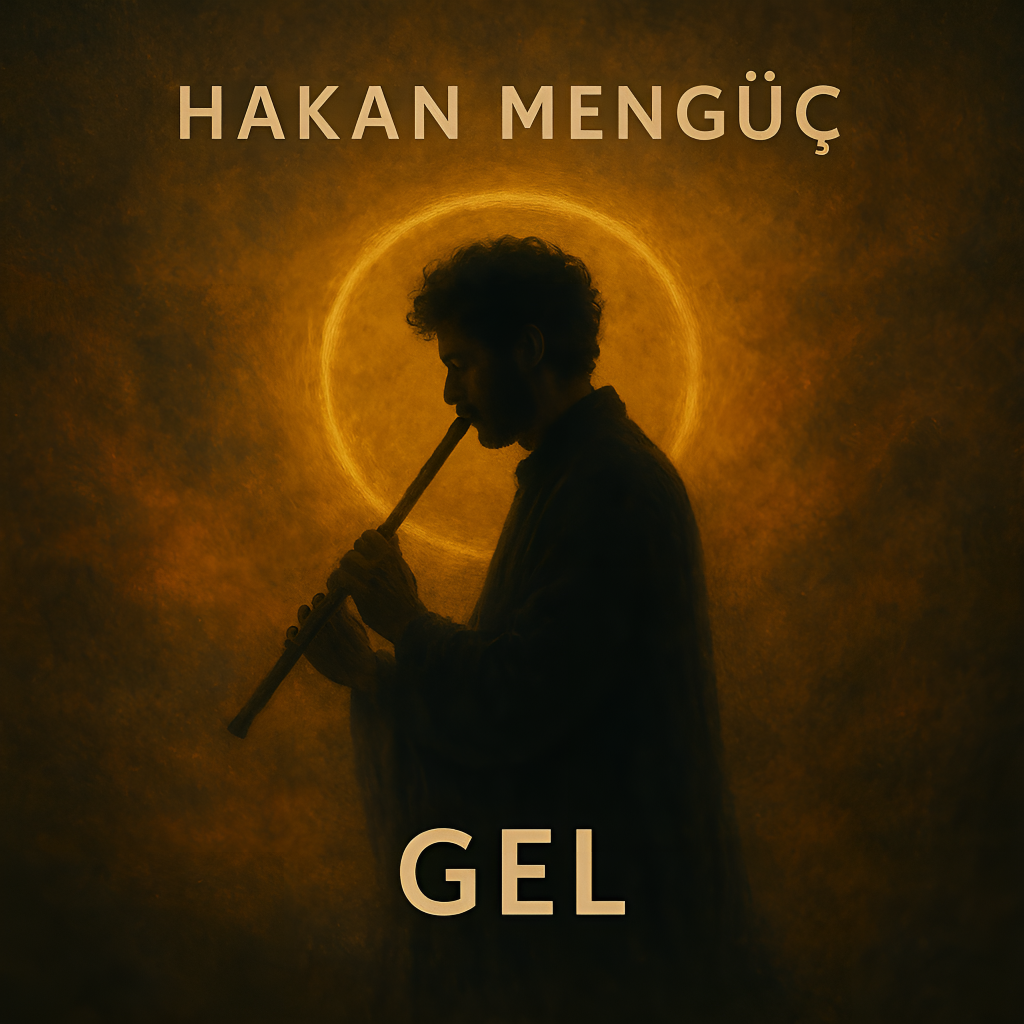
New Release: “Gel” by Hakan Menguc

A Mystical Blend of Sufi Soul & Deep Electronic Rhythms

🌿 The Artist: Bridging Ancient and Modern Worlds

Hakan Mengüç is an internationally renowned author, composer, and ney player, whose books have been translated into 15 languages and sold over 3 million copies. As a musical performer, he has graced the stages of over 30 countries — offering listeners a deep, healing sound inspired by Sufi spirituality.

🎧 The Track: Gel

“Gel” (meaning “Come”) is not just a song — it’s an invitation to an inner ritual.

Blending the sacred breath of the ney, grounding deep house textures, and poetic whispers by Hakan himself, the track explores how tradition and electronic expression can coexist to open the heart.

It’s a soundscape where stillness meets movement, and where the mystical meets the modern.

🌍 The Genre: Sufi Deep House

As part of Mengüç’s growing exploration into Sufi Deep House / Sufi House, this release expands the boundaries of spiritual music. It is perfect for lovers of:

  • Organic House
  • Spiritual Downtempo
  • Ethnic Electronica
  • Meditative Sound Journeys

📲 Now Available On All Platforms

“Gel” is now streaming on Spotify, Apple Music, YouTube Music, and all major digital platforms.

Spotify: Gel

Youtube: Gel

I Thought It Was the End… But It Was the Birth of a New Me


I Thought It Was the End… But It Was the Birth of a New Me

Sometimes someone leaves…

And all that’s left is silence.

A vast emptiness.

No words.

No sound.

Only the hollow ache of absence.

That person is gone—

but no one sees what they took with them:

the dreams you built together,

the quiet moments you shared,

the words they once said to you…

or the look they never had the courage to give.

The one who leaves is not just a person.

It’s a time in your life that ends.

A version of you disappears with them.

The old “you” is no longer there.

Because some goodbyes don’t just change your world—

they transform the world inside you.

But that’s where transformation begins.

Because the soul awakens most… when it loses something.

And sometimes, the greatest strength

rises from the quietest collapse.

Hard times are often the loneliest.

The world keeps spinning, people talk, life goes on…

But inside, you’re frozen in a different time.

No message arrives, no voice calls out—

it feels as if the world has forgotten you.

And in that silence, you begin to ask yourself:

“Where did I go wrong?”

“If things had been different, would we still be together?”

“Was I not enough? Or did they give up too soon?”

These questions have no clear answers.

But your heart always returns to the same place:

Longing…

Woundedness…

And still—love.

And this… this is the rawest form of being human.

To pray for someone’s happiness,

even when they’ve hurt you.

To wish them well,

even if you’ll never see or hear them again.

That’s not weakness.

That’s your greatest strength.

Some pains can’t be spoken.

You just carry them.

There are feelings you can’t explain to anyone.

Because even if you tried, no one would truly understand.

So you stay quiet.

You smile.

You pretend you’re okay.

But deep down, a part of you still burns like it did on the first day.

And you can’t show that to anyone—

because the world assumes you’ve moved on.

But you know…

You haven’t.

It’s just that the pain now sits quietly in a corner of your heart.

But hear me, my friend…

It is in that silence where we find ourselves again.

As you walk through the fire of pain,

your eyes begin to see differently.

And one day, you look in the mirror—

and the person staring back at you

is softer, deeper, stronger than you’ve ever been.

That’s the day you realize:

What felt like a breakup…

was actually a rebirth.

And from deep inside, a voice rises:

“I didn’t fall apart.

I wasn’t destroyed.

I simply grew.”

One day, the sun rises inside you again.

You wake up and the thing that once broke you—

is now just a memory.

Not erased.

But no longer piercing.

You’ve made peace with it.

You’ve let it be.

Your heart may still have cracks…

but they no longer define you.

And you begin to realize:

What once shattered you…

actually built your strength.

You ask yourself:

“How did I get back up?”

“How am I still able to love?”

“How do I still trust people?”

And the answer comes gently:

You didn’t just lose something—

you were reborn.

You now walk through life

with a softer heart,

a deeper soul,

and wiser eyes.

Because pain didn’t destroy you.

It shaped you into who you were always meant to be.

So pause now.

Take a deep breath.

And set this intention in your heart:

“I allow every experience I’ve lived

to turn me into someone wiser, kinder, and more loving.

I honor the past, embrace the present,

and look to the future with hope.”

Because no matter what you’ve lived through,

someone, somewhere still loves you.

Maybe a friend…

Maybe a prayer…

Maybe the sacred part of you that never stopped believing.

Remember this:

You are not broken.

You have simply been reshaped.

And now, with the light inside you,

it’s time to help light the way for others.

Even the darkest nights give way to morning—

and sometimes, that morning isn’t outside…

it’s born within.

You didn’t just walk through that darkness—

you brought light into it.

And those who do that…

make this world a more beautiful place.

You are precious, my fellow traveler.

🌿

A Soft Whisper to the Soul: This Too Shall Pas


A Soft Whisper to the Soul: This Too Shall Pas

I know…

There’s so much you’ve been holding inside.

Unspoken emotions,

Unshared sorrows,

Thoughts that live in your heart but never quite made it into words.

You know that kind of silence we carry sometimes?

It’s not really silence.

It’s the echo of all your uncried tears, your unseen exhaustion, your quiet disappointments.

Maybe you’re living in that silence right now.

But please don’t forget this:

Every silence carries the seed of awakening.

Every turning inward is a sacred preparation—

a space where your soul gets ready to be born again.

You are far stronger than you appear.

And this life…

It isn’t here to teach you everything.

It’s here to help you remember the truth you already carry within.

Feeling tired…

Crying…

Breaking down…

All of it is deeply human.

And you, my dear, are human.

To be human is to feel.

To fall, to rise, and to keep walking again.

As Mevlana Rumi said:

“Even if you’ve broken your vow a hundred times, come, yet again, come.”

Do you know what that means?

It means:

“Even if you’re tired, rise again.

Even if your heart is broken, love again.

Even if you’ve forgotten, remember again.”

Because your heart…

Is a compass that remembers.

It will guide you—

if only you choose to listen.

Everything you’re going through right now

might just be the path that leads you to your hidden treasure.

Perhaps life paused you at this very station

so you could finally look at where you’re going—with awareness.

Don’t abandon yourself

just because others have left you.

Some doors may have closed, yes—

but maybe those doors hid things that drained you,

that no longer helped you grow.

And now…

It’s time to let go of the old burdens.

The guilt, the past, the responsibilities that were never yours.

Gently set them down.

Because you are not just your past.

You are the infinite potential within you.

You are the parts of you still waiting to be discovered.

Life’s challenges…

They don’t come to turn you into something divine.

They come to make you deeply, tenderly human.

To soften your heart.

To make it more compassionate.

More aware.

So this moment—

let it be not an end,

but a beginning of transformation.

Now close your eyes…

Come back to yourself for a moment.

Maybe it’s been a while since you checked in.

Since you asked that child within: “How are you, really?”

Ask them now:

“Are you okay?”

And tell them:

“I’m here now.

I will take care of you.

I won’t ignore you anymore.”

This is where healing begins.

In hearing yourself.

In forgiving yourself.

In gently holding yourself again.

Because you…

You are the healing you’ve been waiting for.

You are the very words you’ve been longing to hear from someone else.

You are… a miracle.

And miracles—

they are born from fragile hearts.

So now, come closer…

Let’s whisper together:

“This too shall pass…

All of it shall pass…”

And once it has…

You will look back on these days with gratitude.

Because it’s these very days—

that will shape who you truly are.

Farewell for now, my fellow traveler.

With love and light always. 🌿


Spiritual Detox: Cleanse Your Heart with the Arrival of Spring

Hakan Mengüç, April 2025

In recent weeks, I’ve been traveling across many cities in Europe for seminars and book signings.

And in every city I visited, I could hear the footsteps of spring…

The budding trees whispering in quiet alleys,

the gentle sunlight touching faces with kindness,

and that lightness quietly resting in people’s eyes…

It was as if everything around me was speaking.

I believe that every season has its own language,

and every scene invites us to listen inward.

If we know how to see, life always carries a message for us.

So, what is spring telling us?

What do flowers say as they bloom?

What do the trees teach us as they let go of their dry branches?

Spring is not only the awakening of nature—

it is the awakening of the soul.

Just as the earth sheds its old skin,

we are called to release what we carry within.

Every new leaf is like a quiet intention

breaking free from the past.

And every spring,

we are gently reminded to let go of what no longer serves us.

Sometimes, we carry burdens for years without noticing:

A word we couldn’t forgive,

a disappointment buried deep inside,

a regret we pretend to forget but still echoes in the silence of the night…

Spring leans in and softly whispers:

“Let it go now. It’s time to renew.”

Just as we clean our homes in spring,

we must also cleanse our hearts.

As the Sufi sages say:

“The heart is a mirror; but once it’s covered with dust, it cannot reflect.”

So how do we cleanse ourselves?

It all begins with an intention.

A simple but profound one:

“With this spring, I choose to purify my heart,

to let go of what weighs me down,

and make space for something new to bloom.”

Sometimes it’s like a prayer.

A whisper carried on a walk,

a sentence written in silence,

or a moment of simply listening within…

True cleansing starts not on the outside,

but deep within.

And each step taken from the heart opens a new path.

Every spring, I do a small ritual.

I take a piece of paper and write down what feels heavy inside—

a feeling I haven’t released,

a person I haven’t yet forgiven,

or words I’ve never spoken out loud.

And then I gently release that paper into flowing water.

Softly, I say to myself:

“I release you with love. I no longer choose you—I choose peace.”

Maybe not everything changes in that moment.

But a lightness begins to rise inside.

And that lightness becomes a new breath for the soul.

Don’t forget, my dear friend,

Life becomes clearer not from the outside,

but from within.

And sometimes you find your answer

in the blooming of a flower,

in the cool air of morning,

or in the quiet peace that comes after a single tear.

So this spring—

don’t just open your windows…

open your heart, too.

And now… leave a gentle intention in your heart.

This is my intention…

With this spring,

I choose to lovingly release the burdens of my past,

to cleanse the old wounds that left marks on my heart,

to awaken the joy that has been quietly sleeping inside,

and to approach myself with more softness, more compassion.

I choose to welcome each new beginning with hope,

to patiently nurture the change blooming within me,

and to embrace the spring blossoming in my soul with love.

Because I know—

true spring does not begin outside…

it begins within.


Walking with Lions: Lessons in Love, Care, and Courage from Africa

Lion Care: A Journey Beyond Fear

🦁 Lions… The majestic kings of the wild, symbols of strength and grace. For many, approaching these magnificent creatures is only a dream. But sometimes, life opens a door for those who dare to step in. I was lucky enough to walk through that door in South Africa.

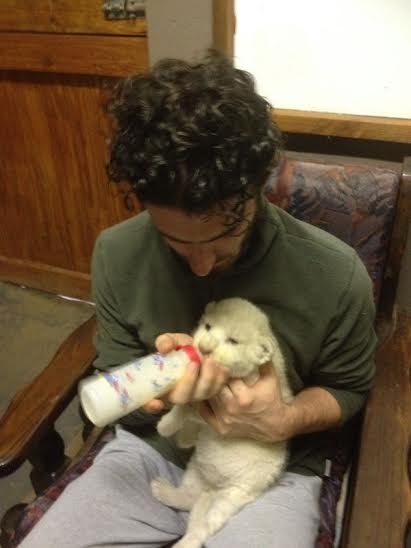
🌍 During my training at the Limpopo Predators Park & Animal Rehabilitation Center, I not only observed lions but helped raise their cubs. It was a soulful experience—one that taught me more about love, responsibility, and surrender than any book ever could.


Protecting Cubs from Male Lions

In nature, male lions often harm cubs that aren’t their own. That’s why, in wildlife centers, cubs are separated from their mothers within the first few days. Yes, it sounds harsh—but in the wild, survival sometimes means making difficult choices.

Once separated, the cubs are bottle-fed with a special milk formula every four hours—200 ml each time.


Feeding Lion Cubs

The milk used is called “Lion Milk Replacer.” We add 600 ml of this powder into a blender, add water, and mix it until smooth. Then it’s poured into bottles and gently warmed in hot water before feeding.

aslan_maması
The lion milk powder we used in Africa
aslan_mamasi_yapimi
The blender we used in Africa
beyazaslanhakan.jpg

🍼 I remember waking up at 2 AM to feed the cubs. It was exhausting, especially when feeding the white lions. They were picky eaters and often refused the bottle. But in every struggle, I saw an invitation: to meet myself deeper.


Disinfecting the Bottles

Since the cubs are so young, hygiene is critical. Before feeding, we disinfect our hands in water mixed with a capful of bleach. After feeding, the bottles are washed and placed in a tub with Milton tablets to kill bacteria.

aslan_emzik

Biberonların olduğu kovanın içine koyulan tablet ilaç
The tablet medicine placed into the tub containing the bottles

🧴 Life, like bottles, needs regular cleansing. Sometimes it’s not what we carry that’s heavy—it’s what we never clean out. Let go, refresh, begin again.


Helping Cubs with Toileting & Sleep

After every feeding, we help the cubs urinate and defecate by gently rubbing their genital area with a warm wipe. If not, they may soil their bedding. All their waste is monitored on a checklist to ensure health. Any signs of blood are taken seriously and require immediate vet attention.

At night, they sleep in a shelter that is warm yet well-ventilated. Safety, rest, and peace—that’s all they need. That’s all any of us need, truly.


Final Thoughts

The time I spent with these lion cubs was one of the most heart-opening experiences of my life. I realized that caring for a lion is not about taming its wild nature—it’s about taming the fear inside us.

I wrote this article to share that story, hoping it helps someone connect more deeply with life, nature, and themselves. In a world that teaches us to roar, don’t forget to purr too.

💛 With love, stay close to your heart and wildness.

“You were born not to cage your inner lion, but to walk beside it in peace.” – Hakan Mengüç

This article was originally published on February 24, 2014.

You don’t need to be loved to feel valuable

Hello, my fellow traveler 🌙

You don’t need to be loved to feel valuable.

Your worth cannot be measured by how much others love you.

You are unique and precious just as you are.

Sometimes, you simply need to pause and recognize the light within yourself.

Remember how valuable you are without needing anyone else’s approval, just by being yourself.

Because you are whole and enough just the way you are.

Today, show yourself a little love and compassion, because you are the one who deserves it the most. 🌟

And never forget, when you start loving yourself and let go of the thought “I must be loved,” those who truly love you will find their way into your life.

Hakan | 3 January 2025